 Joint Rotary Actuators Series HAT
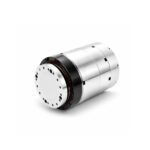 Joint Rotary Actuators series HAS
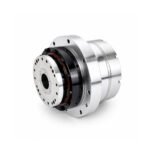 Joint Rotary Actuators Series HAMF
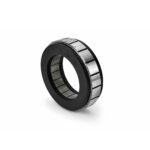 Frameless Torque Motor HBM
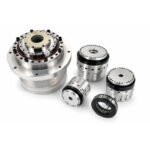 Rotary Actuators
 Joint Rotary Actuators Series HAG
 Rotary Actuators Series HPG
Introduction: The Micro-World Challenge
In the world of semiconductor manufacturing, the margin for error is non-existent. A single particle of dust or a microscopic positioning drift during the transfer of a silicon wafer can result in the loss of an entire batch of high-value chips. As the industry pushes toward smaller nodes and larger wafer sizes, the demand for precision motion control systems has become more intense than ever.
The robotic handling systems responsible for moving wafers between chambers are the unsung heroes of the fab. These systems must operate with extreme speed, yet maintain the gentleness of a human hand. Achieving this balance requires a deep understanding of motion dynamics, vacuum compatibility, and material science.
The Unique Demands of Wafer Handling Systems
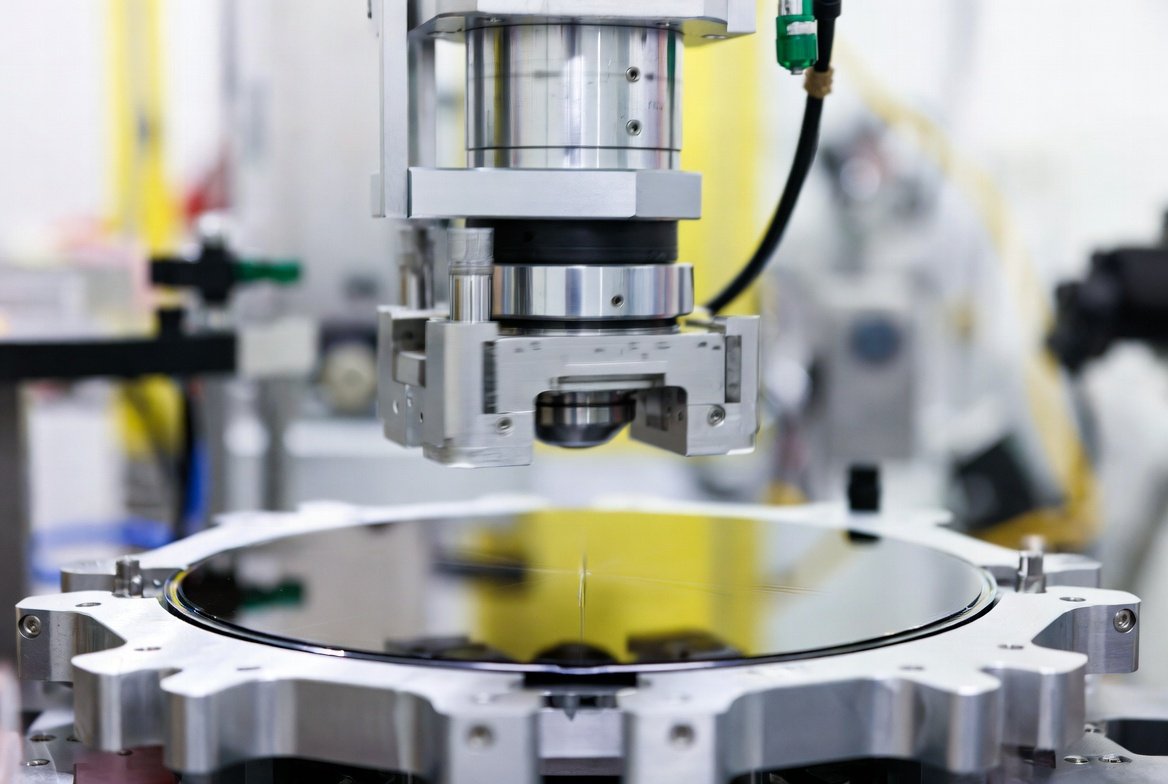
Designing for the semiconductor industry requires a complete shift in engineering philosophy. Standard industrial automation components often fail to meet the “clean” and “steady” requirements of a modern fab.
The Critical Need for Low Vibration Profiles
During wafer transport, any high-frequency vibration—even at the nanometer scale—can cause the wafer to slip or experience surface fatigue. Low vibration is not just about aesthetics; it is a fundamental requirement for process integrity. Actuators used in these systems must utilize advanced control algorithms to dampen resonant frequencies and ensure fluid, jitter-free acceleration and deceleration.
Particle Generation: Why Traditional Actuators Fail
Traditional actuators often use grease, belts, or external cabling that sheds particles over time. In a cleanroom, these particles are catastrophic. Semiconductor-grade actuators must be designed with “low-outgassing” materials and feature fully sealed housings to ensure that no internal lubricants or wear particles contaminate the process chamber.
Vacuum Compatibility and Material Selection
Many wafer handling steps occur inside vacuum chambers. Standard motors or actuators would rapidly outgas or fail due to the lack of air for heat dissipation. Semiconductor-ready actuators must be specifically engineered with materials that remain stable in a vacuum, ensuring that the motion system does not degrade the vacuum pressure or interfere with the chemical vapor deposition (CVD) or etching processes.
How Frameless Motors Enable High-Yield Wafer Handling
The shift toward frameless technology has been a game-changer for semiconductor equipment design.
Minimizing Footprint in Multi-Arm Robot Clusters
Modern wafer handling robots, such as “cluster tools,” often feature multiple robot arms working in tight, circular chambers. Integrating frameless motors directly into the joint mechanics allows designers to create extremely low-profile arms. This footprint reduction enables faster cycle times, as the robot can move more freely without colliding with the chamber walls.
Optimizing Torque for Fast, Smooth Wafer Transfer
Direct drive frameless motors provide the instantaneous torque required for rapid wafer transfer, but with the smoothness needed to keep the wafer stable. By eliminating the gear stages found in traditional motors, you remove the source of mechanical noise and vibrations, directly contributing to higher throughput and better process yield.
Hollow Rotary Actuators: The Secret to Cleaner Design
The physical design of the actuator is just as important as the motor technology inside it.
Centralized Routing for Vacuum-Compatible Lines
A hollow rotary actuator provides a clear, unobstructed path through the center of the rotation axis. For wafer handling, this is essential. It allows for the centralized routing of vacuum hoses, power lines, and fiber-optic sensors without requiring external loops of cable.
Eliminating External Wiring to Reduce Particle Generation
External cabling is a major source of particle generation, as cables rub against each other or the machine frame during movement. By routing all utilities through the center of the hollow actuator, you encapsulate the wiring, keeping the cleanroom environment pristine and significantly reducing the risk of contamination.
Precision Motion: Driving Higher Wafer Yields
Ultimately, the goal of optimizing your motion system is to increase the yield per wafer.
Sub-Micron Repeatability in Wafer Alignment
When a wafer enters a process chamber, it must be aligned with extreme precision. The motion system must be capable of sub-micron repeatability. This level of precision is achieved through high-resolution feedback systems and the high stiffness provided by integrated rotary actuators.
Advanced Control Algorithms for Vibration Damping
It is not just the hardware—it is the control logic. Advanced servo systems now utilize self-adaptive tuning to adjust to the changing weight of different wafer carriers. This active vibration damping ensures that the robot arm remains rock-solid, even when operating at maximum speed.
Conclusion: Precision as the Foundation for Future Chips
The semiconductor industry is the ultimate proving ground for motion control technology. As chip architectures become more sophisticated, the machines that build them must evolve in parallel. By prioritizing low vibration, vacuum compatibility, and modular integration, engineers can build handling systems that are faster, cleaner, and more accurate than ever before.
Precision is the foundation of high-yield semiconductor manufacturing. If you are developing next-generation wafer handling systems, Hobber Drive provides the engineering support and high-performance components necessary to meet these extreme requirements.
FAQ Section: Semiconductor Motion Control FAQs
Q1: What materials are used to ensure vacuum compatibility?
We avoid standard oils or off-gassing plastics. Our vacuum-ready units utilize specialized low-outgassing seals, dry-lubricated bearings, and stainless steel housing to ensure they remain inert even under deep vacuum conditions.
Q2: How do your actuators handle the stringent cleanroom Class requirements?
Our actuators feature fully sealed, IP-rated enclosures designed to encapsulate any internal wear particles. By eliminating external moving parts like exposed belts or external wiring, we ensure minimal particle shedding, making them suitable for Class 100 or better cleanroom environments.
Q3: Does your precision change as the actuator heats up during high-throughput operation?
Thermal drift is a concern for every precision machine. Our actuators are designed with optimized heat paths and high-efficiency coils to minimize internal heat generation. Furthermore, our control algorithms include thermal compensation features to maintain positional accuracy even as the system reaches its steady-state operating temperature.