 Joint Rotary Actuators Series HAT
 Joint Rotary Actuators series HAS
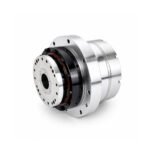 Joint Rotary Actuators Series HAMF
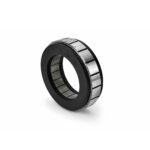 Frameless Torque Motor HBM
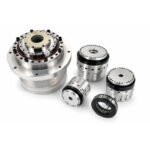 Rotary Actuators
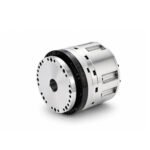 Joint Rotary Actuators Series HAG
 Rotary Actuators Series HPG

In any high-performance robotic actuator, the position feedback system acts as the “eyes” of the machine. Without knowing exactly where a joint is at any given microsecond, even the most powerful motor is blind. This feedback is provided by an encoder—a device that converts mechanical rotation into electrical signals.
For engineers, the most fundamental choice in position feedback design is deciding between an incremental encoder and an absolute encoder. This choice ripples through your system’s software, safety protocols, and operational uptime. This guide explores the technical differences to help you navigate this critical design decision.
What is an Incremental Encoder?
An incremental encoder generates a series of pulses as the shaft rotates. It tells the controller how far it has moved from the previous position, but it does not know where it is in relation to a fixed starting point.
How Incremental Counting Works
These encoders use a slotted disc and a light source. As the disc spins, the light is interrupted, creating a pulse train. By counting these pulses, the controller determines distance. To determine direction, a second channel (Phase B) is used, shifted 90 degrees out of phase, allowing the controller to detect the direction of rotation.
The Need for “Homing” Sequences
Because the device only tracks relative movement, it loses its “memory” when the power goes off. Every time the machine starts, it must perform a “homing” sequence—physically moving the arm until it hits a limit switch or sensor—to establish a reference point.
Advantages: Simplicity and Cost-Effectiveness
Incremental encoders are remarkably simple and cost-effective. They are ideal for applications where the machine is always “on” or where a homing cycle at startup is acceptable and carries no safety or operational risk.
The Power of Absolute Encoders
An absolute encoder provides a unique digital word for every specific angular position. It doesn’t just tell you how far it moved; it tells you exactly where it is.
Real-Time Absolute Positioning
Regardless of how many times the motor spins, or whether the power was lost for a second or a month, the device always reports the precise, unique position. It functions like a GPS coordinate for your robotic joint, rather than a speedometer.
Why Absolute Positioning is Vital for Robotics
In complex robotics engineering, homing cycles can be dangerous or impossible. Imagine a surgical robot or a heavy factory gantry; you cannot simply move the arm to “find” its starting position without risking collisions. Absolute positioning ensures the system knows its location the instant power is applied.
Eliminating Homing Cycles for Better Uptime
By removing the need for homing cycles, you dramatically increase machine availability. Operators can restart a production line instantly after a power fluctuation, saving valuable time and reducing the risk of manual interference.
Comparative Analysis: Absolute vs. Incremental
When selecting components for a robotic actuator, weigh these factors carefully.
| Feature | Incremental | Absolute |
|---|---|---|
| Power-off Memory | No | Yes |
| Startup Process | Requires Homing | Instant |
| Complexity | Low | High |
| Cost | Budget-friendly | Premium |
Performance in Robotic Actuator Applications
In high-precision actuators, absolute encoders are becoming the standard. They provide a higher level of “intelligence” to the motion control system. When integrated into a smart joint module, an absolute encoder ensures the robot can perform complex, multi-axis movements with total confidence in its coordinate system.
Reliability and Immunity to Power Loss
If your application involves mission-critical tasks where unexpected power loss is a possibility, absolute feedback is not just a feature—it is a safety necessity. It prevents the system from “resetting” its brain to an unknown state.
Key Factors for Choosing the Right Feedback Device
System Complexity and Safety Standards
If your machine design involves human-robot interaction or high-speed automation, the safety benefit of absolute positioning often justifies the higher initial cost. It simplifies your safety software by providing reliable position data in real-time.
Environmental Factors (Dust, Vibration, and EMI)
Optical encoders are common, but in dirty industrial environments, dust on the disc can cause errors. Many modern absolute encoders use magnetic or inductive sensing, which are immune to the dust, vibration, and oil mists often found in factory floors, ensuring long-term reliability.
Conclusion: Precision Starts with Accurate Feedback
The choice between an incremental and an absolute system determines how your robot behaves the moment it wakes up. While incremental encoders offer simplicity and lower costs, absolute encoders provide the instant readiness and safety that define modern industrial robotics.
For projects requiring high repeatability and maximum uptime, the absolute encoder is the superior technology. When designing your next robotic actuator, consider the long-term operational benefits rather than just the component cost.
FAQ Section: Feedback System Design Questions
Q1: Can I switch from incremental to absolute without changing the motor? It depends on the actuator design. Because the encoder must be mounted to the motor shaft, a physical change is usually required. Many high-end actuators, like those in our range, come with the absolute encoder pre-integrated for this exact reason.
Q2: How does encoder resolution affect the smoothness of my robot? Higher resolution means the controller can see smaller movements. This allows for tighter PID loop tuning, resulting in smoother motion at low speeds and better stiffness at a standstill.
Q3: Are optical encoders better than magnetic encoders?