 Joint Rotary Actuators Series HAT
 Joint Rotary Actuators series HAS
 Joint Rotary Actuators Series HAMF
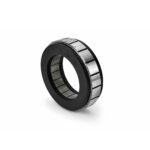 Frameless Torque Motor HBM
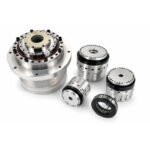 Rotary Actuators
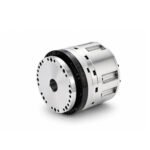 Joint Rotary Actuators Series HAG
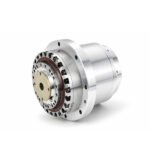 Rotary Actuators Series HPG

Introduction: Capturing Perfection Through Precision Motion
In the age of Industry 4.0, automated optical inspection (AOI) has become the backbone of quality control. Whether it is inspecting microscopic defects on semiconductor wafers, verifying the placement of components on a PCB, or ensuring the integrity of medical device surfaces, the goal is always the same: capture a perfect, high-resolution image every single time.
However, there is an often-overlooked paradox in this field: the need for both high speed and high resolution. To detect defects, your camera must move quickly to keep up with production lines, but it must be perfectly stable to capture a clear, usable image. This is where the precision actuator becomes the silent foundation of your entire machine vision system.
Technical Challenges in Modern Optical Inspection
Achieving the perfect image is not just about the camera sensor; it is about how that camera is moved and positioned.
Eliminating Jitter: The Enemy of High-Resolution Imagery
Jitter—small, rapid, and unwanted movements—is the primary enemy of optical inspection. When an actuator has even slight mechanical imperfections, the camera experiences jitter during the acquisition phase. This results in motion blur, rendering even the most expensive camera sensors useless. A high-quality actuator must ensure perfectly smooth motion to maintain image fidelity.
Settling Time: Why Stopping Smoothly Matters More Than Moving Fast
In an inspection cycle, the camera must move to a location, stop, and capture the image. The “settling time”—the time it takes for the vibrations to subside after the movement stops—is often the biggest bottleneck in throughput. Actuators that incorporate advanced damping or direct-drive technology minimize this settling time, allowing for faster inspection cycles.
Managing Micro-Vibrations in Sensitive Camera Mounts
Even environmental vibrations from nearby heavy machinery can find their way into the camera mount. Precision actuators must not only move smoothly but also provide enough stiffness to reject external micro-vibrations, acting as a structural anchor for the imaging sensor.
Why Rotary Actuators are Essential for Camera Gimbals and Stages
Many inspection systems require the camera to rotate to view a part from multiple angles. This is where rotary actuators shine.
Achieving 360-Degree Coverage with High Repeatability
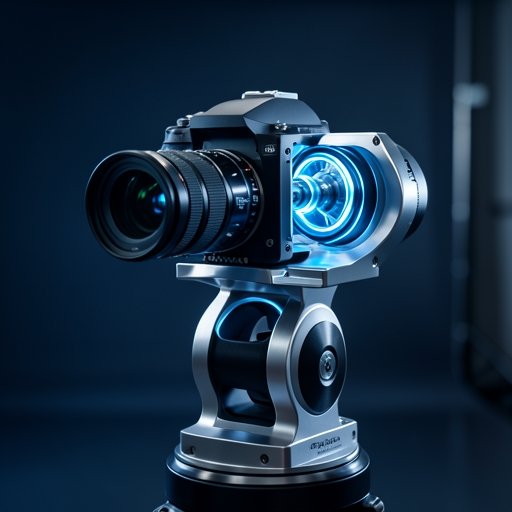
To inspect complex objects, such as a cast metal part or a curved medical device, the camera must be able to rotate around the object with high repeatability. If an actuator lacks precise angular positioning, you will miss parts of the object or create overlapping, redundant data that slows down the inspection software.
The Advantage of Hollow Bore for Camera Cable Management
Imagine a camera gimbal with tangled external cables. Every time it rotates, the cables pull, drag, and introduce friction, ruining the precision of the motion. A hollow rotary actuator allows you to pass power, data, and trigger signals directly through the center of the rotating axis. This clean, internal routing is essential for reliable, continuous operation in machine vision setups.
Direct Drive vs. Stepper: Performance in Machine Vision
In the past, stepper motors were common in low-cost inspection rigs. Today, they are increasingly being replaced by direct drive and servo-based systems.
Overcoming Noise and Step-Loss in Traditional Motors
Stepper motors are prone to “step-loss” when the load fluctuates, and they produce significant vibration as they move from step to step. This noise is detrimental to image clarity. Direct drive systems, by contrast, offer a continuous, fluid motion profile that is fundamentally quieter and more stable.
Smooth Motion Profiles for Dynamic Inspection
When performing dynamic inspection (where the camera moves while capturing the image), the motion must be perfectly constant. Direct drive actuators provide the high-bandwidth control necessary to eliminate speed ripples, ensuring the motion profile remains rock-solid throughout the entire exposure period.
Designing for High-Speed AOI Systems
Automated Optical Inspection (AOI) requires the seamless synchronization of hardware components.
Synchronizing Motion with High-Speed Camera Triggers
The motion controller must fire the camera trigger at the exact moment the actuator reaches a specific coordinate. This requires a control system with extremely low latency. Advanced actuators and drives now offer synchronization features that allow the motion controller to trigger image capture with microsecond precision.
Thermal Management in Enclosed Inspection Chambers
Inspection chambers are often enclosed to control lighting and dust. This creates a thermal challenge: heat from the actuator can raise the internal temperature of the chamber, causing the camera sensor to produce “thermal noise” in the image. High-efficiency, low-heat-generation actuators are critical for maintaining a stable environment inside these chambers.
Conclusion: Stability is the Imaging Foundation
The quality of your machine vision data is strictly capped by the quality of your motion control. You can have the most expensive, highest-resolution camera available, but if the actuator supporting it is vibrating or imprecise, your system will fail to deliver the results you expect.
By investing in high-quality precision actuators that emphasize smooth motion and structural stability, you are investing in the quality and consistency of your inspection data. Stability is not just a performance metric—it is the very foundation of your inspection capability.
FAQ Section: Machine Vision Design Questions
Q1: How do I minimize vibration during high-speed camera rotation?
Use direct-drive rotary actuators to eliminate gear-mesh vibration. Additionally, ensure your system is properly balanced, and use high-gain servo tuning to ensure the actuator maintains a rigid position without oscillation.
Q2: Can hollow rotary actuators pass fiber optic cables without degrading the signal?
Yes. Large-bore hollow actuators are designed with internal paths that protect sensitive fiber optic cables from tight bends, ensuring signal integrity is maintained even during continuous 360-degree rotation.
Q3: What actuator resolution is needed for sub-pixel accuracy?
Sub-pixel accuracy depends on the lens magnification and the sensor pixel size. Generally, your actuator’s angular resolution should be at least 10 times finer than the smallest feature you need to resolve on the object. Always calculate your “system-level” accuracy rather than looking at the actuator in isolation.