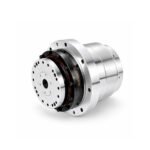
 Joint Rotary Actuators Series HAT
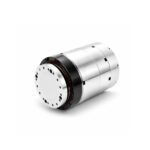 Joint Rotary Actuators series HAS
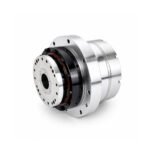 Joint Rotary Actuators Series HAMF
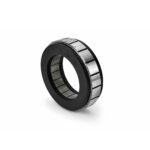 Frameless Torque Motor HBM
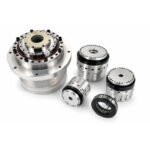 Rotary Actuators
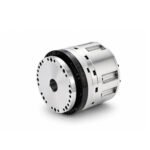 Joint Rotary Actuators Series HAG
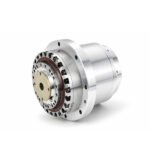 Rotary Actuators Series HPG
Introduction: The Race for Throughput in Consumer Electronics
The 3C industry—Computer, Communication, and Consumer electronics—is defined by its relentless pace. With product lifecycles shrinking to months and components becoming microscopic, the pressure on electronics manufacturing has never been higher. To remain competitive, manufacturers must achieve a delicate balance: maximizing throughput while maintaining sub-micron accuracy.
In this environment, traditional motion components often become the bottleneck. The “Race for Throughput” is won by machines that can move, stop, and settle faster than the competition. This article explores how advanced precision motion solutions are driving the next generation of 3C automation.
The Dynamics of 3C Automation: Why Traditional Motors Struggle
3C production lines are characterized by high-frequency, short-stroke movements. A typical machine may perform thousands of cycles per hour, requiring extreme mechanical agility.
Overcoming Inertia in High-Frequency Start-Stop Cycles
Every time a motor starts or stops, it must overcome inertia. Traditional motors with heavy internal rotors and high-ratio gearboxes generate significant “inertial lag.” In 3C automation, this lag translates directly into lost seconds. By utilizing lightweight, high-torque frameless motors, designers can reduce the system’s moving mass, allowing for instantaneous acceleration.
The Critical Importance of Short Settling Times
Moving fast is only half the battle; the machine must also stop perfectly. “Settling time” is the delay between the end of a move and the point where vibrations subside enough to perform a precision task (like taking a photo or dropping a component). Advanced servo drives and high-rigidity actuators are essential to dampen these micro-vibrations, ensuring the machine is ready for the next step in milliseconds.
Precision Dispensing and Coating: Accuracy at Every Drop
One of the most demanding tasks in smartphone assembly is the application of adhesives and protective coatings.
Maintaining Constant Velocity for Uniform Glue Application
Whether it is sealing a screen or bonding a battery, the dispensing head must move at a perfectly constant velocity. Any “speed ripple” from the motor will result in uneven glue thickness, leading to structural failures or water-ingress issues. Direct-drive technology provides the fluid, cog-free motion required for flawless dispensing.
How Compact Actuators Enable Multi-Head Dispensing Systems
Space is at a premium inside 3C assembly cells. Using compact, integrated rotary actuators allows machine builders to mount multiple dispensing heads on a single gantry. This parallel processing multiplies the machine’s output without increasing its physical footprint.
PCB Assembly and Pick-and-Place Innovation
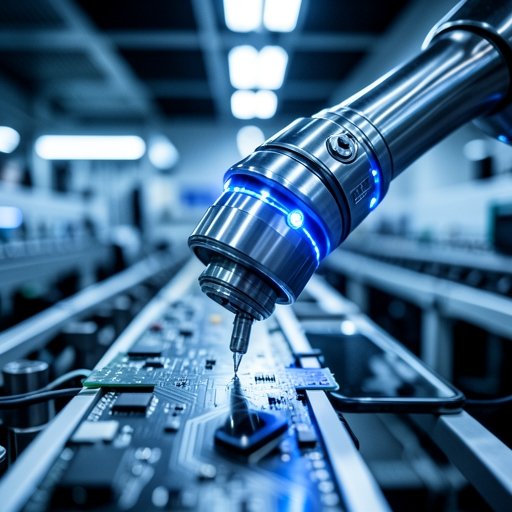
The heart of every 3C device is the Printed Circuit Board (PCB). As components like 01005 resistors become the standard, the demands on pick-and-place precision are extreme.
Rapid Angular Orientation of Micro-Components
Before a component is placed, it must be rotated to the correct angle. This “theta-axis” rotation must be incredibly fast and vibration-free. High-resolution integrated joint modules provide the precise angular positioning needed to align micro-components at lightning speeds.
Integrating Frameless Motors for Sleeker Z-Axis Designs
By integrating frameless motors directly into the Z-axis pick-and-place head, manufacturers can create slimmer, lighter units. This reduction in weight allows the entire gantry to move faster, significantly cutting down the overall cycle time for PCB assembly.
High-Speed Optical Inspection in 3C Production Lines
With zero-tolerance for defects, automated optical inspection (AOI) is integrated into every stage of the 3C line.
Vibration-Free Motion for Clear High-Resolution Imagery
If a camera shakes, the image blurs, and the AI inspection software fails. Precision actuators ensure that the motion of the camera or the workpiece is perfectly stable. This enables the capture of high-resolution images while the line is in motion, a technique known as “inspection-on-the-fly.”
360-Degree Inspection Stages for Complete Quality Control
To check for defects on all sides of a component, 360-degree rotation stages are used. Using hollow shaft actuators for these stages allows for internal cabling of cameras and lights, preventing wire-tangling and allowing for continuous, high-speed 360-degree rotation.
Conclusion: Empowering Agile Electronics Manufacturing
The future of 3C manufacturing belongs to the agile. As devices become more complex, the machines that build them must move smarter, not just faster. By prioritizing high speed dynamics and precision motion, manufacturers can reduce waste, improve yields, and respond instantly to market shifts.
At Hobber Drive, we specialize in the compact, high-bandwidth motion hardware that makes this agility possible. From ultra-low-profile frameless motors to high-rigidity joint modules, our technology is the foundation of the world’s most advanced 3C production lines.
FAQ Section: 3C Manufacturing Motion Challenges
Q1: How does motor heat affect the accuracy of delicate electronic assembly? In precision assembly, even slight thermal expansion can throw off tolerances. We design our actuators with high-efficiency coils and optimized heat-dissipation paths to ensure that the assembly environment remains thermally stable, even during high-duty cycles.
Q2: Can your actuators handle the high-duty cycles of 24/7 3C production? Yes. Our components are industrial-grade and designed for continuous operation. We use high-fatigue-life materials and superior bearing structures to ensure that Hobber Drive products maintain their precision over millions of cycles, minimizing production line downtime.
Q3: What communication protocols are best for high-speed synchronization in 3C lines? For the sub-millisecond synchronization required in 3C lines, we highly recommend EtherCAT. Our USERVO-FLEX drives are optimized for EtherCAT, providing the real-time response necessary to synchronize multi-axis gantries with high-speed camera triggers.