 Joint Rotary Actuators Series HAT
 Joint Rotary Actuators series HAS
 Joint Rotary Actuators Series HAMF
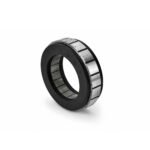 Frameless Torque Motor HBM
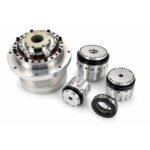 Rotary Actuators
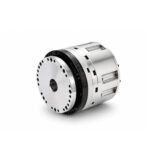 Joint Rotary Actuators Series HAG
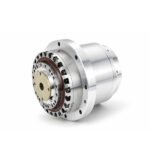 Rotary Actuators Series HPG

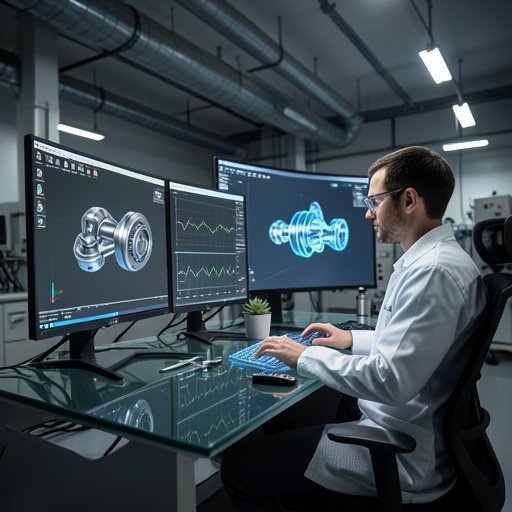
Modern motion control systems—ranging from high-precision multi-axis CNC machine tools and semiconductor wafer handlers to collaborative robot joints—have reached unprecedented levels of complexity. Designing these advanced systems requires balancing mechanical rigidity, inertia matching, thermal performance, and high-frequency servo loop tuning.
Historically, engineers relied on a traditional “build-and-test” methodology: designing a physical prototype, machining components, assembling hardware, and troubleshooting issues on the test bench. However, this trial-and-error approach is costly, time-consuming, and increasingly impractical in fast-paced markets. Today, simulation and digital modeling have evolved from optional tools into essential cornerstones of efficient motion control system design.
Why Simulation Matters in Motion Control Engineering
Integrating simulation into the early stages of a design cycle offers several profound advantages:
- Mitigating Physical Prototyping Costs: Procuring high-end hardware—such as frameless torque motors, precision planetary gearboxes, and multi-axis servo drives—before validating a design carries significant financial risk. Simulation allows engineers to test hypotheses virtually.
- Accelerating Time-to-Market: Mechanical, electrical, and control software teams can work in parallel using a shared digital model. This concurrent engineering approach drastically shortens development cycles.
- Uncovering Hidden Edge Cases: Physical testing often misses rare or extreme dynamic scenarios. Simulation environments can safely push a motion profile to its absolute limits, revealing potential thermal overloads, resonance issues, or mechanical interferences before hardware is ever assembled.
The Core Dimensions of Motion Control Simulation
To achieve accurate results, a comprehensive motion control simulation typically spans three critical engineering domains:
1. Multi-Body Dynamics (MBD)
Mechanical structures are rarely rigid. Multi-body dynamics software simulates how components interact under load, accounting for masses, friction, joint clearances, and structural compliance. For instance, simulating a precision rotary actuator requires factoring in the specific torsional stiffness of strain wave gears to predict how the system will behave during high-speed acceleration and deceleration.
2. Servo Control Loop Modeling
A motion system is only as good as its control loops. Simulating current, velocity, and position loops (often using PID or advanced autotuning algorithms) enables engineers to evaluate system stability, overshoot, and settling time. This ensures that the selected servo drive can seamlessly handle the dynamic demands of the mechanical load.
3. Electromagnetic and Thermal Simulation
For direct-drive applications utilizing frameless torque motors, understanding heat dissipation is vital. Electromagnetic and thermal modeling helps engineers predict continuous torque capabilities, copper losses, and temperature rises during continuous duty cycles, preventing premature thermal throttling or insulation failure.
Best Practices for Integrating Simulation into Your Workflow
To maximize the benefits of modeling software (such as MATLAB/Simulink, SolidWorks Motion, or specialized motion sizing tools), development teams should follow a structured approach:
- Utilize Accurate Manufacturer Data: Garbage in means garbage out. The accuracy of any simulation depends entirely on the fidelity of the component data inputted. Always rely on verified manufacturer datasheets for parameters such as rotor inertia, torque constants, and back-EMF coefficients.
- Implement Virtual Commissioning: Before connecting control code to physical hardware, perform co-simulation where your motion controller or PLC logic interacts directly with the plant model. This allows you to debug trajectory generation and safety routines safely.
- Close the Loop with Physical Testing: Treat simulation as an evolving tool. Once the physical prototype is built, compare real-world telemetry data against your simulation outputs. Fine-tuning your models based on empirical data ensures that future iterations become even more predictive.
Conclusion
Simulation does not replace engineering intuition; rather, it amplifies it. By embracing modeling and digital twin methodologies, motion control engineers can design systems that are not only optimized for performance and reliability but are also brought to market faster and at a lower total cost.
Frequently Asked Questions (FAQ)
Q1: What software tools are commonly used for motion control simulation?
A1: Common tools include MATLAB/Simulink for control loop and algorithm simulation, SolidWorks Motion or Adams for multi-body mechanical dynamics, and specialized motor design software for electromagnetic and thermal analysis.
Q2: How do manufacturer datasheets affect simulation accuracy?
A2: Simulation models rely heavily on accurate baseline parameters. Precise data regarding motor inertia, torque constants, and gearbox stiffness ensure that the virtual model behaves identically to the physical hardware.
Q3: What is virtual commissioning in motion control?
A3: Virtual commissioning is a process where automation control software (like PLC or motion controller code) is tested against a virtual simulation model of the machine before physical hardware is wired and powered on, reducing risks and setup time.