 Joint Rotary Actuators Series HAT
 Joint Rotary Actuators series HAS
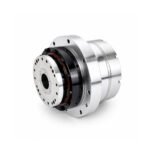 Joint Rotary Actuators Series HAMF
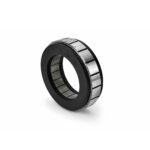 Frameless Torque Motor HBM
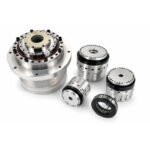 Rotary Actuators
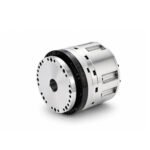 Joint Rotary Actuators Series HAG
 Rotary Actuators Series HPG
Introduction: Finding the Right Muscle for Your Machine
Every machine that moves relies on actuators to convert energy into physical work. In the realm of rotational movement, the rotary actuator is the essential component that provides the “twist” needed to turn a valve, rotate a robotic arm, or index a precision table.
However, with so many actuator types available today, engineers often struggle to choose the technology that best fits their specific project. Should you prioritize the raw power of hydraulics, the simplicity of pneumatics, or the digital precision of an electric actuator? This guide provides a side-by-side comparison of the most common rotary technologies to help you optimize your motion control system.
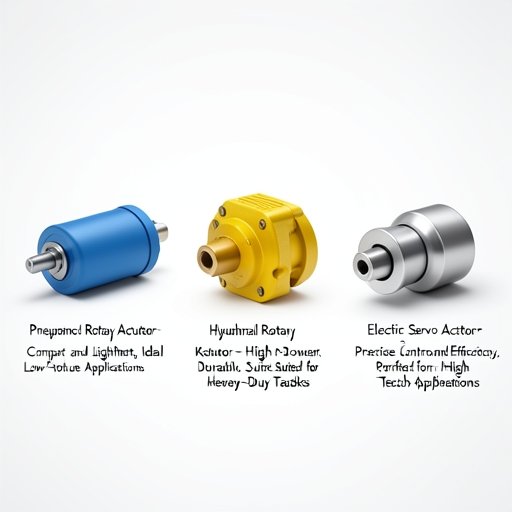
Pneumatic Rotary Actuators: Simple and Fast
Pneumatic actuators use compressed air to generate movement. They are the workhorses of general factory automation where simple, repetitive tasks are the norm.
How Rack-and-Pinion and Vane-Type Cylinders Work
Most pneumatic units fall into two categories: “Rack-and-Pinion” designs, which convert linear piston movement into rotation via gears, and “Vane-Type” actuators, where air directly pushes a paddle inside a circular chamber. Both are designed for speed and rapid cycling.
Advantages: Low Initial Cost and Explosion-Proof Nature
The primary draw of pneumatics is cost. These units are inexpensive to purchase and easy to install. Because they use air rather than electricity, they are inherently explosion-proof, making them ideal for oil and gas or chemical environments where sparks are a safety risk.
The Major Drawback: Lack of Precise Positioning Control
Air is compressible. This makes pneumatic actuators difficult to stop at precise mid-stroke positions. They are generally best suited for “bang-bang” motion—moving fully between two fixed stops (e.g., 0 to 90 degrees) without the need for high-accuracy positioning.
Hydraulic Rotary Actuators: Raw Power for Heavy Loads
When a task requires massive amounts of torque in a relatively small space, hydraulics are the traditional choice.
When to Use High-Pressure Fluid Systems
Hydraulic actuators use pressurized oil. Because fluids are virtually incompressible, they can transmit enormous force. You will find these on heavy construction machinery, large-scale industrial valves, and aerospace control surfaces where load capacity is the primary requirement.
Maintenance Challenges: Leaks and Environmental Concerns
The power of hydraulics comes with a high maintenance burden. Seals must be checked constantly to prevent fluid leaks, which can contaminate the environment and create safety hazards. Furthermore, they require complex support systems including pumps, reservoirs, and cooling units.
Electric Actuators: The Gold Standard for Precision Motion
As industry moves toward smart manufacturing, the electric actuator has become the dominant technology for high-performance applications.
Stepper vs. Servo-Driven Rotary Actuators
Electric units utilize an electric motor—either a stepper or a servo—coupled with a precision gearbox. Stepper versions are cost-effective but can lose sync under load. Servo-driven actuators, however, use high-resolution feedback to ensure every movement is perfectly accurate.
The Advantage of Integrated Encoders and Closed-Loop Control
Modern electric actuators are “smart.” With integrated absolute encoders, they provide real-time data to the controller, allowing for micron-level positioning, complex speed profiles, and varying torque limits. This “closed-loop” nature is what enables the high-speed precision of modern robotics.
Why Hollow Shaft Designs Are Dominating Modern Robotics
A significant evolution in electric design is the hollow shaft. By hollowing out the center of the actuator, designers can route cables and air lines through the joint itself. This eliminates the “cable-spaghetti” common in older machines and allows for continuous 360-degree rotation.
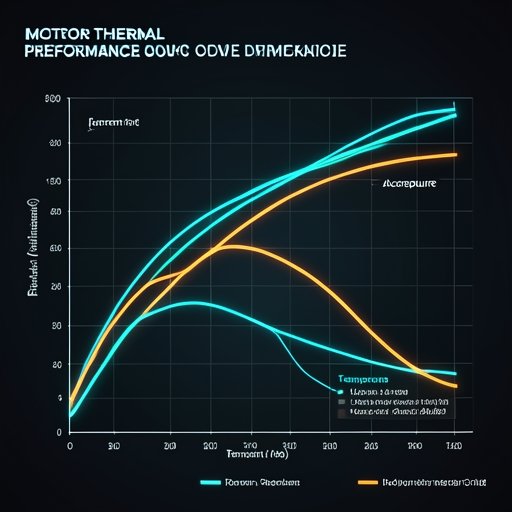
Comparative Analysis: Speed, Accuracy, and Efficiency
| Feature | Pneumatic | Hydraulic | Electric (Servo) |
| Positioning Accuracy | Low | Medium | High |
| Torque Capacity | Low to Medium | Very High | Medium to High |
| Energy Efficiency | Low (Air leaks) | Medium | High |
| Control Complexity | Simple | High | Advanced |
Analyzing the Total Cost of Ownership (TCO)
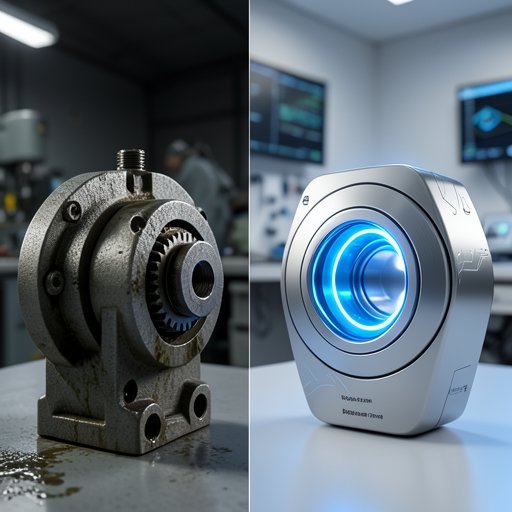
While pneumatic units are cheaper to buy, they are often more expensive to run due to the inefficiency of compressed air systems. Electric actuators have a higher initial price but offer a lower TCO because they consume energy only when moving and require virtually zero maintenance.
Energy Efficiency in the Era of Green Manufacturing
In modern “Green” factories, electric systems are preferred. They allow for precise power management and regenerative braking, significantly reducing the carbon footprint of the production line compared to air-heavy or oil-heavy alternatives.
Conclusion: The Shift Towards Intelligent Electric Motion
While pneumatic and hydraulic actuators still have their niches in simple or ultra-heavy tasks, the trend in Industry 4.0 is clear. Electric actuators provide the intelligence, data feedback, and precision required for the next generation of automation.
If your application demands high repeatability, flexible programming, and a clean, maintenance-free design, a high-performance electric rotary actuator is the superior investment. By selecting integrated servo-modules, you ensure your machine is not just moving, but moving with intelligence.
FAQ Section: Rotary Actuator Selection Basics
Q1: Is a rotary actuator better than a standard motor with a gearbox?
A dedicated rotary actuator (like an integrated module) is usually better because it is pre-engineered for precision. It combines the motor, gearbox, and bearings into a single, compact housing, ensuring better rigidity and less backlash than a “built-up” system of separate parts.
Q2: Can an electric actuator handle high-washdown environments?
Yes. High-quality electric actuators can be designed with IP65 or IP67 ratings, using specialized seals and finishes to withstand high-pressure water and chemical cleaning, common in food and beverage processing.
Q3: What is the most cost-effective solution for simple 90-degree rotations?
If positioning accuracy is not critical (e.g., opening a simple air flap), a pneumatic vane-type actuator is typically the most cost-effective solution. However, for any task involving variable angles or high-speed damping, an electric solution is often cheaper in the long run.