 Joint Rotary Actuators Series HAT
 Joint Rotary Actuators series HAS
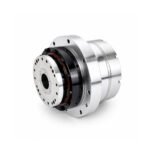 Joint Rotary Actuators Series HAMF
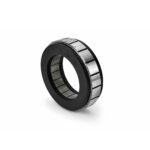 Frameless Torque Motor HBM
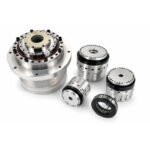 Rotary Actuators
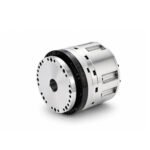 Joint Rotary Actuators Series HAG
 Rotary Actuators Series HPG
Introduction: The Shift Towards Flexible Automation
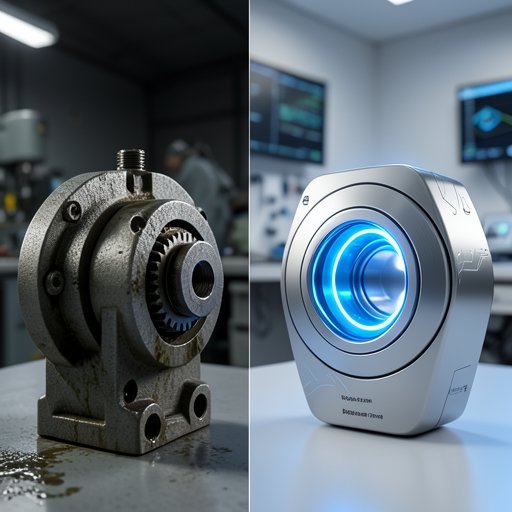
For decades, the standard method for rotating parts through an assembly or packaging machine has been the mechanical cam indexer. It is a robust piece of iron and steel that turns continuous rotary motion into intermittent stop-and-go steps. In the era of mass production, where a machine made the exact same product 24/7 for years, this rigid technology was perfect.
However, modern manufacturing is undergoing a massive shift towards flexible automation. Today’s factories demand “high-mix, low-volume” production. Machines must be able to change product recipes, alter indexing angles, and adjust speeds on the fly. In this dynamic environment, the rigid nature of legacy mechanical indexers has become a costly physical bottleneck.
This guide compares the traditional cam indexer with the modern hollow rotary actuator, explaining why upgrading your rotary indexing table to a servo-driven architecture is the key to remaining competitive in the Industry 4.0 landscape.
Understanding the Legacy Cam Indexer
To understand why the industry is moving on, we must understand the strengths and inherent flaws of the cam indexer.
Mechanical Reliability but Zero Flexibility
A cam indexer uses a continuously rotating input shaft driving a precision-machined, hardened steel cam. This cam has a specific groove cut into it that physically forces the output shaft to index (rotate) a set number of degrees and then dwell (stop) while the operation is performed. Because the motion profile is cut into solid steel, it is incredibly reliable and can handle high impact loads.
The Pain of Fixed Stations and Costly Changeovers
The greatest strength of the cam indexer is also its fatal flaw: it is completely fixed. If you buy a 4-station indexer (90-degree rotations), it will only ever be a 4-station indexer. If your next product requires 6 stations (60-degree rotations), you cannot reprogram the machine. You must physically tear down the machine, remove the heavy cam indexer, and buy a completely new unit. This makes machine changeovers incredibly expensive and time-consuming.
The Modern Standard: The Hollow Rotary Actuator
The solution to the rigid cam is the servo-driven hollow rotary actuator. This technology replaces the mechanical cam with digital intelligence.
Combining Servo Control with High-Rigidity Gearboxes
A hollow rotary actuator (like the HAT or HAMF series from Hobber Drive) consists of a high-resolution servo motor directly coupled to a high-rigidity, zero-backlash gear system (such as a strain wave or precision planetary gear). Instead of relying on a physical cam groove, the motion profile is entirely controlled by software in the servo drive. The high-rigidity gearbox ensures that the table remains perfectly stable during the “dwell” phase, mimicking the mechanical locking of a cam but doing so electronically.
Programmable Positioning for Infinite Stations
Because the movement is digitally controlled, the flexibility is infinite. Need to change from a 4-station process to an 8-station process? You simply change a single parameter in your PLC or motion controller software. The machine adapts instantly. You can even program variable index angles on the same table (e.g., move 90 degrees, then 45 degrees, then 225 degrees), a feat completely impossible for a traditional cam indexer.
Head-to-Head Comparison for Machine Builders
When designing a new rotary indexing table, engineers must weigh several critical factors beyond just flexibility.
Accuracy and Backlash Compensation over Time
Over millions of cycles, the steel groove inside a cam indexer will eventually wear down. As it wears, mechanical backlash increases, and the positioning accuracy degrades. The only fix is a costly mechanical rebuild.
A high-quality hollow rotary actuator utilizing zero-backlash strain wave gears maintains its accuracy for a significantly longer portion of its lifespan. Furthermore, because it is a closed-loop servo system, any minor deviations can be actively compensated for by the encoder and the drive, ensuring day-one accuracy years down the line.
Cable Management: The Hollow Bore Advantage
In modern automation, the tooling mounted on the rotary table requires power, sensor data, and compressed air. With a solid-shaft cam indexer, you must route these utilities around the outside of the table, leading to tangled wires and restricting rotation, or you must buy an expensive and fragile slip ring.
The hollow rotary actuator features a large, empty center bore. This allows engineers to route all cables and pneumatic lines cleanly through the center of the rotation axis. The cables twist gently rather than bending sharply, preventing wire fatigue and allowing for continuous 360-degree rotation.
Maintenance: Oil Changes vs. Lifetime Lubrication
Cam indexers sit in an oil bath. This oil must be drained, flushed, and replaced regularly to prevent catastrophic wear, a messy and time-consuming maintenance task. Most precision rotary actuators are factory-sealed with specialized, long-life synthetic grease. They require zero lubrication maintenance for the duration of their rated lifespan, significantly reducing the machine’s total cost of ownership.
The ROI of Upgrading to Servo-Driven Rotary Tables
Transitioning from mechanical cams to programmable actuators requires a shift in design philosophy, but the return on investment (ROI) is compelling for both OEMs and end-users.
Reducing Machine Setup Time and Downtime
For factory operators, the ability to switch product recipes instantly via an HMI touchscreen is invaluable. By eliminating the mechanical changeover time associated with cam indexers, factories can run smaller, more customized batches profitably, drastically reducing machine downtime.
Future-Proofing Your Automation System
When you build a machine with a hollow rotary actuator, you are building a machine that can adapt to products that haven’t even been invented yet. This future-proofing adds immense value to your equipment, making it a much more attractive investment for forward-thinking manufacturing facilities.
Conclusion: Moving Beyond Fixed Stops
The era of rigid, single-purpose manufacturing is ending. While the cam indexer will always have a place in ultra-high-speed, single-product machines, the broader market demands flexible automation.
By upgrading to a servo-driven hollow rotary actuator, machine builders eliminate costly mechanical changeovers, solve complex cable routing issues with the hollow bore, and provide their customers with the digital flexibility required for Industry 4.0. If you are ready to modernize your rotary indexing tables, upgrading your actuation hardware is the first and most critical step.
FAQ Section: Rotary Indexing Upgrade Questions
Q1: Can a hollow rotary actuator handle the same heavy axial loads as a cam indexer?
Yes. High-end rotary actuators use heavy-duty cross-roller bearings designed specifically to support massive axial loads and overturning moments. They can easily support large, heavy indexing dials and the associated tooling forces, matching or exceeding the load capacities of comparable cam indexers.
Q2: Is it difficult to program a servo-driven rotary indexing table?
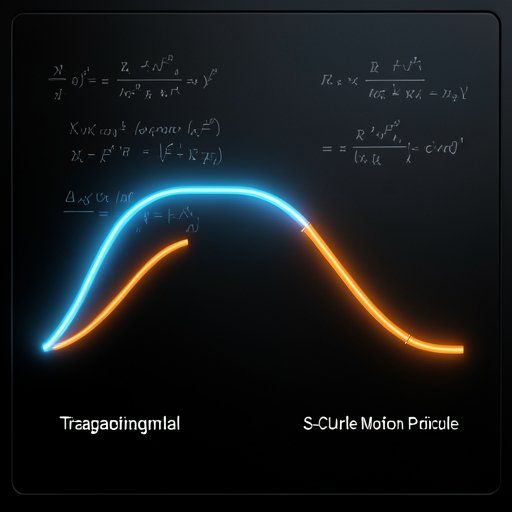
No. Modern servo drives and PLCs have built-in “indexing” or “electronic camming” functions. You simply input the number of stations, the desired acceleration/deceleration curves, and the target speed. The drive handles the complex motion profiles automatically.
Q3: Does the hollow shaft design compromise the torsional rigidity of the actuator?
Not when engineered correctly. By using a large-diameter rotor and optimizing the gear geometries, manufacturers like Hobber Drive achieve extremely high torsional rigidity even with a large central bore, ensuring the table does not deflect during high-speed indexing or heavy machining operations.