 Joint Rotary Actuators Series HAT
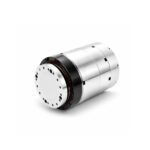 Joint Rotary Actuators series HAS
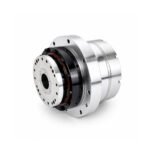 Joint Rotary Actuators Series HAMF
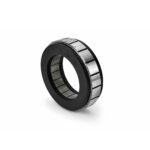 Frameless Torque Motor HBM
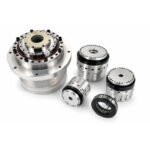 Rotary Actuators
 Joint Rotary Actuators Series HAG
 Rotary Actuators Series HPG
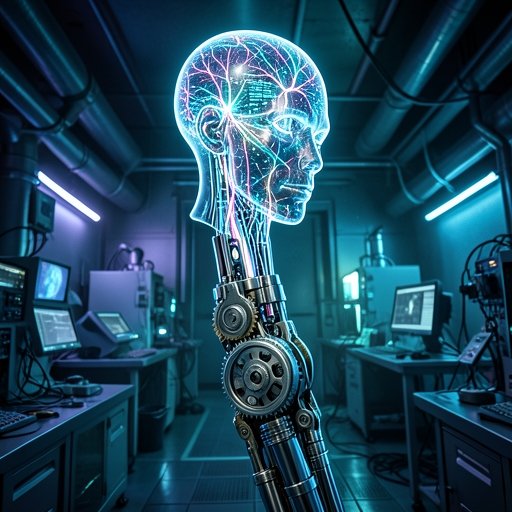
Introduction: When the Digital Brain Meets the Physical Muscle
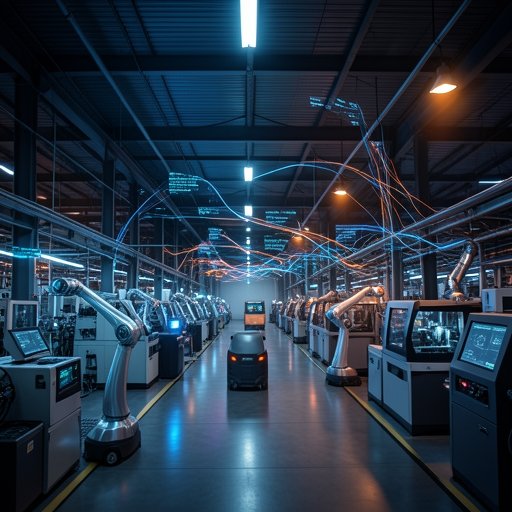
We are living through a profound transition in robotics. For decades, industrial and service robots operated on rigid, pre-programmed scripts. Today, driven by explosive breakthroughs in Artificial Intelligence, autonomous systems are learning to adapt, perceive, and react to unpredictable environments.
Yet, a fascinating engineering bottleneck remains. An AI can calculate a complex trajectory in a fraction of a millisecond, but if the physical machine cannot execute those commands with absolute fidelity, the intelligence is wasted. Artificial Intelligence provides the digital “brain,” but advanced motion control provides the physical “muscle.” This article explores the intersection of AI in robotics, examining why smart automation demands a new level of mechanical precision.
AI as the Brain, Motion Control as the Muscle
To appreciate modern intelligent robotics, we must look at how the digital architecture collaborates with the physical drivetrain.
How Machine Learning Generates Complex Trajectories in Milliseconds
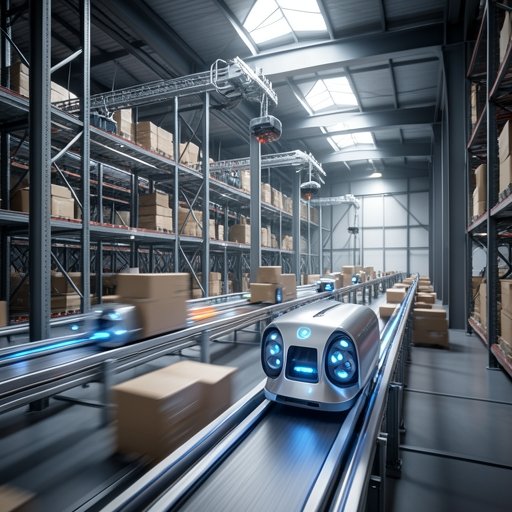
Traditional trajectory planning required extensive manual programming and rigid mathematical path models. Today, machine learning models—particularly in computer vision and reinforcement learning—allow robots to learn tasks dynamically. A robot can look at an unorganized bin of parts, use an AI model to determine the optimal grasping point, and generate a 3D motion path instantly.
The Latency Challenge: Translating Code into Physical Movement
While the AI can generate these paths instantly, translating lines of code into high-speed physical movement creates massive demands on the hardware. If the control loop suffers from latency, or if the underlying hardware exhibits mechanical compliance, the robot will overshoot or jitter. Real-time motion control acts as the crucial translator, taking abstract AI coordinates and enforcing strict velocity, acceleration, and jerk limits to ensure smooth physical execution.
The Rise of Self-Adaptive Smart Automation
The convergence of AI and motion control goes beyond simple command execution; it is changing how drives and actuators behave on the factory floor.
Real-Time Auto-Tuning Driven by Neural Networks
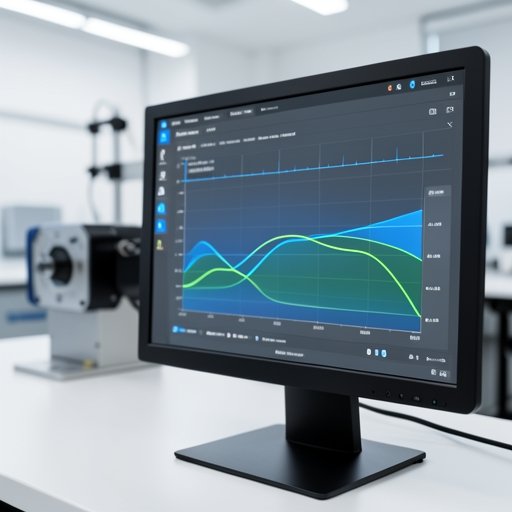
Traditional servo tuning requires an engineer to manually adjust PID gains based on a static load. In modern smart automation, drives equipped with machine learning capabilities can continuously monitor changes in payload, friction, and mechanical wear. By analyzing these variables in real-time, the drive can automatically adjust its tuning parameters, maintaining optimal performance even as the machine ages.
Predicting Mechanical Failures Before They Happen (Predictive Maintenance)
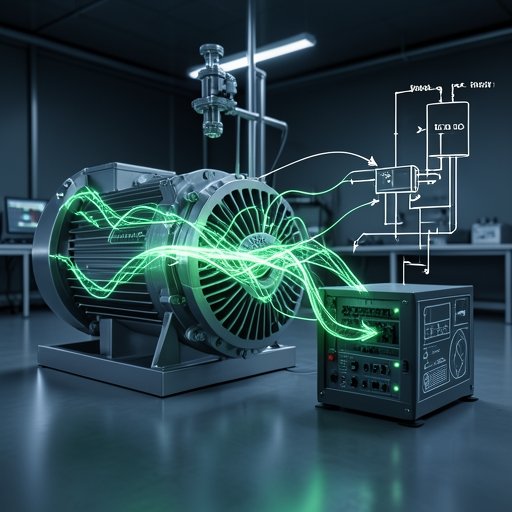
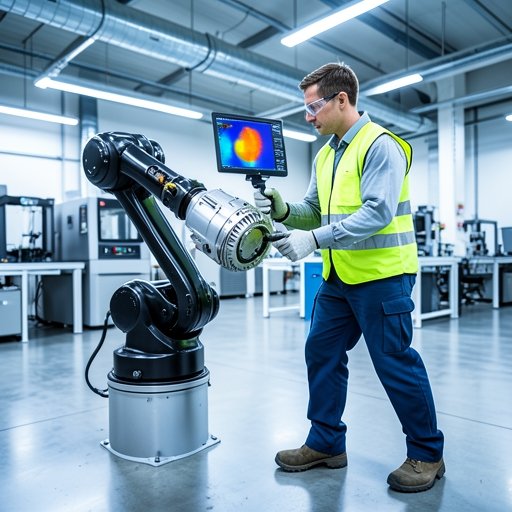
Because servo drives constantly process electrical current, voltage, and position data, they sit on a goldmine of operational metrics. By applying machine learning algorithms to this motor feedback, systems can now predict component degradation weeks before a physical breakdown occurs. This shifts maintenance from a reactive scramble to a predictable, data-driven schedule.
Why AI Demands Uncompromising Mechanical Precision
It is a mistake to assume that smarter software can compensate for sloppy hardware. In fact, AI often exposes mechanical weaknesses.
The Catastrophic Effect of Backlash on AI Path Planning
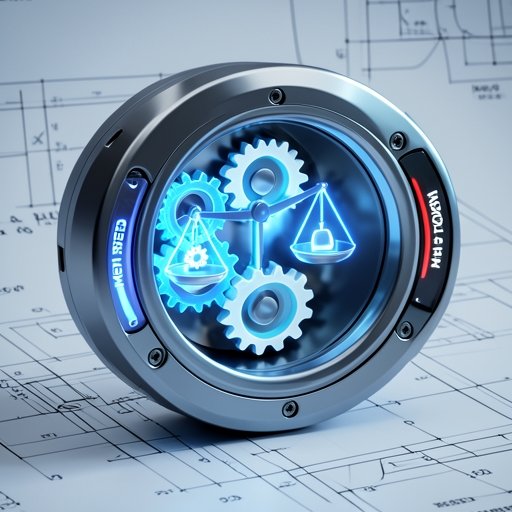
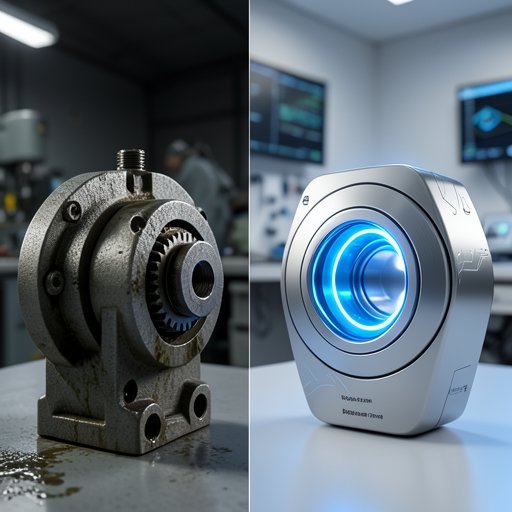
AI navigation and manipulation models rely on the assumption that the physical world matches the digital simulation. If your mechanical joints suffer from backlash or elasticity, the robot’s actual position will drift from its reported encoder position. This “state error” confuses reinforcement learning models, leading to dropped objects, misaligned assembly, and unpredictable errors. Achieving true autonomy requires zero-backlash mechanical hardware.
High-Bandwidth Actuators for Immediate Force Feedback
When an AI-driven robot interacts with a human or an unknown object, it needs immediate tactile feedback. High-bandwidth actuators equipped with high-resolution encoders and responsive current loops allow the robot to “feel” its environment. This immediate loop closure is vital for delicate tasks, such as electronic assembly or soft-tissue handling in medical robotics.
Edge Computing: Pushing Intelligence to the Robotic Joint
To reduce latency, the architecture of motion control is decentralizing.
Why Servo Drives are Becoming Powerful Edge Computers
Modern servo drives are evolving into powerful edge-computing devices. Instead of relying entirely on a distant central PLC to process complex trajectories, smart drives can execute localized motion planning algorithms directly at the axis level.
Decentralizing Control for Faster Reactive Speeds
By pushing intelligence down to the robotic joint module, the system reduces communication overhead. The local drive can react to sensor inputs or unexpected collisions within microseconds—a speed that is physically impossible if data has to travel back and forth to a central processor.
Conclusion: Hardware is the Limit of Artificial Intelligence
The digital world is virtually boundless, but the physical world is bound by friction, gravity, and inertia. As Artificial Intelligence continues to expand the cognitive capabilities of robots, the hardware that executes its commands must evolve in parallel.
The future of autonomous systems relies on a seamless partnership between intelligent software and robust, ultra-precise hardware. By embracing the intersection of AI and precision motion control, engineers can build machines that are not only smart enough to think for themselves, but precise enough to change the world.
FAQ Section: AI and Motion Systems
Q1: Will machine learning completely replace manual PID tuning?
Machine learning and auto-tuning algorithms have advanced significantly, handling roughly 90% of standard tuning scenarios automatically. However, for highly complex mechanical systems with severe resonance, non-linear friction, or massive inertia mismatches, human engineering expertise and manual tweaking remain essential to achieve absolute stability.
Q2: How does the processing delay of computer vision affect motion control stability?
Processing delay (latency) introduces a time lag between when a vision system “sees” an object and when the robot reacts. If this delay is too long while the robot is moving at high speeds, the target will have moved. High-speed automation relies on fast frame rates, edge processing, and high-bandwidth servo loops to minimize this lag.
Q3: Do I need specialized motors to implement AI in my robotics project?
While standard motors can be controlled by AI systems, high-performance applications (such as advanced humanoids or delicate cobots) benefit greatly from specialized hardware. Low-cogging motors, zero-backlash actuators, and high-resolution feedback devices ensure that the physical execution matches the perfection of your AI algorithms.