 Joint Rotary Actuators Series HAT
 Joint Rotary Actuators series HAS
 Joint Rotary Actuators Series HAMF
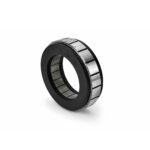 Frameless Torque Motor HBM
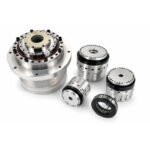 Rotary Actuators
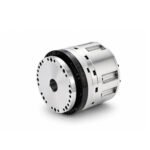 Joint Rotary Actuators Series HAG
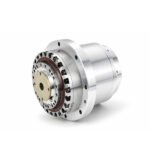 Rotary Actuators Series HPG
Introduction: Building the Future, Layer by Layer
The evolution of additive manufacturing (commonly known as 3D printing) has been nothing short of revolutionary. What began as a tool for rapid prototyping has rapidly matured into a viable method for producing end-use industrial parts in aerospace, automotive, and medical fields. However, as manufacturers push for higher resolutions, stronger materials, and faster build times, a new mechanical bottleneck has emerged. Material science alone can no longer solve surface defects.
The ultimate quality, structural integrity, and dimensional accuracy of a printed part are now dictated by the machine’s mechanical execution. In this deep dive, we explore how advanced motion control systems are shaping the future of industrial 3D printing, and why upgrading to precision actuation hardware is mandatory for next-generation additive systems.
The Quest for Perfect Surface Finish: Eliminating Ringing and Banding
In extrusion-based 3D printing (like FDM/FFF) or direct energy deposition (DED), the most common complaints are surface artifacts. These visual defects are direct manifestations of motion control failures.
How Mechanical Backlash Ruins Extrusion Continuity
Z-banding (horizontal lines on the print) and “ringing” (echoes around sharp corners) are almost always caused by mechanical compliance and backlash. When a print head changes direction, traditional geared belts or low-quality lead screws exhibit microscopic play. This backlash creates a brief hesitation in movement while the extruder continues to pump material, resulting in uneven layer deposition. To achieve a flawless surface finish, the mechanical transmission must have absolute zero backlash.
Achieving Ultra-Smooth Motion with Direct Drive Motors
To eliminate these artifacts, industrial printer manufacturers are migrating toward direct drive technology. By utilizing a frameless torque motor directly coupled to the linear or rotary stage, engineers eliminate the belts, pulleys, and gearboxes that introduce elasticity. This direct connection ensures ultra-smooth motion, allowing the print head to navigate sharp corners and complex geometries without inducing structural vibrations into the frame.
Precision Dynamics in Powder Bed Fusion (SLM/SLS)
Powder Bed Fusion technologies, such as Selective Laser Melting (SLM) and Selective Laser Sintering (SLS), present an entirely different set of dynamic challenges.
High-Speed Scanning and Powder Recoating Stages
In an SLM machine, a laser melts metal powder layer by layer. After each layer, a mechanical recoater blade sweeps a fresh, micron-thin layer of powder across the bed. The motion control system driving this recoater must be exceptionally smooth. Any vibration or stuttering during the sweeping process will cause uneven powder distribution, leading to weak spots, porosity, or complete failure of the metal part.
Why Torsional Rigidity Matters for Laser Alignment
While galvanometer mirrors steer the laser beam, the Z-axis build plate must drop with sub-micron precision after every layer. The actuators supporting this heavy build plate must possess extreme torsional rigidity. If the actuators deflect under the weight of the growing metal part and the powder bed, the focal point of the laser will shift, ruining the dimensional accuracy of the entire build.
The Rise of Multi-Axis 3D Printing Systems
The most exciting frontier in additive manufacturing is the departure from traditional, flat-layer printing.
Moving Beyond Flat Layers: 5-Axis and Robotic DED Systems
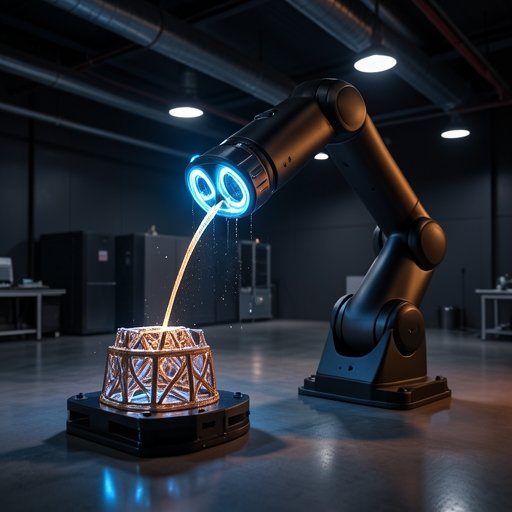
Traditional 3-axis printers require extensive support structures for overhanging features, wasting material and post-processing time. Modern industrial systems utilize 5-axis platforms or 6-axis robotic arms. This multi-axis capability allows the print head to orient itself perpendicular to the surface being printed, eliminating the need for supports and dramatically increasing the mechanical strength of the part by aligning material layers with load-bearing stress paths.
Integrating Robotic Joint Modules for True Multi-Axis Freedom
Building a highly accurate multi-axis 3D printer requires robotic joint modules that offer both high torque and absolute precision. Because these joints must carry heavy extrusion heads or welding torches, they cannot suffer from “droop” or backlash. Integrated robotic joints combining harmonic reducers and high-resolution absolute encoders provide the stiffness and repeatability required for these complex toolpaths.
Continuous Rotation: The Advantage of Hollow Rotary Actuators
In multi-axis rotary tables or custom robotic print beds, cables for heating elements, sensors, and water cooling must be managed. A hollow rotary actuator provides a generous central bore, allowing all utilities to be routed safely through the axis of rotation. This prevents cable tangling during continuous, infinite rotation, which is often required for printing cylindrical or spiral components.
Operating in Hostile Environments: Metal Powder and Heat
Industrial 3D printers operate in environments that are exceptionally hostile to delicate electronic and mechanical components.
Protecting Actuators from Abrasive Metal Powders (IP Ratings)
In metal 3D printing, the titanium, aluminum, or steel powders used are highly abrasive and often conductive. If this microscopic dust penetrates a motor bearing or an optical encoder, it will cause catastrophic failure. Actuators used in these chambers must feature stringent IP65 or IP67 ratings. Fully sealed housings and specialized fluororubber seals are necessary to guarantee long-term system reliability.
Thermal Management During High-Temperature Sintering
Build chambers in high-performance polymer and metal printers are heavily heated to prevent part warping. This high ambient temperature reduces the cooling capacity of the motors driving the axes. Precision motion components must be designed with high-temperature insulation (Class F or H) and must be actively monitored by the servo drive to prevent thermal expansion from degrading positioning accuracy.
Conclusion: The Mechanical Foundation of Next-Gen 3D Printers
The resolution of a printed part is fundamentally limited by the resolution of the motion system that created it. You cannot software-patch your way out of mechanical backlash, poor rigidity, or thermal drift.
As additive manufacturing transitions into a primary production technology, the underlying hardware must meet the standards of traditional CNC machining. By integrating zero-backlash hollow rotary actuators, highly rigid robotic joint modules, and high-bandwidth direct drive motors, equipment manufacturers can build the mechanical foundation necessary to unlock the true potential of next-generation 3D printing. At Hobber Drive, we provide the elite precision actuators that make this possible. If you are designing a next-gen 3D printer, consult our engineering team for a comprehensive motion profile evaluation.
FAQ Section: Motion Control for 3D Printers
Q1: How does motor micro-stepping compare to a true closed-loop servo system in 3D printing?
While micro-stepping in stepper motors divides a step into smaller increments for smoother motion, it operates open-loop. If the print head encounters resistance, it loses position. A closed-loop servo system uses encoder feedback to actively correct positioning errors in real-time, guaranteeing exact layer alignment and preventing failed prints due to missed steps.
Q2: Can hollow rotary actuators be used for the build plate in continuous rotation printing?
Yes. In continuous rotational printing (such as printing large cylindrical aerospace tanks), the build plate must rotate endlessly. A hollow rotary actuator allows the heavy power cables for the heated bed to pass directly through the rotation axis, safely enabling infinite 360-degree movement without cable twisting.
Q3: How do thermal fluctuations affect the positioning accuracy of a multi-axis print head?
Metals expand when heated. In a hot 3D printing chamber, the mechanical linkages and motor housings will undergo thermal growth, slightly shifting the tool center point (TCP). High-end motion control systems combat this by using materials with low coefficients of thermal expansion and utilizing absolute linear or rotary encoders that directly measure the final output position, bypassing thermal errors in the drivetrain.