 Joint Rotary Actuators Series HAT
 Joint Rotary Actuators series HAS
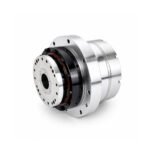 Joint Rotary Actuators Series HAMF
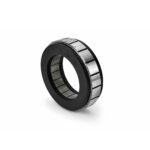 Frameless Torque Motor HBM
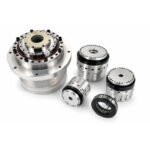 Rotary Actuators
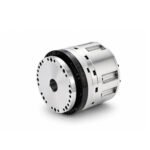 Joint Rotary Actuators Series HAG
 Rotary Actuators Series HPG
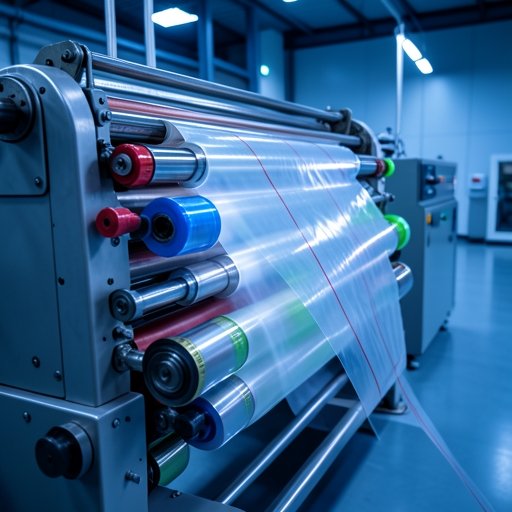
Introduction: The Symphony of High-Speed Web Handling
Modern industrial packaging and printing lines operate at breathtaking velocities. Miles of paper, foil, or plastic film rush through a printing machine every hour, passing through numerous stations—from unwinding and multi-color printing to die-cutting and final labeling.
In these continuous “web-handling” environments, the greatest engineering challenge is not just making things move fast, but making multiple moving parts act as a single, unified organism. A microscopic timing error between two rollers can stretch the material, misalign color layers, or misplace a label, resulting in thousands of dollars of waste. This article explores how modern motion control achieves flawless high-speed synchronization to revolutionize industrial automation.
The Mechanics of Misalignment: Why Speed Breaks Accuracy
To understand why synchronization is difficult, we must look at the physical limitations of traditional mechanical designs.
The Limitations of Mechanical Shafts and Physical Cams
Historically, large printing presses used a single massive mechanical driveshaft running the length of the machine, with physical gearboxes and steel cams branching off to drive each individual printing cylinder. While this ensured that all stations were mechanically linked, it had severe drawbacks. The sheer mass of the driveshaft created massive inertia, limiting maximum speeds. Furthermore, mechanical backlash, gear wear, and thermal expansion over long shafts inevitably introduced phase lag, destroying fine registration accuracy.
Material Stretch and Tension Fluctuations at High Speeds
Unlike rigid steel parts, web materials like plastic film are elastic. As they accelerate, decelerate, or pass through drying ovens, they stretch. If the downstream roller spins even 0.1% faster or slower than the upstream roller, the material will either bunch up or stretch past its elastic limit, causing print distortion or tearing. Maintaining constant tension requires dynamic, instantaneous speed adjustments across every axis.
The Digital Solution: Electronic Camming and Virtual Masters
The modern answer to mechanical rigidity is software-defined flexibility, led by electronic camming.
Replacing Steel Cams with Software-Defined Motion Profiles
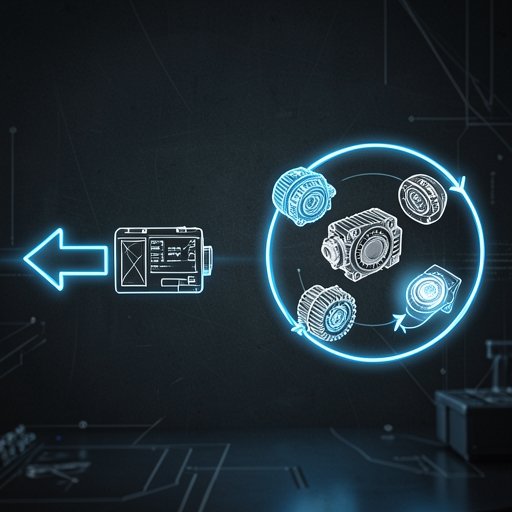
Instead of cutting a physical steel cam to dictate a roller’s movement, modern systems use an “Electronic Cam.” The physical driveshaft is replaced by a “Virtual Master”—a pure software clock running inside the motion controller. Every physical axis (the slave axes) electronically locks onto this virtual master, executing complex speed profiles and position ratios entirely through code.
How Virtual Master Axes Eliminate Phase Accumulation Errors
Because electronic camming relies on digital communication rather than physical gears, there is zero cumulative mechanical wear. If a recipe changes or a different label size is required, the operator doesn’t need to swap out heavy metal cams; they simply load a new software profile. This allows a printing machine to adapt to multi-product runs in seconds rather than hours.
The Hardware Behind the Sync: Drives, Buses, and Actuators
Software profiles are only as good as the hardware executing them. Achieving microsecond-level synchronization demands a robust hardware ecosystem.
Sub-Millisecond Cycle Times via Real-Time Industrial Ethernet
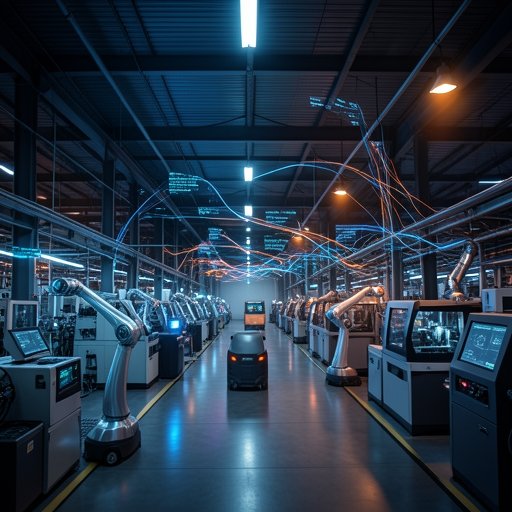
To coordinate five, ten, or twenty axes simultaneously, standard communication networks are far too slow. Industrial Ethernet protocols, such as EtherCAT, provide the necessary bandwidth. With cycle times under one millisecond, commands are broadcasted to all drives almost simultaneously, ensuring that every axis knows its precise target coordinate at any given microsecond.
Eliminating Phase Lag with High-Bandwidth Servo Drives
Even with perfect network commands, a slow drive will introduce “phase lag”—a delay between receiving the command and moving the motor. High-bandwidth servo drives with fast current and velocity loops are essential. They respond instantly to master commands, ensuring that slave rollers track the virtual master without lagging behind during rapid accelerations.
Application Focus: Precision Registration in Rotary Labelers
Nowhere is high-speed synchronization more critical than in rotary labeling machines applied to beverage packaging.
Aligning Labels to Moving Products on Continuous Conveyors
In a rotary labeling station, bottles move continuously along a high-speed conveyor while a dispensing starwheel applies pre-cut labels. The label-dispensing axis must match both the linear speed of the conveyor and the exact rotational angle of the bottle wrapper.
Maximizing Throughput Without Sacrificing Placement Tolerance
Using high-performance servo actuators for the dispensing head allows the machine to adjust its phase dynamically on the fly. If a bottle is slightly out of position on the conveyor, the system reads an optical sensor, calculates the positional error in real time, and micro-adjusts the phase of the labeling axis instantly, ensuring the label lands perfectly straight every single time, even at outputs exceeding 600 bottles per minute.
Conclusion: Perfect Harmony in Motion
The transition from mechanical shafts to electronic synchronization represents a massive leap forward for the packaging and printing industries. Millisecond-level coordination turns chaotic, high-speed material handling into a harmonious, high-yield operation.
By replacing physical cams with virtual master profiles and pairing them with high-bandwidth drives and rigid actuators, equipment builders can deliver machines that run faster, adjust quicker, and waste less material. Precision synchronization is the ultimate competitive advantage in modern manufacturing.
FAQ Section: Multi-Axis Synchronization Engineering
Q1: What is the main advantage of electronic camming over physical mechanical cams in a printing machine?
Electronic camming offers infinite flexibility. Changing a product size or print repeat length requires a simple software parameter update rather than a costly physical teardown and replacement of steel cams. It also eliminates mechanical backlash and wear, resulting in superior long-term registration accuracy.
Q2: How does EtherCAT improve multi-axis synchronization compared to traditional pulse/direction signals?
Traditional pulse/direction signals struggle with cabling complexity and cumulative timing jitter as the number of axes grows. EtherCAT uses a high-speed ring or line topology where a single telegram passes through all drives, updating every axis’s position command simultaneously within fractions of a millisecond.
Q3: How do you compensate for material stretching when synchronizing multiple web-handling rollers?
Engineers use closed-loop tension sensors (load cells) placed between rollers. The control system feeds this tension data back into the motion controller, which dynamically makes microscopic adjustments to the speed (trimming) of the upstream or downstream servo axes to keep the web tension perfectly constant.