 Joint Rotary Actuators Series HAT
 Joint Rotary Actuators series HAS
 Joint Rotary Actuators Series HAMF
 Frameless Torque Motor HBM
 Rotary Actuators
 Joint Rotary Actuators Series HAG
 Rotary Actuators Series HPG

Introduction: The Shift Toward Agile Machine Architecture
The pressure of Industry 4.0 has changed the rules of manufacturing. Being “faster and smarter” is no longer enough; original equipment manufacturers (OEMs) and integrators must now be “agile.” As consumer demands shift rapidly, the machines that build our products must be capable of quick reconfiguration and rapid deployment.
This necessity has driven a fundamental shift in machine architecture: the move toward modular design. By transitioning from building machines out of thousands of individual parts to using pre-validated functional blocks, the modern automation system has become more resilient and efficient. At the heart of this revolution is the robotic joint module. Let’s explore how this modular approach is redefining the industry.
What Does Modular Design Mean for Motion Control?
In traditional motion control, an engineer spends weeks sourcing a motor from one vendor, a gearbox from another, and an encoder from a third. They then design custom brackets and couplings to hold them all together.
From Discrete Components to Plug-and-Play Modules
Modular design replaces this fragmented process with integrated solutions. Instead of managing a complex bill of materials, engineers use “Plug-and-Play” modules. These units arrive pre-assembled, pre-tested, and ready to communicate with the central controller.
The Anatomy of an Integrated Robotic Joint
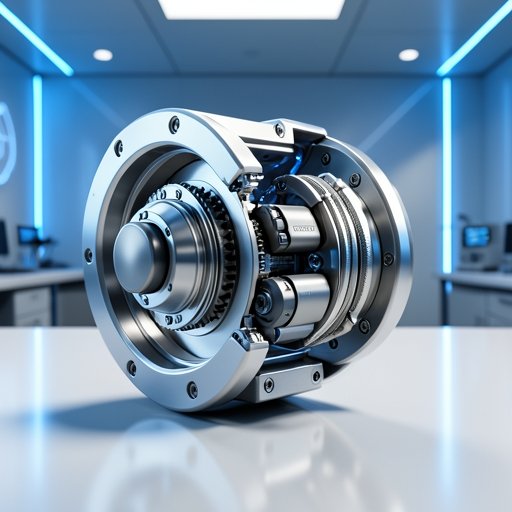
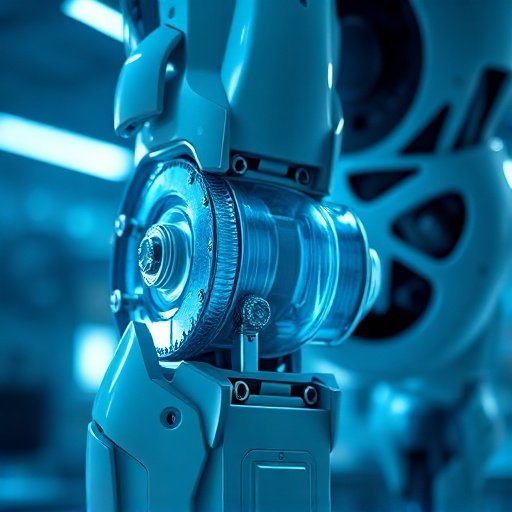
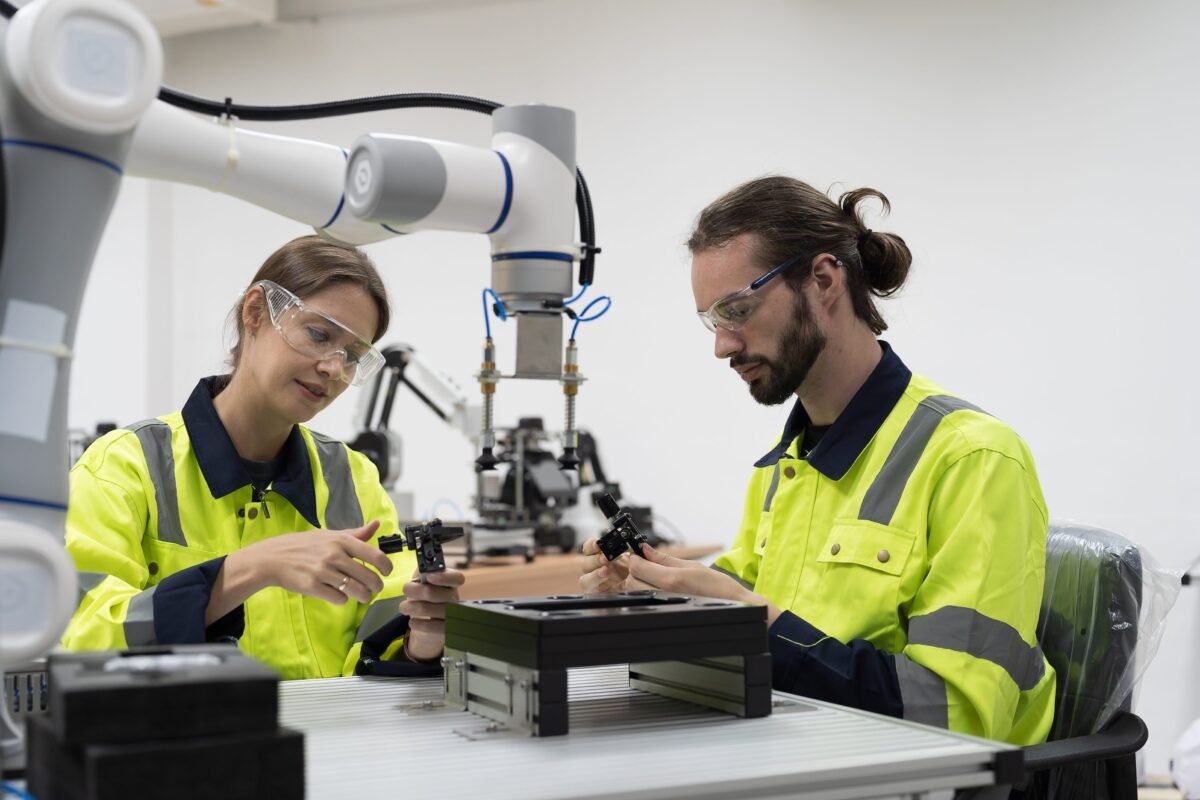
An integrated robotic joint module encapsulates the motor, high-precision reducer, brake, and dual encoders into a single mechanical housing. This modular block handles the “heavy lifting” of precision engineering, allowing the machine designer to focus on the high-level application logic.
Accelerating R&D Cycles and Time-to-Market
In a global economy, the first company to bring a solution to market often wins. Modular design is the ultimate tool for speed.
Eliminating Component Sourcing and Compatibility Testing
When you use integrated modules, you eliminate the risk of component mismatch. You no longer need to worry if the motor’s shaft fits the gearbox’s input or if the encoder signal is compatible with the drive. This significantly reduces the time spent in the sourcing and technical validation phases.
Rapid Prototyping: From Concept to Functional Machine in Weeks
With modular building blocks, the journey from a CAD concept to a working prototype is shortened by months. Robot manufacturers can assemble a 6-axis arm using standardized joint modules in a matter of days, allowing for rapid iteration and faster software development.
Significant Cost Reduction Across the Product Lifecycle
While the initial cost of a modular component may seem higher than a pile of raw parts, the total cost reduction for the project is substantial.
Lowering Engineering Labor and Assembly Costs
The “hidden” costs of automation are often found in labor. Designing custom mounts, aligning couplings, and troubleshooting complex wiring harnesses requires hundreds of highly-paid engineering hours. Modular hardware slashes assembly time and reduces the engineering overhead required for every machine built.
Inventory Management: Reducing the Complexity of Spare Parts
For the end-user, modularity simplifies the supply chain. Instead of stocking dozens of different bearings, gears, and motors, they only need to stock a few spare joint modules. This reduces inventory holding costs and simplifies the procurement process.
Reliability and Maintenance: The Modular Advantage
The ultimate test of an automation system is its performance on the factory floor over five or ten years.
Predictable Performance via Pre-Validated Hardware
Integrated modules are factory-tested as a complete system. This means the thermal performance, rigidity, and precision are known and guaranteed before the unit even reaches the machine. This predictability leads to a more robust final product with fewer “teething issues” during commissioning.
Minimal Downtime: The “Swap-and-Run” Maintenance Strategy
When a traditional gearbox fails, the machine might be down for days as it is disassembled. In a modular system, a technician can simply swap the entire joint module for a new one in minutes. This “Swap-and-Run” strategy minimizes downtime, ensuring that the production line stays active and profitable.
Conclusion: Building the Future, Block by Block
Modular hardware is no longer a luxury; it is the key to managing the rising complexity of modern automation. By embracing a modular design philosophy, companies can build machines that are not only more capable but also easier to design, cheaper to build, and simpler to maintain.
At Hobber Drive, we are committed to providing the high-precision building blocks—our robotic joint module series—that empower your innovation. By handling the mechanical complexity for you, we allow you to build the future, one block at a time.
FAQ Section: Modular Automation Strategy
Q1: Does modular design limit my ability to customize my robot?
Not at all. Modularity provides the internal structure, but the external configuration is entirely up to you. You can combine different sizes of modules to create a custom reach, payload, and geometry tailored to your specific application.
Q2: Are integrated modules as durable as custom-built drivetrains?
In many cases, they are more durable. Because the motor, gear, and sensors are co-designed and sealed in a single environment, they are better protected from dust, moisture, and misalignment than separate components bolted together.
Q3: How do I calculate the ROI of switching to modular hardware?
To see the true cost reduction, you must look beyond the purchase price. Factor in the reduction in design hours, the saved assembly labor, the faster time-to-market, and the significant reduction in long-term maintenance costs for your customer. Usually, the ROI is evident within the first production run.