 Joint Rotary Actuators Series HAT
 Joint Rotary Actuators series HAS
 Joint Rotary Actuators Series HAMF
 Frameless Torque Motor HBM
 Rotary Actuators
 Joint Rotary Actuators Series HAG
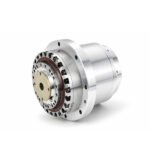 Rotary Actuators Series HPG
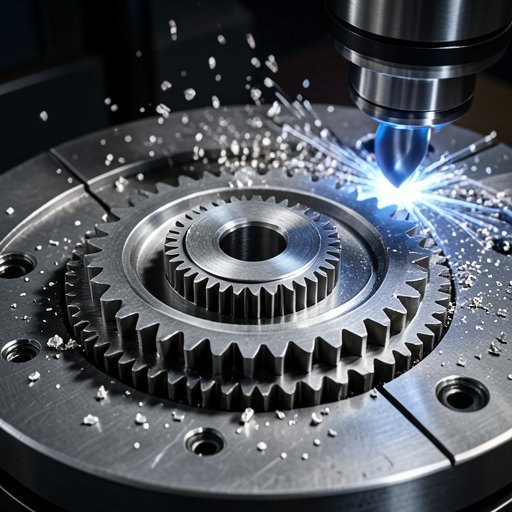
Introduction: The Frontline of Heavy-Duty Metal Cutting
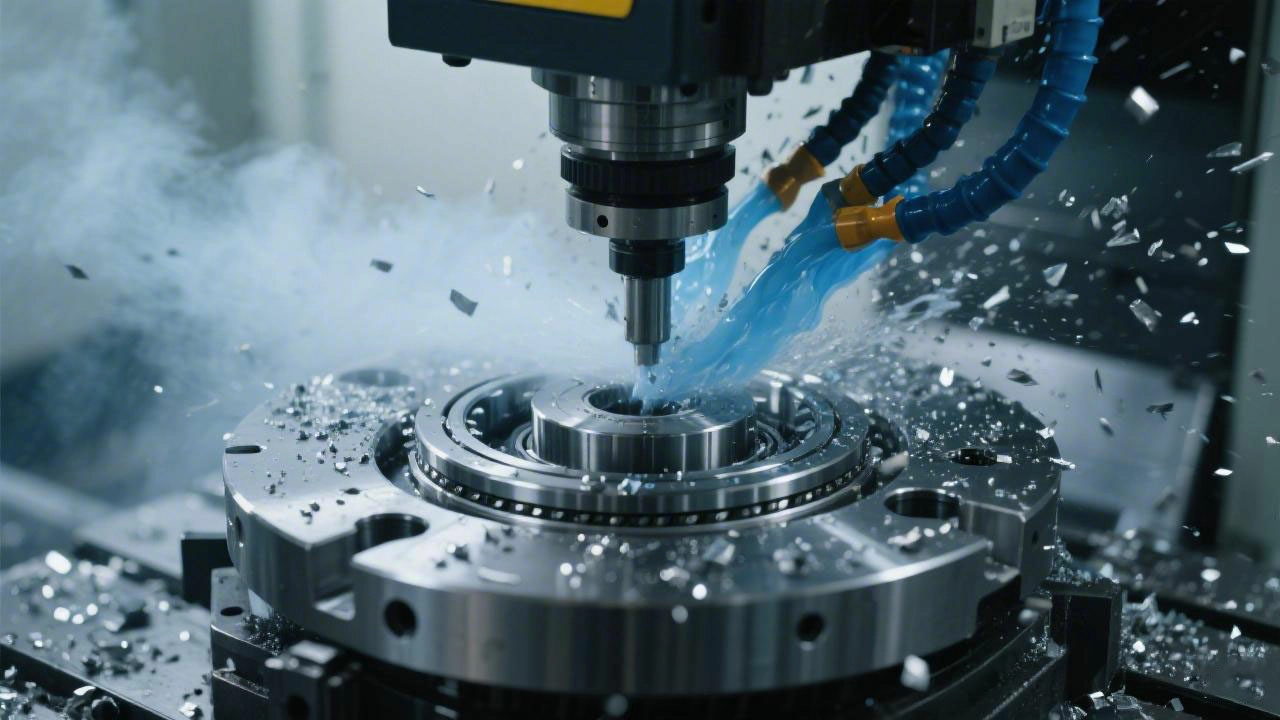
The physical demands placed on a modern machine tool during metal removal are brutal. As a solid carbide endmill bites into a block of titanium or aerospace-grade steel, it generates massive, fluctuating forces. While the massive cast-iron frame of the machine is designed to absorb these forces, the moving parts—specifically the rotary axes (A, B, and C)—are often the weakest mechanical link.
If a rotary table or a tilting milling head lacks the structural integrity to resist these cutting forces, the entire machining process breaks down. To combat this, elite machine builders turn to a specific transmission technology. This guide uncovers how a high-precision planetary gearbox provides the ultimate mechanical foundation for heavy-duty CNC machining.
The Dynamics of Heavy-Duty CNC Machining
To understand why the gearbox matters, we must first look at the violent dynamics of cutting metal.
Dealing with Interrupted Cuts and Shock Loads
Milling is not a smooth, continuous process. As the individual flutes of a cutting tool enter and exit the material, they create a series of rapid, violent impacts known as “interrupted cuts.” This constant hammering sends shockwaves directly through the spindle and down into the rotary axis holding the part. The motion system must be able to absorb these repetitive shock loads without allowing the workpiece to shift.
Tool Chatter: The Enemy of Surface Finish and Tool Life
If the rotary axis yields even slightly under these forces, it creates a microscopic springing effect. The tool bounces against the workpiece, causing a harmonic vibration known as “tool chatter.” Chatter leaves ugly, rippled marks on the machined surface, destroys tight tolerances, and shatters expensive cutting tools. Eradicating chatter requires maximizing the mechanical stiffness of the system.
The Anatomy of a High Rigidity Planetary Gearbox
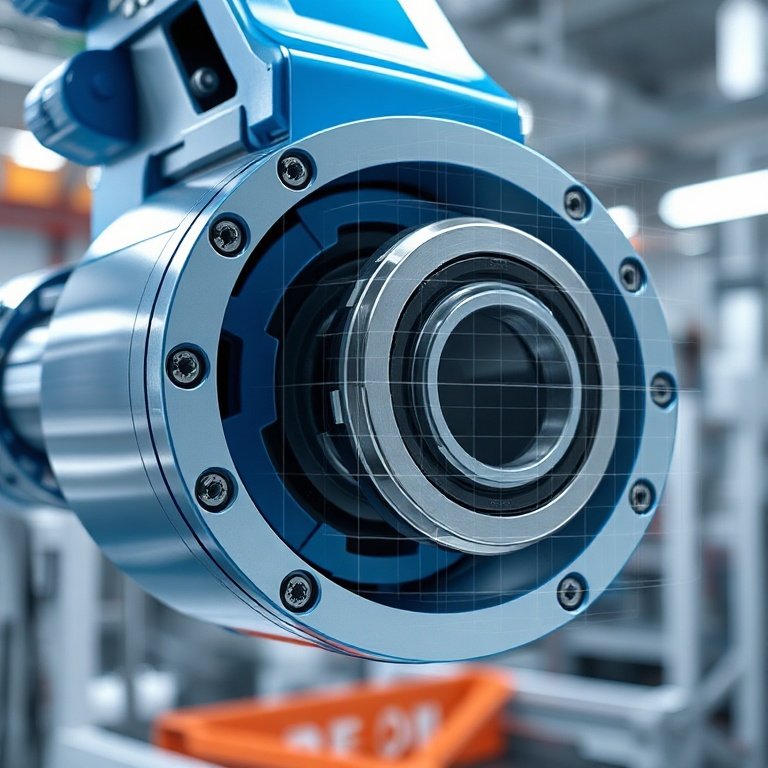
The solution to tool chatter is stiffness, and stiffness is where the planetary gearbox reigns supreme. Its internal geometry is perfectly suited for high-stress industrial environments.
Load Sharing Across Multiple Planet Gears
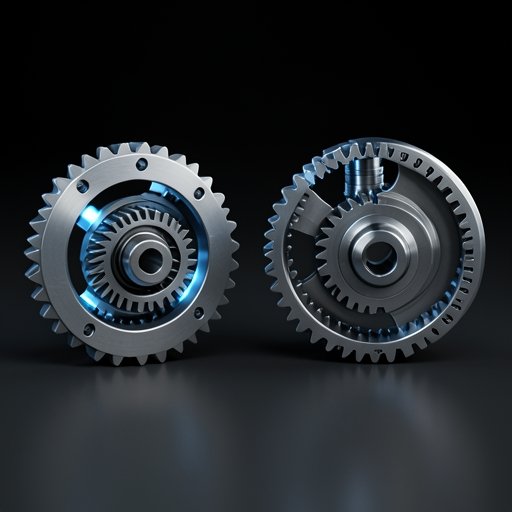
In a standard spur gear system, all the cutting force is concentrated on a single gear tooth at a time. A planetary system distributes this force. A central “sun” gear drives multiple “planet” gears (usually three or four) simultaneously, which in turn drive an outer ring gear. Because the extreme torque of the cutting operation is shared across multiple gear meshes at the same time, the stress on any individual tooth is drastically reduced.
Achieving Exceptional Torsional Stiffness (Nm/arc-min)
This load-sharing geometry creates a transmission that is exceptionally stiff. Torsional stiffness is measured in Newton-meters per arc-minute (Nm/arc-min)—essentially, how much twisting force is required to deflect the gearbox by a fraction of a degree. A precision planetary gearbox boasts incredibly high rigidity, meaning it acts like a solid block of steel under heavy loads, refusing to twist or yield when the cutting tool engages the metal.
Enhancing Machine Tool Performance on the Factory Floor
Translating this mechanical rigidity into real-world manufacturing benefits completely changes the economics of a CNC shop.
Faster Feed Rates Without Compromising Accuracy
When an operator knows the machine is prone to chatter, their only recourse is to slow down the feed rate and take shallower cuts. This destroys productivity. With the high rigidity of a planetary-driven rotary table, operators can push the cutting tools to their maximum recommended speeds and feeds. The gearbox holds the part perfectly still, allowing for aggressive material removal rates while maintaining sub-micron surface finishes.
Surviving Emergency Stops (E-Stops) and Accidental Crashes
In a busy machine shop, accidents happen. Power failures trigger violent emergency stops, or a programming error causes a tool crash. These events send catastrophic torque spikes through the machine. Because a planetary gearbox distributes force across multiple gears and utilizes heavy-duty bearings, it can typically withstand shock loads up to 300% of its nominal torque rating without suffering catastrophic internal damage.
The Hobber Drive HPG Series Advantage
Building a high-performance rotary axis requires more than just buying a gearset; it requires seamless integration.
Integrating Planetary Power with High-Precision Servo Control
Hobber Drive’s HPG series represents the pinnacle of this integration. We combine ultra-stiff planetary gearing with high-resolution servo motor technology. This means the machine tool doesn’t just resist cutting forces—it can also execute complex, simultaneous 5-axis interpolation with absolute precision, thanks to optimized backlash control and dynamic servo tuning.
Compact Designs for Multi-Axis Milling Heads and Rotary Tables
Space is always limited inside the machining envelope. The inline, coaxial design of a planetary gearbox naturally lends itself to a compact cylindrical footprint. This allows machine builders to design sleeker trunnion tables and more agile articulating milling heads, minimizing the risk of collision with the workpiece while maximizing the available machining volume.
Conclusion: Building a Rock-Solid Machining Foundation
A machine tool is only as capable as its stiffest joint. You can invest in the best spindles, the sharpest carbide tooling, and the most advanced CAM software, but if your rotary axis flexes under pressure, you will never achieve optimal results.
Investing in the high rigidity of a precision planetary gearbox pays off every single day. It guarantees higher metal removal rates, extended tool life, and the confidence to run “lights-out” manufacturing without fear of chatter-induced scrapped parts. For heavy-duty CNC machining, planetary power is the ultimate foundation for success.
FAQ Section: Planetary Gearing in CNC Applications
Q1: What is the typical backlash of a precision planetary gearbox?
High-end precision planetary gearboxes used in CNC machinery are manufactured with extremely tight tolerances, achieving backlash ratings of less than 1 to 3 arc-minutes. While not “zero backlash” like a strain wave gear, this is more than sufficient for maintaining extreme accuracy during heavy milling operations.
Q2: Can planetary gears be used for continuous high-speed spindle rotation?
Yes. Because planetary gears rely on pure rolling motion and can be efficiently lubricated, they handle continuous high-speed rotation and heat dissipation much better than many other reduction technologies. This makes them ideal for mill-turn centers where the C-axis must act as both a positioning table and a high-speed lathe spindle.
Q3: How do planetary gears compare to strain wave gears (harmonic drives) for heavy milling?
Strain wave gears offer absolute zero backlash and are incredibly compact, making them perfect for robotic joints and light-duty positioning. However, for heavy milling where resisting massive cutting forces (chatter) is the primary concern, planetary gearboxes are superior due to their significantly higher torsional stiffness and shock load capacity.