 Joint Rotary Actuators Series HAT
 Joint Rotary Actuators series HAS
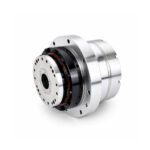 Joint Rotary Actuators Series HAMF
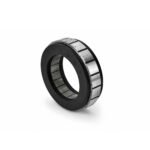 Frameless Torque Motor HBM
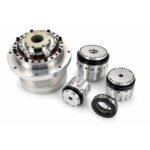 Rotary Actuators
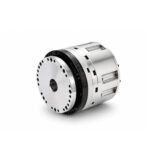 Joint Rotary Actuators Series HAG
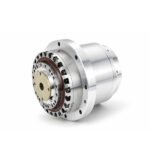 Rotary Actuators Series HPG

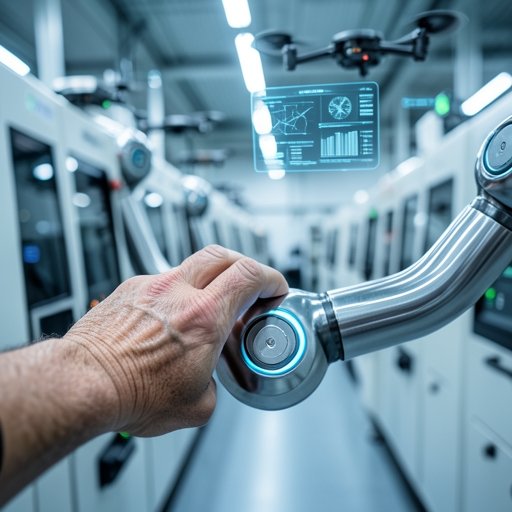
Introduction: Tearing Down the Safety Fences
For decades, the factory floor was defined by a strict division of labor. Humans worked in open spaces, while industrial robots were banished behind heavy steel safety cages and electronic light curtains. These machines were fast and strong, but they were entirely blind to human presence—meaning any accidental breach of their operating zone resulted in an immediate, mandatory system shutdown to prevent fatal injuries.
Today, that paradigm is shifting entirely. The rise of Human-Robot Collaboration (HRC) has replaced isolation with cooperation. Modern cobots share workspaces with human operators, assisting with delicate assembly, heavy lifting, and repetitive tasks side-by-side. However, making machines safe enough to work directly with humans requires revolutionary engineering at the mechanical level. This article explores how advanced motion control and the robotic joint module are shaping the future of human-robot collaboration in manufacturing.
The Evolution of Industrial Safety: From Isolation to Integration
The push toward collaborative automation is driven by the need for flexible, agile production lines that can adapt faster than rigid traditional systems.
The Cost and Inflexibility of Traditional Safety Cages
Traditional safety fencing occupies valuable floor space, restricts manual access to machines, and complicates line reconfiguration whenever product designs change. Furthermore, stopping a massive industrial robot every time a safety fence is opened hurts overall plant productivity.
How Standards (ISO 10218 / ISO/TS 15066) Shape Modern Robotics
To legally transition machines out of cages, the robotics industry adopted stringent international safety standards, such as ISO 10218 and ISO/TS 15066. These standards define the precise parameters for safe human-robot interaction, dictating maximum allowable impact forces, pressures, and speeds when a collaborative robot makes contact with a human body.
Hardware-Level Safety: Why the Joint is the First Line of Defense
While safety software and vision monitoring systems are important, true safety must be hardwired into the physical mechanics of the machine.
Integrating Force and Torque Sensing at the Actuator Level
Next-generation cobots cannot rely solely on external bumper skins to detect collisions. True safety begins at the actuator. By integrating high-resolution torque sensors and internal current-monitoring loops directly inside the robotic joint module, the robot can detect a deviation of fractions of a Newton-meter. It feels external resistance instantly.
Ultra-Fast Collision Detection and Safe Torque Off (STO)
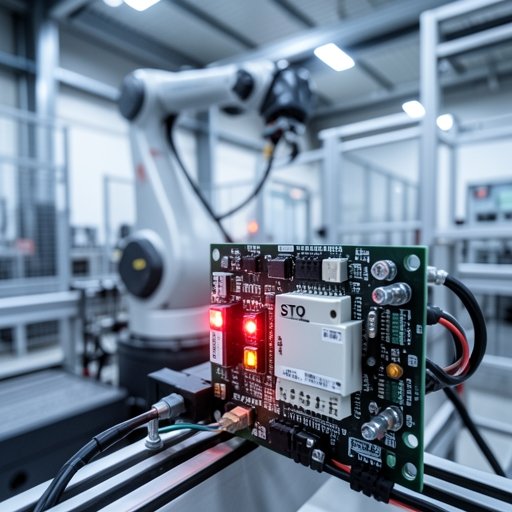
When an unexpected impact occurs, the joint electronics must react faster than human reflex times. Advanced drives utilize hardware-level Safe Torque Off (STO) functions. Upon detecting an abnormal load spike, the drive cuts power to the motor stages within milliseconds, dropping the arm’s active holding force and preventing crushing injuries.
Balancing Safety with High Productivity and Speed
A common misconception in factory automation is that safe robots must inherently be slow and weak.
Overcoming the Myth That Safe Robots Must Be Slow
Early cobots were heavily restricted in speed and payload capacity to ensure compliance with impact safety limits. However, modern motion control algorithms and sensor-fusion technologies allow cobots to operate at high speeds when humans are outside a designated safety perimeter, dynamically slowing down only when a worker enters their immediate zone.
Maintaining High Torque Density While Shrinking Safety Margins
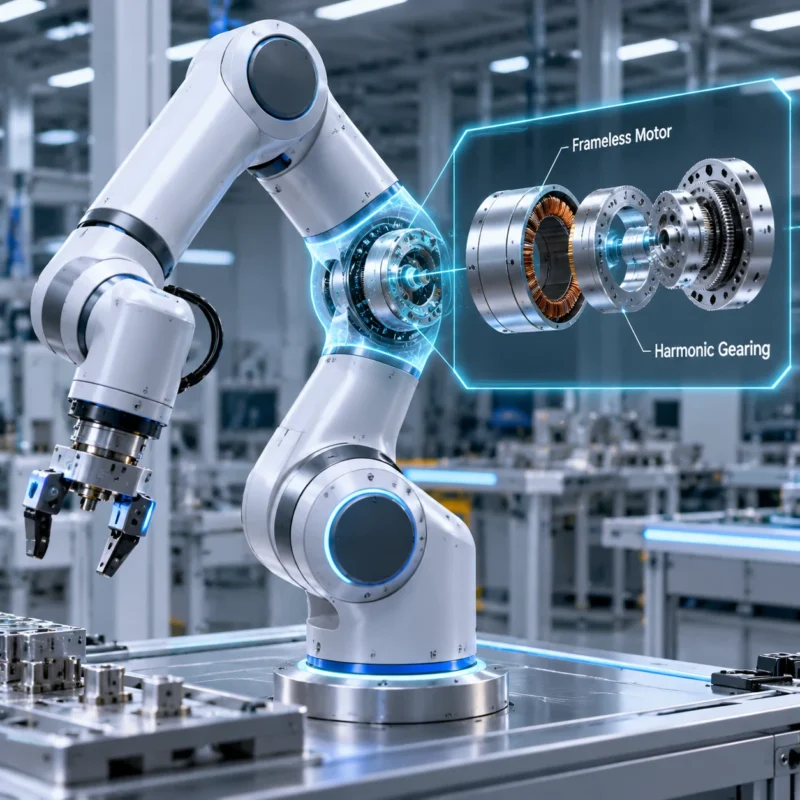
To make collaborative robots productive, they must still lift substantial payloads. This demands high torque density from lightweight actuators. By packing powerful frameless motors and high-ratio precision reducers into compact housings, manufacturers achieve powerful lifting capability without increasing the physical mass—and thus the kinetic energy—of the moving arm.
Empowering Small and Medium Enterprises (SMEs) with Flexible HRC
The true superpower of collaborative robotics is its accessibility to businesses that could never afford traditional caged automation cells.
Eliminating Fixed Infrastructure for Rapid Deployment
Because cobots do not require massive safety cages or bolted-down structural barriers, they can be mounted on mobile carts and wheeled from one workstation to another as production demands shift. This plug-and-play flexibility is a game-changer for high-mix, low-volume manufacturing environments.
The Role of Modular Actuators in Multi-Tasking Robotic Cells
Standardized, modular joint architecture enables rapid prototyping and custom arm configurations. Whether an SME needs a 4-axis SCARA-style collaborative tool or a complex 7-axis dual-arm setup, modular hardware simplifies the mechanical build, shortening the path from factory concept to full operational deployment.
Conclusion: Side-by-Side in the Factory of Tomorrow
The manufacturing facility of the future is not a ghost town run entirely by unmonitored machines, nor is it a traditional workshop reliant entirely on manual labor. It is a symbiotic ecosystem where human creativity and robotic endurance amplify one another.
This synergy relies entirely on trust—trust that is engineered directly into the mechanics of the machine. By embracing advanced hardware solutions that prioritize safety, high torque density, and lightning-fast collision response, equipment builders can deliver collaborative robots that protect operators while pushing productivity to new heights.
FAQ Section: Human-Robot Collaboration Q&A
Q1: How quickly can a robotic joint module detect a collision to protect a human operator?
With embedded torque sensors and high-bandwidth current feedback loops inside the joint module, a modern collaborative robot can detect an unexpected external collision and initiate safety shutdown protocols (such as Safe Torque Off) within 2 to 10 milliseconds, significantly minimizing impact force.
Q2: Do collaborative robots require external sensors for safety, or is it handled within the joints?
While some cobots use external tactile skins or vision systems, modern high-performance cobots handle core collision detection directly at the joint level through internal motor current feedback and integrated torque sensors. This provides a more robust, failure-resistant safety mechanism that cannot be blocked by external debris or clothing.
Q3: How does high torque density contribute to better safety performance in human-robot collaboration?
High torque density allows an actuator to deliver massive lifting power while keeping the overall physical size and mass of the robot arm remarkably low. Lower mass means lower kinetic energy (
Ek=12mv2Ek=21mv2). In the event of an unavoidable contact incident, a lighter arm transfers significantly less momentum to a human operator, making the system inherently safer.