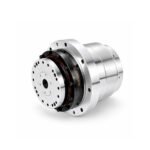
 Joint Rotary Actuators Series HAT
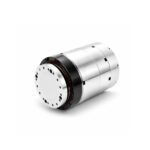 Joint Rotary Actuators series HAS
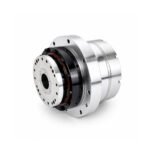 Joint Rotary Actuators Series HAMF
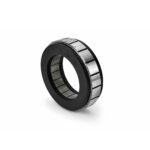 Frameless Torque Motor HBM
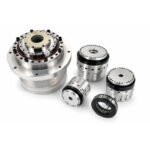 Rotary Actuators
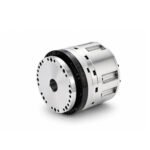 Joint Rotary Actuators Series HAG
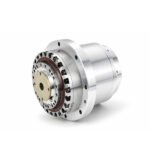 Rotary Actuators Series HPG
Introduction: The Fourth Industrial Revolution is Here
We are living through a profound transition in global production: the era of Industry 4.0. This Fourth Industrial Revolution is characterized by the seamless convergence of digital logic and physical machinery. Today’s manufacturing landscape is evolving from isolated, mechanical processes into highly integrated, data-driven ecosystems.
However, a common misconception among industry leaders is focusing entirely on software—such as Cloud computing, Artificial Intelligence, and Big Data—while taking the mechanical execution for granted. Software can calculate the perfect trajectory in a millisecond, but if the physical machine cannot execute it with absolute fidelity, the intelligence is wasted. This article explores how advanced industrial automation and precision motion control serve as the indispensable “muscle” that brings the vision of smart manufacturing to life.
The Core Principles of Smart Manufacturing
To understand the impact of this revolution, we must first look at the technological pillars that define it.
Interconnectivity: The Industrial Internet of Things (IIoT)
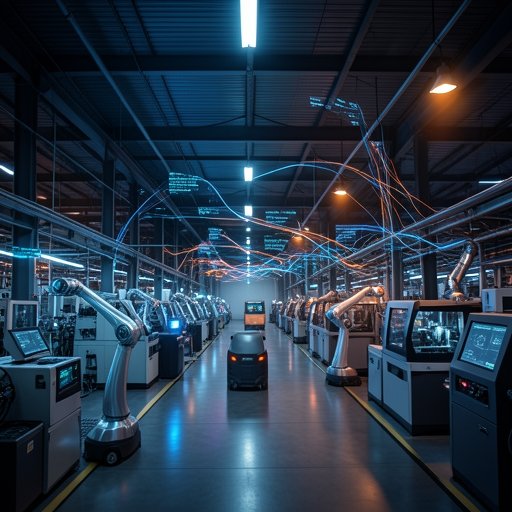
The foundation of smart manufacturing is connectivity. Through the Industrial Internet of Things (IIoT), every machine, sensor, and robotic joint on the factory floor is connected to a central network. This allows for real-time communication between previously siloed equipment, enabling the entire production line to operate as a single, synchronized organism rather than a collection of independent machines.
From Digital Twins to Physical Reality
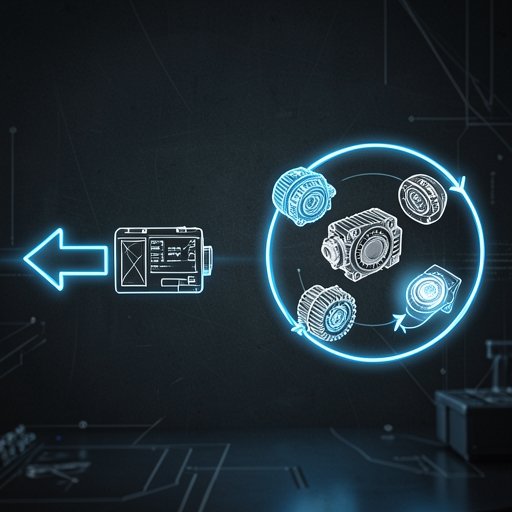
A “Digital Twin” is a complete virtual replica of a physical machine or production line. Engineers can simulate changes, test new code, and optimize production in the digital world before making a single change on the factory floor. However, the accuracy of a Digital Twin depends entirely on the predictability of the physical hardware. Highly rigid, zero-backlash actuators are required to ensure the physical machine performs exactly as its digital counterpart predicts.
Why Motion Control is the Muscle of Industry 4.0
The true value of Industry 4.0 is realized only when digital decisions are translated into physical actions.
Bridging the Gap Between AI Software and the Factory Floor
Artificial Intelligence can optimize a supply chain or calculate a collision-free path for a robotic arm in real-time. Yet, without high-performance motion control systems, these AI commands remain trapped in the digital realm. Precision servomotors, harmonic gears, and advanced drives act as the bridge, converting digital intelligence into physical force, speed, and positioning with sub-micron accuracy.
Overcoming Mechanical Bottlenecks in Automated Systems
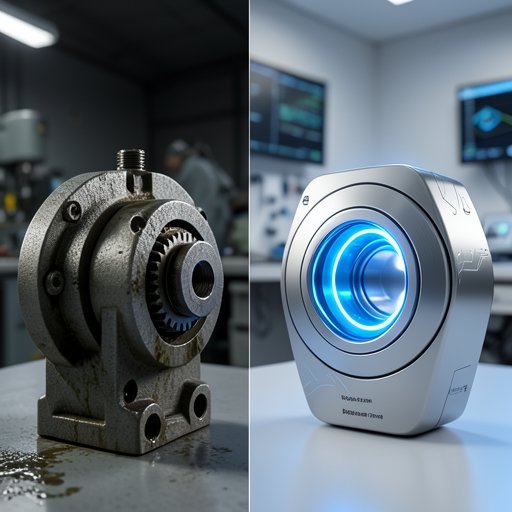
As control algorithms become faster, traditional mechanical transmissions become the bottleneck. Belts stretch, gears wear, and mechanical compliance introduces delays. To keep pace with modern controllers, equipment manufacturers are rapidly adopting direct drive technologies and highly integrated joint modules. These components eliminate mechanical elasticity, allowing the machine to react to AI commands instantaneously.
Key Automation Trends Driving the Future Factory
The implementation of high-end automation hardware is enabling new manufacturing paradigms that were previously impossible.
The Rise of Mass Customization (Lot Size of One)
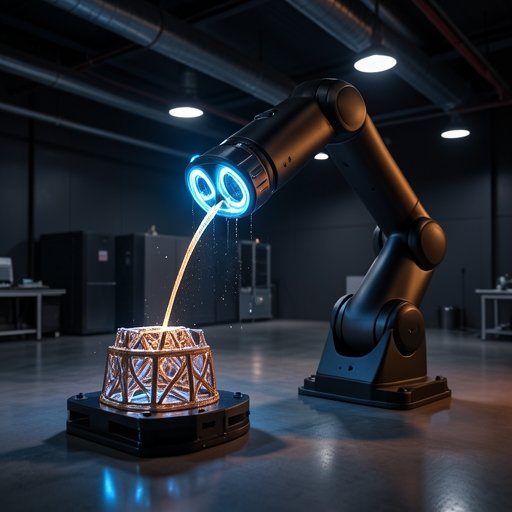
Consumers today demand personalized products, forcing manufacturers to shift from “Mass Production” to “Mass Customization.” A smart factory must be able to retool and adjust to a new product variation instantly without human intervention. This requires highly agile, modular automation systems that can change stroke lengths, torque profiles, and operational speeds on the fly.
Human-Machine Collaboration with Advanced Cobots
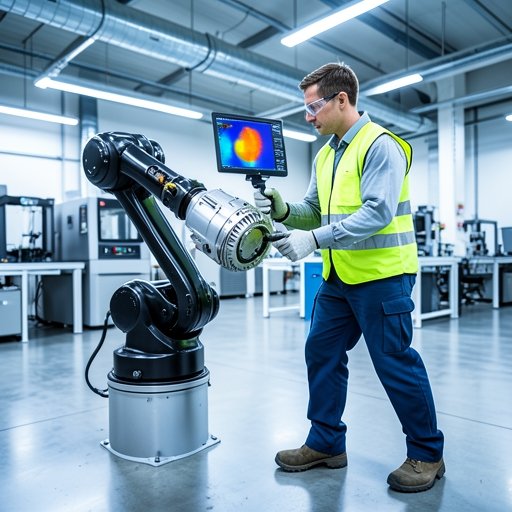
The factory of the future is not devoid of humans; it empowers them. Collaborative robots (cobots) work safely alongside human operators, taking over physically demanding or repetitive tasks. This collaboration relies on ultra-sensitive force feedback and highly responsive joint modules that can detect an unexpected impact and stop safely in milliseconds.
The Data Advantage of Modern Industrial Automation
In Industry 4.0, hardware does not just execute motion; it generates valuable data.
Servo Drives as Edge Computing Sensors
Modern servo drives are incredibly powerful computers. Because they directly control the current sent to the motor, they possess high-resolution data regarding torque, speed, and resistance. By treating the servo drive as an “Edge Computing” sensor, factory managers can harvest this data to monitor the health of the entire mechanical system without installing additional external sensors.
Enabling Predictive Maintenance Through Motor Feedback
Traditionally, maintenance was reactive (fixing broken parts) or preventative (replacing parts on a schedule). With IIoT connectivity, factories now use Predictive Maintenance. If a servo drive reports a gradual 5% increase in the current required to move a specific axis, the central AI can deduce that a bearing is beginning to fail. Maintenance can then be scheduled during planned downtime, completely eliminating catastrophic, unexpected machine failures.
Conclusion: Building the Smart Factory on a Solid Foundation
You cannot build a smart factory on “dumb” or unreliable hardware. The promises of Industry 4.0—unprecedented efficiency, extreme flexibility, and zero downtime—are achievable only when the mechanical systems are as advanced as the software that commands them.
As industrial leaders look to future-proof their facilities, upgrading the underlying motion control architecture must be a strategic priority. By investing in highly rigid, low-maintenance, and data-rich precision actuators, manufacturers build a solid physical foundation capable of supporting the next generation of industrial intelligence.
FAQ Section: Navigating the Future of Manufacturing
Q1: What is the fundamental difference between Industry 3.0 and Industry 4.0?
Industry 3.0 introduced computers and basic automation to the factory floor, allowing machines to perform repetitive tasks independently. Industry 4.0 introduces networks and AI, allowing those independent machines to communicate with each other, share data, and make decentralized decisions to optimize the entire production process in real-time.
Q2: How can upgrading motion components improve the ROI of my smart manufacturing facility?
Upgrading to advanced motion components (like direct-drive motors or integrated modular joints) directly increases machine throughput by reducing settling times and mechanical delays. Furthermore, their superior reliability and ability to provide predictive maintenance data drastically reduce unplanned downtime, leading to a much faster Return on Investment (ROI).
Q3: Does modular automation hardware speed up factory deployment?
Yes. Modular hardware acts like industrial building blocks. Instead of engineering custom drivetrains from scratch, system integrators can use pre-validated motion modules. This drastically reduces mechanical design time, simplifies supply chain management, and accelerates the commissioning of new automated production lines.