 Joint Rotary Actuators Series HAT
 Joint Rotary Actuators series HAS
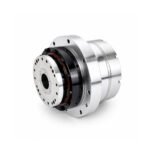 Joint Rotary Actuators Series HAMF
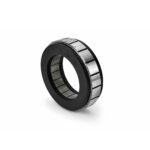 Frameless Torque Motor HBM
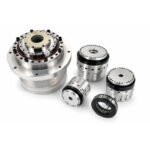 Rotary Actuators
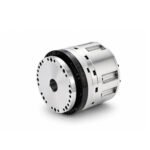 Joint Rotary Actuators Series HAG
 Rotary Actuators Series HPG
Introduction: The Evolution of Mobile Robot Chassis Engineering
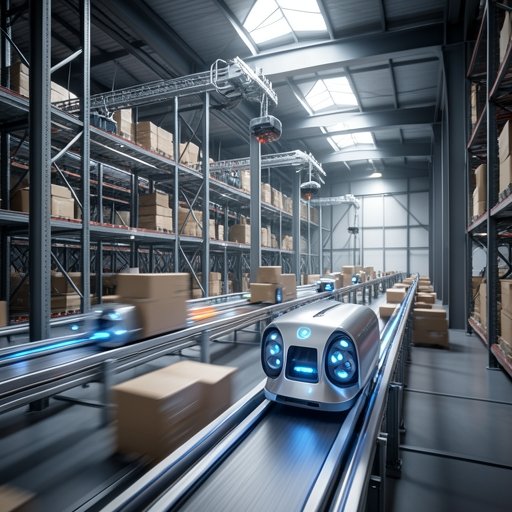
In the modern smart warehouse, mobile robotics has changed the definition of factory logistics. Whether it is a heavy-duty Automated Guided Vehicle (AGV) hauling raw materials or a nimble Autonomous Mobile Robot (AMR) weaving through dynamic human traffic, these platforms keep global supply chains moving.
However, a recurring engineering truth governs every mobile robot: software controls the brain, but hardware drives the body. While advanced SLAM navigation and artificial intelligence determine where a robot goes, physical mechanics dictate how efficiently it gets there. At the center of this physical performance is drivetrain design. This technical comparison explores the structural, kinematic, and component-level differences between AGV and AMR drive architectures.
AGV vs. AMR: Understanding the Kinematic Differences
To design an effective drivetrain, you must first understand how the robot interacts with its workspace. The fundamental operational divergence between AGVs and AMRs heavily influences their mechanical requirements.
Rigid Paths vs. Dynamic Obstacle Avoidance
Traditional AGVs typically follow pre-determined physical or digital tracks, such as magnetic tape, wires, or fixed RFID tags. Their movement is largely point-to-point with predictable accelerations and minimal need for sudden evasive maneuvers.
AMRs, conversely, rely on real-time sensor data to map and navigate environments autonomously. They must constantly calculate paths, spin in place, weave around unexpected obstacles, and adjust velocities dynamically. This constant high-frequency acceleration places severe thermal and mechanical stress on the drive components.
How Navigation Intelligence Demands Better Mechanical Agility
Because AMRs require superior maneuverability, their drivetrains must offer instant response times, zero backlash, and precise low-speed control. A sluggish drivetrain will introduce lag between the navigation computer’s commands and the physical movement of the wheels, resulting in poor trajectory tracking and potential collisions.
Anatomy of a Mobile Robot Drivetrain
Depending on the payload capacity and maneuverability requirements, engineers typically choose from three primary mechanical layouts.
Differential Drive Systems: Simplicity and Cost Control
The differential drive utilizes two independently driven coaxial wheels and one or more passive caster wheels for balance. Steering is achieved by varying the relative speeds of the two drive wheels. It is cost-effective and mechanically simple, making it a favorite for standard AGVs and simpler AMR platforms.
Swerve Drive and Steering Mechanisms: Achieving Zero-Radius Turns
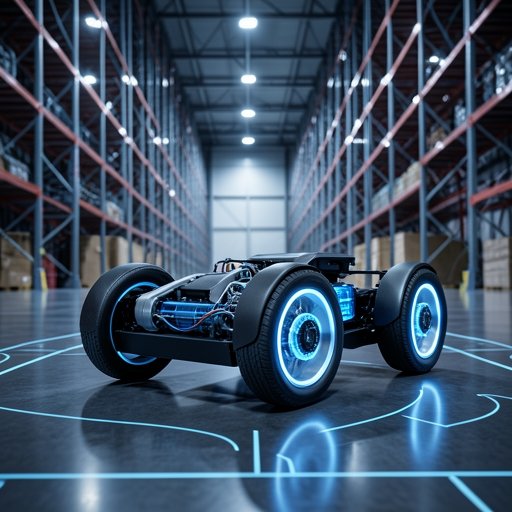
For high-end AMRs requiring maximum mobility, Swerve Drive (or independent steering/driving modules) is becoming the gold standard. In this layout, the drive wheels can rotate 360 degrees independently. This allows the robot to execute true omnidirectional movement, sliding sideways or turning on a zero-radius axis. This demands ultra-compact, high-torque steering actuators capable of continuous rotation.
Omnidirectional Wheels (Mecanum): Versatility at a Mechanical Cost
Mecanum wheels feature angled rollers along their circumference, allowing the robot to move in any direction without changing the orientation of the chassis. While mechanically versatile, they suffer from lower traction, higher vibration on rough floors, and reduced mechanical efficiency compared to standard rubber tires.
The Engineering Challenges in Modern Drivetrain Design
Designing a robust mobile platform means overcoming harsh physical constraints on the factory floor.
Maximizing Battery Efficiency and Reducing Mechanical Loss
Because mobile robots rely on onboard batteries, every watt lost to mechanical friction is a watt stolen from operational runtime. Traditional drivetrains using heavy right-angle gearboxes and timing belts suffer from high parasitic losses. Eliminating these intermediate transmissions through direct-drive technology directly translates to extended battery life and fewer charging interruptions.
Managing Shock Loads from Floor Expansion Joints and Thresholds
Warehouse floors are rarely pristine. When an AGV carrying a 500kg payload drops across a concrete expansion joint or rolls over a cable protector, the mechanical shock travels straight into the motor bearings and gear teeth. Drivetrain components must feature high shock-load resilience to prevent premature bearing failure or tooth stripping under heavy payloads.
How Frameless Motors and Integrated Actuators Transform Chassis Layouts
The physical architecture of mobile robots is shrinking. To maximize cargo space and battery capacity, engineers are abandoning bulky, housed motors.
Low-Profile Wheel Hub Integration
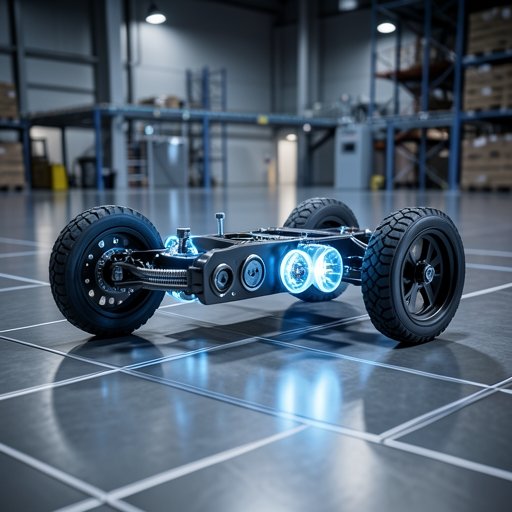
By utilizing frameless torque motors, designers can integrate the motor stator and rotor directly into the wheel hub assembly. This creates an extremely low-profile drivetrain that frees up the center of the chassis for larger battery banks or payload-lifting mechanisms.
Compact Steering Actuators for Omnidirectional Control
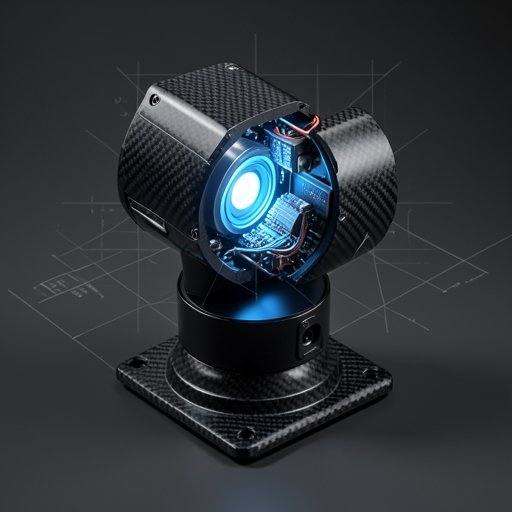
For sophisticated steering systems, pre-integrated rotary actuators provide the necessary structural rigidity and torque density. They allow for clean internal routing of encoder signals and power lines, protecting fragile wiring from the constant twisting motions associated with heavy-duty mobile steering.
Conclusion: Building the Mobile Foundation for Smart Logistics
The future of warehouse automation relies on platforms that are faster, smarter, and infinitely more reliable. As the lines between fixed-path AGVs and autonomous AMRs continue to blur, the quality of the underlying drivetrain design remains the ultimate determinant of operational success.
By prioritizing high efficiency, robust shock-load resistance, and compact component integration, mechanical designers can build mobile platforms that maximize uptime and battery longevity. The right drivetrain is the invisible engine powering the future of smart logistics.
FAQ Section: Mobile Robot Drivetrain Engineering Q&A
Q1: What is the primary mechanical difference between an AGV and an AMR drivetrain?
The primary difference lies in dynamic duty cycles. AGV drivetrains are optimized for predictable, point-to-point cruising along fixed paths with minimal steering adjustments. AMR drivetrains are engineered for high-frequency accelerations, continuous micro-corrections, and rapid changes in direction to support autonomous obstacle avoidance.
Q2: Why are hub motors becoming popular in modern AMR designs?
Hub motors eliminate traditional gearboxes, chains, and belts. By placing the motor directly inside the wheel, designers save critical chassis space, reduce mechanical friction losses, increase overall drivetrain efficiency, and significantly extend battery runtime between charges.
Q3: How do integrated rotary actuators improve the steering reliability of a mobile robot?
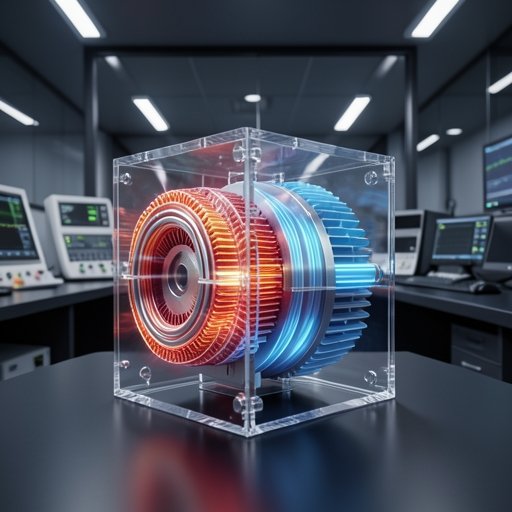
Integrated rotary actuators combine high-torque motors, zero-backlash gearing, and absolute encoders into a single, sealed housing. This protects sensitive feedback elements from dust and moisture while providing the extreme torsional rigidity required to keep heavy-duty steering wheels precisely aligned under load.