 Joint Rotary Actuators Series HAT
 Joint Rotary Actuators series HAS
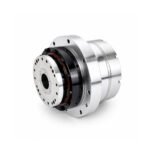 Joint Rotary Actuators Series HAMF
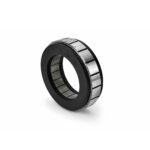 Frameless Torque Motor HBM
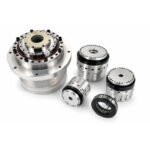 Rotary Actuators
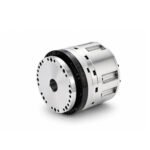 Joint Rotary Actuators Series HAG
 Rotary Actuators Series HPG
Introduction: The Quest for Cinematic Fluidity
In the world of professional broadcasting, cinematic production, and high-end surveillance, image quality is everything. When a camera tracks a fast-moving subject or performs a slow, dramatic pan across a landscape, the audience expects absolute visual perfection. However, achieving this “cinematic fluidity” is an extraordinary mechanical challenge.
A single micro-jitter or stutter in the pan-and-tilt mechanism can ruin hours of professional footage. Traditional motorized gimbals often rely on standard brushed or brushless motors paired with gearboxes, which struggle at ultra-low speeds due to physical irregularities.
This case study examines how an elite manufacturer of broadcast equipment solved the low-speed vibration problem by integrating Hobber Drive HBM series low-cogging frameless motor technology, securing a new benchmark for smooth motion in a high-performance camera gimbal.
The Challenge: Overcoming Low-Speed Jitter in Professional Gimbals
The client, a globally recognized designer of PTZ (Pan-Tilt-Zoom) broadcast cameras and cinema gimbals, was receiving complaints from high-end cinematographers regarding ultra-slow speed tracking.
Why Geared Servos Fail at Ultra-Slow Speeds
When tracking a subject at a crawl—such as a wildlife macro shot or a slow cinematic reveal—the gimbal axis might rotate at less than 1 RPM. In traditional geared systems, the motor must spin much faster while a gearbox steps down the speed. At these crawling speeds, the imperfections in the gear mesh and motor design become glaringly obvious. The system suffers from “stick-slip” behavior, where the axis hesitates and then jumps, creating jerky, unusable footage.
The Visual Impact of Torque Ripple on Long-Lens Footage
Compounding the gear issue is “cogging torque”—the magnetic attraction between a motor’s rotor magnets and stator teeth. When a camera is equipped with a heavy, long-focal-length telephoto lens, even the slightest torque ripple from the motor is magnified by the lens’s weight and length. This results in high-frequency vibrations that ruin long-lens footage, making crisp stabilization nearly impossible.
The Solution: Integrating HBM Low-Cogging Frameless Motors
To achieve true zero-backlash, jitter-free performance, the engineering team decided to scrap the traditional geared assembly entirely and adopt a direct-drive approach using a specialized frameless motor.
Direct Drive Mechanics: Removing Gears for Zero Backlash
By choosing a direct-drive layout, the camera payload was mounted directly onto the motor’s rotor axis. This complete elimination of gears, belts, and couplings meant there was zero mechanical backlash to absorb or compensate for. The response from the controller to the camera movement became instantaneous and pure.
Optimizing Magnetic Air Gaps for Ultra-Low Cogging
The client selected the Hobber Drive HBM series specifically for its optimized magnetic design. By employing advanced fractional slot-pole combinations and careful skewing techniques, HBM motors feature an exceptionally low cogging profile. This effectively neutralized the magnetic detents that cause low-speed stuttering, ensuring that the motor could rotate smoothly even at fractions of a revolution per minute.
Implementation: Designing a Lightweight, Balanced Gimbal Axis
Implementing a frameless motor required a collaborative mechanical redesign of the gimbal’s internal architecture.
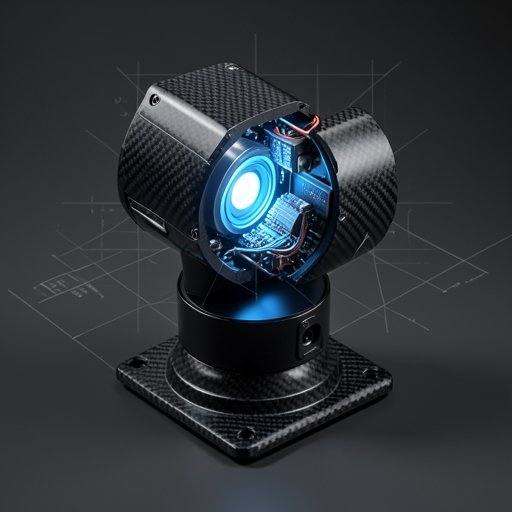
Direct Integration into the Pan and Tilt Axes
Rather than bolting an enclosed motor onto the frame, the OEM machined the aluminum pan and tilt housings to act directly as the motor shell. The frameless stator was press-fitted into the housing, and the rotor was integrated onto the central spindle. This “inside-out” approach maximized structural stiffness while eliminating redundant bearings and shafts.
Cable Through-Holes for Clean Video and Power Routing
Professional gimbals must rotate freely through multiple axes without wrapping or twisting external video and power cables. The team utilized the central opening enabled by the frameless design to route high-definition SDI/HDMI video lines and power cables directly through the center of the rotation axis, ensuring unrestricted 360-degree pan capabilities.
The Results: Broadcast-Quality Pan and Tilt Performance
The upgrade to direct-drive frameless technology yielded dramatic, immediate enhancements to the final product line.
Achieving Perfectly Fluid Slow-Motion Tracking
The transition to direct drive completely eradicated the low-speed stick-slip phenomenon. Cinematographers could now perform ultra-slow pans and tilts that looked entirely organic and fluid, with zero micro-jitters, even when operating under high zoom magnification.
Shedding 35% of Total Gimbal Weight for Better Portability
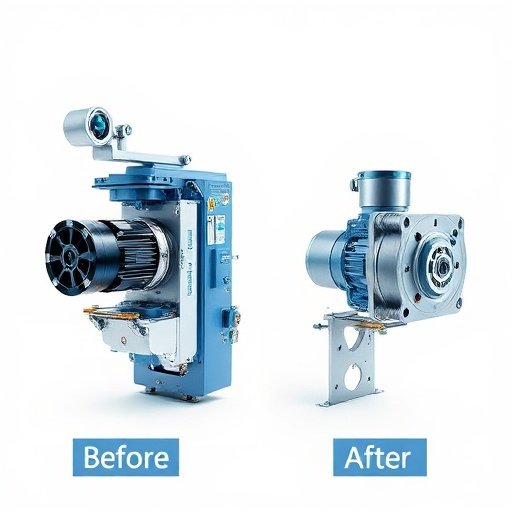
By removing heavy gearboxes, extra housings, and mounting brackets, the total weight of the gimbal head dropped by 35%. This made the system significantly easier to mount on mobile jibs, drones, and handheld rigs, vastly expanding its commercial appeal in the broadcast market.
Conclusion: Redefining Optical Precision
This case study highlights how eliminating mechanical complexity at the joint level can redefine a product’s market position. By replacing legacy geared drives with an advanced frameless motor, the manufacturer solved the physics problem of low-speed vibration at its root.
In professional optics, precision and smoothness are inseparable. When your hardware delivers smooth motion naturally, the resulting imagery speaks for itself.
FAQ Section: Gimbals and Direct Drive Engineering Q&A
Q1: How does a frameless motor eliminate the micro-jitters seen in traditional PTZ cameras?
A frameless motor eliminates gearboxes and mechanical transmissions, which are the primary sources of backlash and mesh friction. Combined with a low-cogging magnetic design, it provides continuous, uninterrupted torque directly to the camera mount, ensuring silky-smooth rotation at any speed.
Q2: Can direct-drive gimbals handle off-center or heavy cinema camera payloads?
Yes, provided the motor is sized correctly for peak torque and the supporting bearings (such as cross-roller bearings) are rated to handle overturning moments caused by heavy, off-center camera packages. Direct drive actually improves heavy-load handling because there are no weak gear teeth to strip under high-inertia shifts.
Q3: What kind of encoders are recommended for ultra-smooth camera tracking?
For broadcast and cinematic gimbals, high-resolution absolute optical encoders or inductive encoders are preferred. They provide the fine angular feedback necessary for the servo drive to maintain a constant, jitter-free velocity loop, even at speeds as slow as 0.01 RPM.