
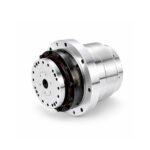
 Joint Rotary Actuators Series HAT
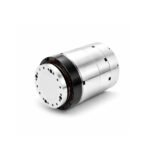 Joint Rotary Actuators series HAS
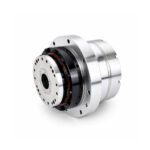 Joint Rotary Actuators Series HAMF
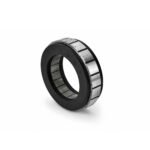 Frameless Torque Motor HBM
 Rotary Actuators
 Joint Rotary Actuators Series HAG
 Rotary Actuators Series HPG

Introduction: Revolutionizing Rotary Motion
Every automated assembly line, laser marking system, and optical inspection cell relies on a rotary component to orient parts. The turntable and the indexing table are the critical hubs of these operations, responsible for positioning heavy loads with absolute accuracy through hundreds of thousands of daily cycles.
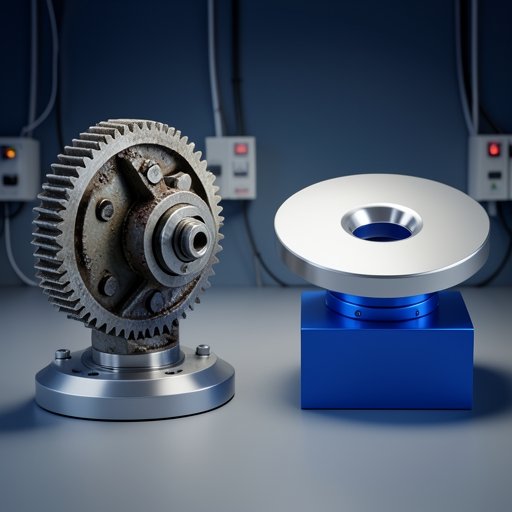
For decades, machine builders relied on conventional mechanical drivetrains—such as worm gears, timing belts, and planetary gearboxes—to achieve rotation. While these systems are familiar, they carry inherent physical limitations that worsen over time. Today, the rise of direct drive technology is changing how engineers approach rotary stage design, offering an uncompromising leap forward in precision motion control.
The Traditional Dilemma: Why Worm Gears and Belts Fall Short
To appreciate the value of modern direct-drive architectures, we must first look at why legacy drivetrains struggle in high-performance environments.
Backlash, Friction, and the Inevitable Degradation of Accuracy
Traditional gear assemblies rely on physical contact between teeth. Over millions of rapid start-stop cycles, this continuous mesh creates friction, generates heat, and wears down the metal. As the components wear, mechanical backlash develops. This “play” in the system results in positioning drift, meaning your table no longer indexes to the exact coordinate programmed by the controller. The only remedy is expensive manual adjustment or complete mechanical replacement.
Speed Limits and Mechanical Complexity in Multi-Station Indexing
Worm gears also suffer from high frictional losses and fixed reduction limits, capping how fast a table can index between stations. Furthermore, building a multi-station indexing machine with traditional motors requires complex mechanical layouts filled with clutches, brakes, and shafts, all of which represent potential points of mechanical failure.
What is Direct Drive? Removing the Middleman
Direct drive technology cuts through this mechanical complexity by applying a simple rule: remove everything between the motor and the load.
Coupling the Load Directly to the Motor Rotor
In a direct-drive turntable, the load is bolted directly to the motor’s rotor flange. There are no gearboxes, no timing belts, and no couplings. The motor drives the stage 1:1. This means whatever command the servo drive sends to the motor is executed instantly by the table, with zero mechanical compliance or elasticity dampening the response.
High Torque Density via Advanced Magnetic Design
Critics of direct drive once argued that without a gearbox to multiply torque, motors would have to be massive. However, modern magnetic engineering has changed this. By utilizing advanced electromagnetic topologies and high-grade neodymium magnets in frameless motor configurations, modern direct-drive stages achieve massive torque density within a remarkably low-profile, flat footprint.
Four Major Advantages of Direct Drive Turntables
Transitioning your rotary stage design to a direct-drive architecture unlocks four distinct operational benefits.
1. True Zero Backlash for Absolute Positioning Repeatability
Because there are no gear teeth engaging with clearance gaps, direct-drive systems exhibit true zero backlash. This ensures absolute positioning repeatability, allowing your machine to return to the exact same microscopic coordinate thousands of times without angular drift.
2. Blistering Dynamic Response and Rapid Indexing Speeds
Without the heavy inertia and friction of intermediate gearboxes, direct-drive turntables can accelerate and decelerate at blistering speeds. This significantly slashes index times, boosting the overall parts-per-minute (PPM) output of your manufacturing or packaging line.
3. Zero Maintenance: No Lubrication, No Belt Tensioning
Traditional indexers require oil baths, regular fluid changes, and belt-tension checks to prevent slippage. Direct-drive systems are wear-free in the drivetrain. With no oil to leak and no belts to stretch, they offer a true “install-and-forget” lifecycle, slashing maintenance costs and maximizing machine uptime.
4. The Hollow Bore Advantage for Clean Cable Routing
Many advanced direct-drive rotary stages feature a large central hollow bore. This design allows pneumatic lines, vacuum hoses, and sensor data cables to pass straight through the center of the rotating axis. This eliminates external cable twisting, prevents wire fatigue, and enables continuous 360-degree rotation without complex slip rings.
Ideal Applications for Direct Drive Rotary Stages
While beneficial anywhere rotation is required, direct drive excels in specific high-demand applications.
High-Speed Laser Marking and Micromachining
Laser systems require rapid indexing paired with absolute stability during the firing phase. Direct-drive stages provide the rapid settling time and vibration-free motion necessary to produce clean, distortion-free marks and micro-cuts.
Optical Inspection and Vision-Guided Part Alignment
In vision-guided alignment systems, the table must rotate incrementally to allow cameras to inspect parts from all angles. The zero-backlash nature of direct drive ensures that image stitching and coordinate mapping remain flawless.
Conclusion: Spinning Into the Future Without Friction
The evolution of industrial automation points clearly toward simpler, smarter, and more integrated mechanics. While worm gears and belts served the previous century of manufacturing, direct-drive technology defines the modern era of high-precision engineering.
By eliminating mechanical wear points, slashing settling times, and offering unmatched positioning repeatability, direct-drive turntables and indexing tables give machine builders a profound competitive edge. Embracing this architecture means stepping into a future of frictionless, maintenance-free performance.
FAQ Section: Direct Drive Turntable Engineering Q&A
Q1: How do direct drive turntables hold position without a mechanical brake?
A direct drive motor holds position using electromagnetic holding torque (electrical detent). By applying a static current to the motor phases, the magnetic field locks the rotor firmly in place against external loads. For safety-critical vertical axes or heavy unpowered states, an integrated fail-safe holding brake can also be added.
Q2: Can a direct drive motor match the massive gear reduction ratio of a worm gear?
Direct drive motors do not multiply speed or torque mechanically through gear ratios (they operate at a 1:1 ratio). Instead, they are designed with high magnetic pole counts to generate high torque natively. While they won’t match the extreme numerical reduction of a 100:1 worm gear, they provide more than enough torque for modern high-speed indexing applications while offering vastly superior speed and zero backlash.
Q3: What are the thermal considerations when running a turntable continuously at high speeds?
Continuous high-speed rotation generates electrical heat (copper losses) within the motor windings. To prevent overheating, direct-drive stages must be designed with adequate thermal conduction paths into the machine frame, and in extreme continuous-duty cases, liquid cooling channels can be integrated into the stationary housing to maintain optimal operating temperatures.