 Joint Rotary Actuators Series HAT
 Joint Rotary Actuators series HAS
 Joint Rotary Actuators Series HAMF
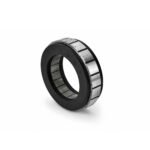 Frameless Torque Motor HBM
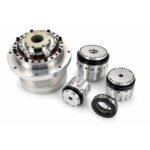 Rotary Actuators
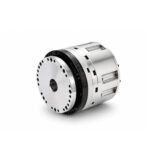 Joint Rotary Actuators Series HAG
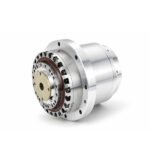 Rotary Actuators Series HPG

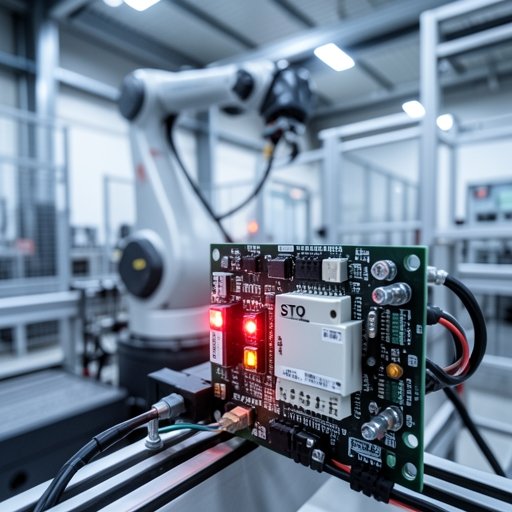
Introduction: The Evolution of Machine Safety
The paradigm shift in modern machine safety has transformed how engineers approach factory design. Gone are the days when a safety system meant simply surrounding a machine with heavy physical wire cages and cutting the main electrical grid with a clumsy mechanical contactor whenever a worker approached.
Today, human-robot collaboration demands smarter, faster, and more integrated safety architectures. When an operator enters a collaborative workspace, the machine must stop instantly, safely, and predictably—without necessarily losing its memory, resetting its control loop, or killing power to its diagnostic sensors. At the core of this modern safety revolution is Safe Torque Off (STO). This article explores how STO functions as the cornerstone of functional safety in modern automation and why it is a mandatory specification for any high-performance servo drive.
What is Safe Torque Off (STO) and How Does It Work?
To understand STO, you must first understand how a standard servo amplifier delivers power.
The Hardware Logic: Silencing the IGBTs
Inside a servo drive, the final stage of power delivery relies on Insulated-Gate Bipolar Transistors (IGBTs). These transistors rapidly switch high voltage to create the precise magnetic fields needed in the motor windings. When an STO command is triggered, the safety circuit uses redundant, hardwired hardware channels to physically block the gate signals going to these IGBTs. Even if the controller demands movement, the transistors are held in an open, non-conducting state. No electrical energy can reach the motor.
Maintaining Control Power While Eliminating Motor Torque
The true brilliance of STO lies in what it leaves running. Because STO only interrupts the motor power stage, the drive’s internal logic, microprocessor, and feedback encoders remain fully powered. The controller doesn’t reboot, and the absolute encoder doesn’t lose its position tracking. Once the safety hazard clears, the machine can resume operation immediately without a lengthy homing or re-initialization sequence.
Why STO Replaces Traditional Hard-Wired Power Interlocks
For decades, the standard emergency stop involved dropping a massive contactor to cut AC power to the entire drive rack. While effective at stopping motion, this old-school method introduces severe engineering drawbacks.
The Drawbacks of Relays, Contactors, and Re-Boot Delays
Heavy electromechanical contactors wear out over time due to arcing. Furthermore, cutting main power forces a total system shutdown. The controller drops offline, the drives lose memory, and upon restart, the machine requires a full system reboot, safety check, and axis re-homing. In a high-throughput factory, these delays accumulate into significant lost production time.
Faster Recovery Times and Preserved Encoder Memory
By using Safe Torque Off (STO), the hazardous energy is removed from the motor instantly at the hardware level, but the digital brain stays awake. This eliminates mechanical contactor wear and slashes recovery times from minutes to mere seconds. Operators can step into a safety zone, clear a jam, step out, and resume production with zero system reboot delays.
Navigating Standards: SIL 3 and PL d Compliance
Safety is governed by strict international standards, primarily IEC 61508, IEC 61800-5-2, and ISO 13849-1.
Understanding Safety Integrity Levels (SIL) for Motion Control
When selecting automation hardware, you will frequently see terms like SIL 3 (Safety Integrity Level 3) or PL d / PL e (Performance Level d/e). These ratings define the statistical reliability and fault tolerance of the safety function. A SIL 3 / PL e certified STO circuit means the probability of a dangerous, undetected failure in the safety mechanism is less than one in a billion hours of operation.
Designing Compliant Safety Circuits Around Your Servo Drive
Achieving these high safety ratings requires dual-channel redundancy. Modern certified servo drives feature dual STO input terminals (typically designated as STO1 and STO2). If either channel fails or opens, the drive will safely inhibit torque. Designing your emergency stop chain to drop both channels simultaneously guarantees compliance with global machinery directives.
Implementing STO with Hobber Drive Advanced Drives
At Hobber Drive, we believe that high-performance motion must always be paired with uncompromising safety.
Hardware Redundancy for Maximum Risk Mitigation
Our advanced servo drives and communication-enabled drive families incorporate certified, dual-channel STO architecture. By isolating the power stage at the hardware level, independent of the primary microprocessor software, we ensure that a software crash or logic glitch can never override the safety shutdown command.
Seamless Integration into Safety-Rated Robotic Cells
Whether you are building a multi-axis CNC machine, an automated guided vehicle, or a collaborative robotic cell, our drives integrate effortlessly into safety PLC networks. This allows you to construct sophisticated, zone-based safety interlocks that protect workers while maximizing overall machine uptime.
Conclusion: Safety as an Enabler of Productivity
Historically, engineers viewed safety features as a necessary burden that slowed machines down and added cost. Safe Torque Off (STO) shatters that paradigm. By providing instantaneous, reliable hardware-level protection while preserving system memory, STO turns safety into an enabler of productivity.
As industrial automation grows more collaborative and complex, functional safety is no longer optional—it is the baseline of professional machine design. Equipping your systems with certified, STO-enabled servo drives ensures your machinery protects human operators while maintaining the high availability required in modern smart factories.
FAQ Section: Safe Torque Off Engineering Q&A
Q1: Is Safe Torque Off (STO) the same thing as a mechanical holding brake?
No. STO is an electronic/electrical safety function that removes rotational torque by disabling the drive’s output transistors. It does not physically lock the motor shaft. If a motor with an active STO command is attached to a heavy vertical load against gravity, the load will fall unless a secondary mechanical holding brake is physically engaged.
Q2: Do I still need a main power contactor if my servo drive has an integrated STO function?
In many cases, certified STO allows you to eliminate the heavy main power contactor for individual drives, because the STO function itself meets the required safety integrity level (e.g., SIL 3). However, local electrical codes or specific risk assessments may still require a master contactor for complete system de-energization during maintenance. Always consult your regional safety standards compliance officer.
Q3: How is the response time of an STO circuit tested and verified during commissioning?
The hardware response time of a certified STO circuit is typically extremely fast—usually under 10 to 15 milliseconds from the opening of the safety switch to the complete inhibition of the output stage. During commissioning, safety engineers use specialized diagnostic tools and logic analyzers to measure the exact time delay and verify that redundant channels trip simultaneously according to the machine’s safety validation plan.