 Joint Rotary Actuators Series HAT
 Joint Rotary Actuators series HAS
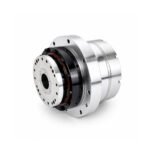 Joint Rotary Actuators Series HAMF
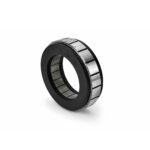 Frameless Torque Motor HBM
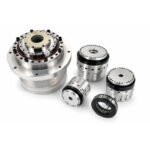 Rotary Actuators
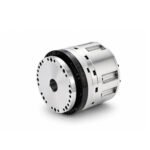 Joint Rotary Actuators Series HAG
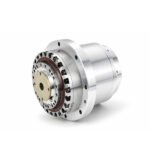 Rotary Actuators Series HPG
Introduction: The High-Stakes Drive for Efficiency in IVD
The In-Vitro Diagnostics (IVD) and lab automation sectors are undergoing a radical shift. As global diagnostic volumes increase, laboratory facilities are demanding equipment that is not only more accurate but significantly faster. In the competitive world of medical device manufacturing, the ability to process more samples per hour—”throughput”—is the primary metric of success.
However, increasing speed often conflicts with the need for a smaller machine footprint and extreme positioning precision. This case study explores how Hobber Drive collaborated with a leading medical equipment manufacturer to break through these performance barriers using advanced motion control technology.
The Challenge: Limited Benchtop Space and Speed Bottlenecks
Our client was developing a next-generation automated sample preparation system. Their existing platform was built using traditional belt-driven stages and discrete stepper motors, which presented two major engineering hurdles.
Why Miniature Lab Equipment Demands “Inside-Out” Engineering
Modern clinical labs are crowded. To win market share, the client needed to reduce the machine’s footprint by 40% while maintaining the same multi-axis functionality. The bulky, traditional motor-and-gearbox assemblies were simply too large. Furthermore, the external cabling required for these discrete components created significant “design noise” and potential failure points.
The Cost of Low Throughput in Diagnostic Testing
The existing system’s throughput was limited by the “settling time” of the robotic arms. Because the mechanical structure lacked sufficient rigidity, the pipette heads would vibrate slightly after every high-speed move. The system had to wait for these vibrations to subside before dispensing, adding precious seconds to every cycle. In a 24/7 diagnostic environment, these seconds translate into thousands of lost test results per year.
The Solution: Implementing Hobber’s Integrated Compact Actuators
To solve the twin problems of space and speed, the client moved away from discrete components in favor of Hobber Drive’s integrated medical automation solutions.
Switching from Belt-Driven Stages to Direct-Integrated Joints
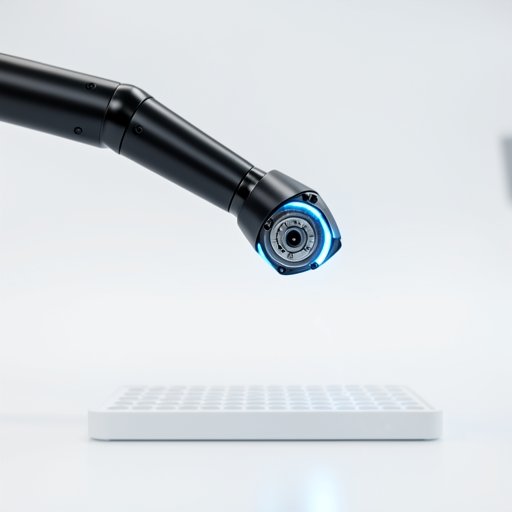
By replacing belt-driven axes with our compact, integrated hollow-shaft actuators, the engineering team was able to place the motion components directly at the pivot points. This eliminated the need for external transmission hardware, allowing for a much cleaner “inside-out” design. The hollow bore of the actuators provided a protected internal path for sensitive fluidic lines and sensor cables.
Ensuring Medical-Grade Smoothness for Microliter Liquid Handling
We provided the client with our low-cogging HBM series motors integrated with zero-backlash strain wave gears. This combination provided the fluid, continuous motion required for microliter liquid handling. The high torsional stiffness of the integrated modules virtually eliminated the vibration issues, allowing the controller to run much higher gains for faster positioning.
Results: 25% Faster Sample Processing and Improved Precision
The impact of the redesign was immediate and measurable across all key performance indicators of the lab automation system.
Quantifying the Impact on Laboratory Throughput
By drastically reducing settling time from 150ms to less than 30ms per move, the system’s total cycle time was reduced. This resulted in a verified 25% increase in total sample throughput. The lab could now process 125 samples in the same time it previously took to process 100, significantly increasing the machine’s commercial value.
Reducing Vibrations for Better Sensor Reliability
The stability of the Hobber Drive actuators also improved the reliability of the onboard optical sensors. With a vibration-free motion profile, the sensors could read sample bar codes and liquid levels more accurately on the first attempt, reducing the number of “retry” cycles and further boosting efficiency.
Specialized Requirements: Why Hobber Drive Fits the Medical Sector
Engineering for medical labs requires attention to details that industrial automation often ignores.
Silent Operation for Patient-Facing Environments
Noise pollution is a major concern in medical environments. Our integrated modules operate with significantly lower decibel levels than traditional geared systems, ensuring that the diagnostic equipment can be used in quiet clinical settings without disturbing staff or patients.
Maintenance-Free Design for Critical Diagnostic Uptime
Downtime in a diagnostic lab can delay critical patient treatments. By eliminating belts that stretch and gearboxes that require lubrication, the Hobber Drive solution provided a maintenance-free drivetrain. The client estimated a 60% reduction in long-term service interventions for the motion system.
Conclusion: Precision as the Engine of Medical Innovation
As this case study demonstrates, the path to higher throughput in medical automation lies in the integration of high-performance components. By prioritizing compact design, high rigidity, and zero-maintenance operation, manufacturers can create laboratory equipment that is faster, smaller, and more reliable.
Precision motion control is not just a technical specification; it is the engine that drives medical innovation. At Hobber Drive, we are committed to providing the modular hardware that helps healthcare professionals deliver faster, more accurate results to patients worldwide.
FAQ Section: Engineering Motion for Labs
Q1: What level of repeatability can I expect in a sample pipette axis?
Using Hobber’s integrated modules with high-resolution encoders, we consistently achieve angular repeatability within ±10 arc-seconds. When translated to a standard 200mm pipette arm, this ensures a linear repeatability of less than 0.01mm.
Q2: Are your materials compatible with standard medical cleaning agents?
Yes. Our actuators are finished with high-durability coatings and utilize specialized seals that are resistant to common laboratory disinfectants, including isopropyl alcohol and hydrogen peroxide vapors.
Q3: How do you handle electromagnetic noise (EMI) in sensitive diagnostic instruments?
Our servo drives and actuators are designed with internal shielding and grounding paths. We work closely with medical OEMs to ensure our motion systems do not interfere with sensitive diagnostic sensors or RF-based imaging equipment.