 Joint Rotary Actuators Series HAT
 Joint Rotary Actuators series HAS
 Joint Rotary Actuators Series HAMF
 Frameless Torque Motor HBM
 Rotary Actuators
 Joint Rotary Actuators Series HAG
 Rotary Actuators Series HPG

Introduction: Bridging the Gap Between Speed and Power
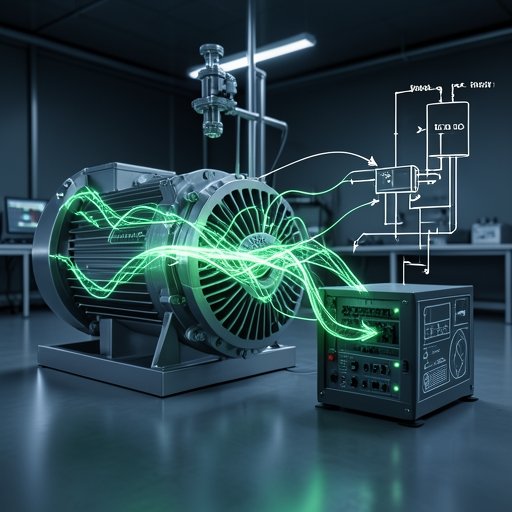
Modern electric motors are wonders of electromagnetic engineering, capable of spinning efficiently at thousands of revolutions per minute. However, an industrial robot arm rarely needs high rotational velocity at its joints. Instead, it requires massive torque to manipulate heavy payloads, coupled with sub-millimeter positional repeatability.
Attempting to drive a robot joint directly with a standard motor would require an impractically large, heavy motor that generates excessive heat and adds dead weight to the arm. This is why the precision gearbox serves as the indispensable mechanical bridge in industrial robotics. By converting high-speed, low-torque motor output into low-speed, high-torque motion, the gearbox acts as the true power multiplier of automated machinery.
Why Do Industrial Robots Need Gear Reduction?
Gearing does far more than simply slow down a shaft; it fundamentally alters the physics of the entire mechanical axis.
Torque Multiplication: Lifting Heavy Payloads with Small Motors
The primary mechanical function of a speed reducer is torque multiplication. A gearbox with a reduction ratio of 100:1 theoretically multiplies the motor’s output torque by a factor of 100 (minus efficiency losses). This allows compact, lightweight servomotors to lift payloads that weigh hundreds of kilograms, keeping the robot’s physical structure sleek and energy-efficient.
Inertia Matching: Ensuring Stable and Controlled Motion
In dynamic robotics, controlling the reflected inertia of the payload is just as important as generating torque. When a robot arm extends, the inertia perceived by the motor increases dramatically. A gearbox reduces this reflected load inertia by the square of the gear ratio (
Jreflected=Jload/N2Jreflected=Jload/N2). This massive reduction stabilizes the servo control loop, eliminating resonance and preventing violent overshoots during rapid trajectory changes.
Strain Wave Gear: The King of Robotic Precision
When designing high-precision, multi-axis articulate arms and collaborative robots, the strain wave gear (often referred to as a harmonic reducer) is the industry benchmark.
How Elastic Deformation Eliminates Backlash
Traditional gears require a tiny clearance gap between teeth to prevent jamming, which introduces mechanical backlash. Strain wave gearing eliminates this gap entirely through controlled elastic deformation. An elliptical wave generator flexes a thin, toothed metal cup (the Flexspline) into continuous, preloaded mesh with an outer ring gear at two opposing points. Because multiple teeth engage simultaneously with zero clearance, the system achieves true zero-backlash operation.
High Reduction Ratios in a Single-Stage Compact Design
Unlike traditional gear trains that require multiple stages and shafts to achieve large reductions, a strain wave gear delivers reduction ratios from 30:1 up to 160:1 in a single, ultra-flat stage. This short axial length makes it ideal for integrating into hollow-shaft joint modules where space is strictly constrained.
Precision Planetary Gearbox: Built for Rigidity and Efficiency
For heavy-duty industrial tasks and high-speed CNC machinery, the planetary gearbox offers an alternative set of mechanical strengths.
Load Sharing: Handling High Dynamic Impacts in CNC and Heavy Robotics
A planetary gearbox distributes torque across three or more planet gears simultaneously as they rotate around a central sun gear. This load-sharing architecture provides exceptional torsional stiffness and shock-load resistance, allowing the system to absorb severe cutting forces or emergency stop impacts without mechanical failure.
Maximizing Energy Efficiency in High-Speed Applications
Because planetary gears rely purely on rolling tooth contact rather than continuous metal flexing, their mechanical efficiency typically exceeds 90% to 95%. This high efficiency minimizes heat buildup, making planetary reducers ideal for applications characterized by continuous high speeds or aggressive duty cycles.
Evaluating Quality: What Makes a Gearbox “Precision”?
Not all gearboxes are created equal. Standard industrial reducers are built for power transmission, while robotics-grade gearboxes are optimized for motion accuracy.
Angular Transmission Accuracy and Repeatability
Transmission accuracy measures the deviation between the theoretical output angle and the actual mechanical position over a full 360-degree rotation. A true precision reducer restricts this error to a few arc-seconds, ensuring that complex multi-axis interpolation paths remain true to the programmed trajectory.
Torsional Rigidity: Resisting Deflection Under Load
Under dynamic acceleration or cutting loads, a gearbox behaves like a torsional spring. High-grade gearboxes are manufactured with specialized preloads, rigid cross-roller output bearings, and optimized tooth geometries to maximize torsional rigidity. This high stiffness raises the mechanical resonant frequency of the joint, enabling tighter servo loop tuning and shorter settling times.
Conclusion: The Foundation of Every Precision Move
An industrial robot is only as capable as its weakest mechanical interface. While advanced algorithms, AI vision systems, and high-resolution encoders provide the intelligence, the precision gearbox delivers the physical fidelity required to execute those commands accurately.
Whether an application demands the zero-backlash compactness of a strain wave gear or the high-load stiffness of a planetary gearbox, selecting the right reduction technology is the foundation of high-performance robotic design.
FAQ Section: Precision Robotics Gearing FAQs
Q1: Why are strain wave gears so popular in cobots?
Collaborative robots require lightweight arms to ensure safety when operating near human workers. Strain wave gears deliver the highest torque-to-weight ratio and zero-backlash motion in an exceptionally compact form factor, making them the standard choice for cobot joints.
Q2: Does a planetary gearbox always have more backlash than a harmonic one?
Yes, inherently. While high-precision planetary gearboxes achieve very low backlash (often less than 1 to 3 arc-minutes) through ground teeth and preloading, strain wave gears achieve true zero backlash due to their continuous elastic tooth engagement.
Q3: How often does a robot’s gearbox require maintenance?
Most modern precision gearboxes designed for robotics are factory-lubricated with specialized synthetic grease and sealed for life. Under rated operating temperatures and load profiles, they deliver tens of thousands of hours of maintenance-free operation.