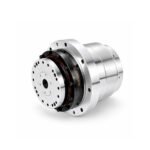
 Joint Rotary Actuators Series HAT
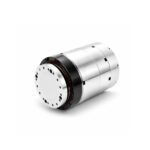 Joint Rotary Actuators series HAS
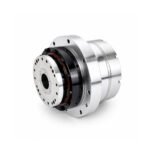 Joint Rotary Actuators Series HAMF
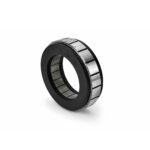 Frameless Torque Motor HBM
 Rotary Actuators
 Joint Rotary Actuators Series HAG
 Rotary Actuators Series HPG
Introduction: The Relentless Race for Milliseconds
In the fast-paced realms of semiconductor packaging and 3C electronics assembly, productivity is measured in fractions of a second. High-speed pick and place systems run 24 hours a day, executing hundreds of rapid start-stop cycles every minute. For equipment builders, shaving even 20 milliseconds off a component placement move translates to thousands of additional units processed every shift.
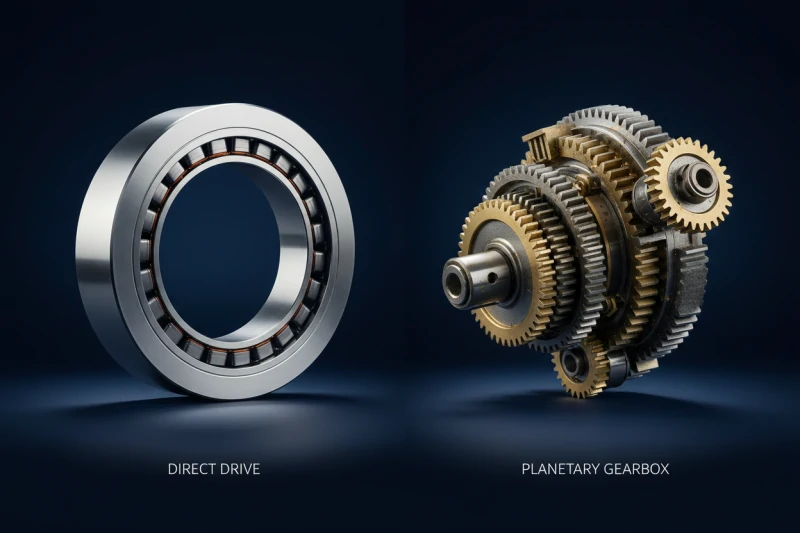
However, many traditional machine architectures have reached their mechanical limits. When relying on conventional geared servomotors, timing belts, and mechanical linkages, pushing for faster cycles introduces severe vibration, backlash, and accelerated wear.
This case study examines how an automation equipment manufacturer overcame these physical bottlenecks by upgrading to a direct drive motor architecture, unlocking unprecedented cycle speeds and rock-solid reliability in high speed automation.
The Engineering Challenge: Hitting the Cycle Time Ceiling
The client, an original equipment manufacturer (OEM) producing automated surface-mount assembly cells, faced an escalating customer demand: increase machine throughput by at least 30% without expanding the machine footprint or sacrificing sub-micron placement accuracy.
Mechanical Compliance: Elasticity in Belts and Backlash in Gears
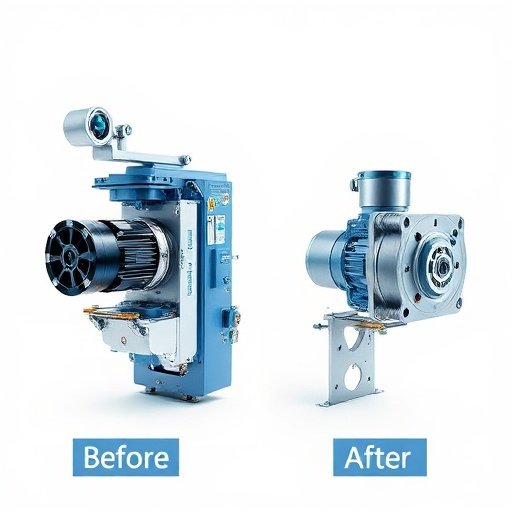
The original theta-axis (rotary orientation axis on the placement head) used a miniature servomotor coupled with a timing belt and a micro-planetary reducer. Under aggressive acceleration curves exceeding 15 Gs, the timing belt behaved like a rubber band, introducing mechanical compliance. Furthermore, the gearbox teeth exhibited microscopic play that caused angular errors whenever the head rapidly reversed direction.
Long Settling Times That Limit Total Machine Throughput
Because the mechanical system was compliant, the placement head would oscillate slightly upon reaching its target position. The vision inspection system could not capture a clear verification image until these vibrations decayed. This “settling time” consumed up to 45 milliseconds on every single placement move, creating an insurmountable bottleneck that capped the machine’s overall cycle rate.
The Engineering Solution: Switching to Direct Drive Motor Architecture
Recognizing that software patches could not overcome physical transmission limits, the OEM collaborated with HOBBER to redesign the placement head around direct drive technology.
Eliminating Intermediate Transmission Elements for Instant Acceleration
The new architecture eliminated the gearbox, belt, and coupling entirely. By utilizing a direct drive motor, the load—consisting of the vacuum nozzle shaft and high-resolution optical encoder—was coupled directly to the motor’s rotor. Without mechanical elasticity or transmission lost motion, motor torque was transmitted instantaneously to the workpiece, enabling crisp, jerk-free trajectory profiles.
Direct Integration of HBM Frameless Motors into the Placement Head
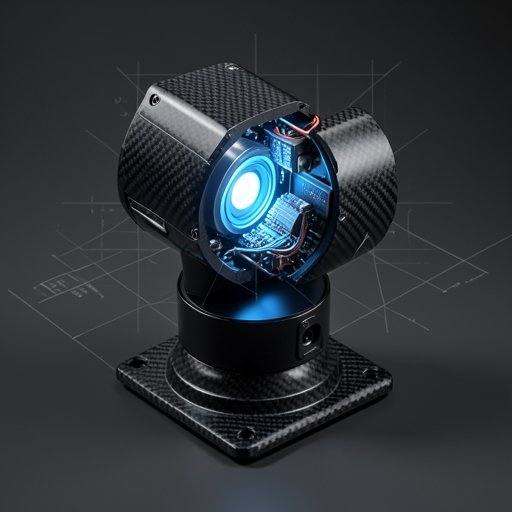
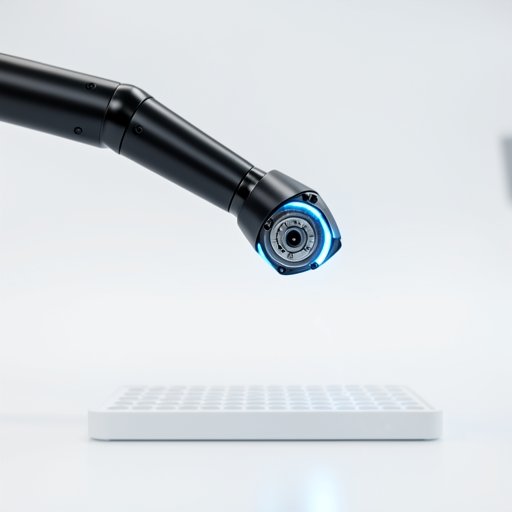
To maintain an ultra-compact payload on the multi-axis Cartesian gantry, the engineering team integrated HOBBER HBM series frameless torque motors directly into the custom aluminum housing of the placement head. The stator was press-fitted into the housing while the hollow rotor was mounted directly onto the central tooling spindle, reducing the total mass of the placement head by 28%.
Dynamic Tuning and Motion Profile Optimization
Hardware redesign was paired with advanced servo drive tuning to extract maximum dynamic performance from the direct drive system.
High-Bandwidth Current Loops for Ultra-Fast Direction Reversals
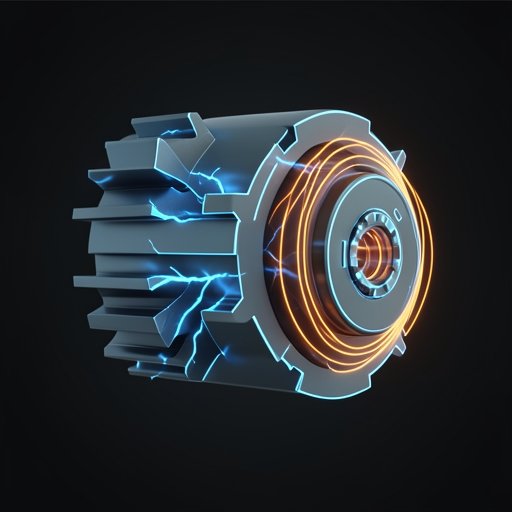
By pairing the HBM frameless motor with a high-switching-frequency servo drive, the system achieved a current loop bandwidth exceeding 3 kHz. This extreme responsiveness allowed the controller to track S-curve acceleration profiles with microsecond precision, executing rapid 90-degree and 180-degree component orientations in single-digit milliseconds.
Managing Thermal Dissipation in Continuous High-Duty Cycles
High-frequency cycling generates heat. The HBM motor’s optimized winding geometry, combined with direct conductive heat sinking to the aluminum gantry frame, kept continuous winding temperatures below 65°C without requiring external forced-air or liquid cooling systems.
Real-World Results: 40% Faster Cycle Times and Zero Maintenance
The transition from a belted gear assembly to a direct drive configuration delivered transformative gains across every production metric.
Slashing Settling Time to Sub-10 Milliseconds
With mechanical compliance eliminated and dynamic stiffness dramatically increased, settling time plummeted from 45 milliseconds to less than 8 milliseconds—a 75% reduction. The machine could now orient, verify, and place components almost instantaneously.
Higher Placement Yield and Elimination of Wear-Induced Backlash
Because direct drive systems have zero mechanical wear points in the drive train, angular repeatability remained rock-solid at ±3 arc-seconds across millions of cycles. Component placement defects dropped to near-zero levels, significantly improving first-pass yields.
Quantifying the ROI of a Maintenance-Free Drivetrain
The elimination of timing belts and gearboxes removed the need for periodic tensioning, lubrication, and replacement shutdowns. The end-user calculated an overall throughput increase of 40%, yielding full capital payback within eight months of factory floor deployment.
Conclusion: Transforming High-Speed Automation at the Joint Level
This case study proves that when high speed automation demands both blistering velocity and micrometer accuracy, the mechanical transmission must not stand in the way. By coupling the load directly to a high-torque direct drive motor, machine builders can eliminate the hidden delays of mechanical compliance and setting time.
As manufacturing tolerances tighten and throughput demands rise, direct drive integration is shifting from a premium option to an essential engineering standard for world-class automation systems.
FAQ Section: Direct Drive in High-Speed Automation
Q1: How does a direct drive motor reduce settling time in pick-and-place?
By eliminating compliant components like belts, flexible couplings, and gear teeth, a direct drive system creates an ultra-stiff mechanical link between motor and load. This eliminates the mechanical “spring” effect, allowing the servo controller to damp residual energy almost instantaneously upon reaching the target position.
Q2: Can direct drive systems handle high-inertia grippers?
Yes. Direct drive torque motors are engineered with high magnetic pole counts specifically to deliver large continuous and peak torque at low to moderate rotational speeds, enabling them to accelerate high-inertia end-effectors without needing gear reduction.
Q3: What is the typical ROI timeframe when upgrading from belt-driven systems?
In high-throughput environments operating on 24/7 schedules, the return on investment (ROI) is typically achieved within 6 to 12 months. The savings stem from increased parts-per-minute (PPM) output, higher manufacturing yield, and the total elimination of belt replacement maintenance costs.