 Joint Rotary Actuators Series HAT
 Joint Rotary Actuators series HAS
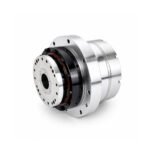 Joint Rotary Actuators Series HAMF
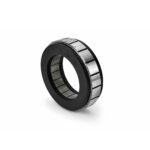 Frameless Torque Motor HBM
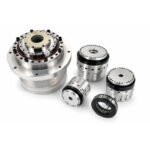 Rotary Actuators
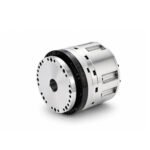 Joint Rotary Actuators Series HAG
 Rotary Actuators Series HPG
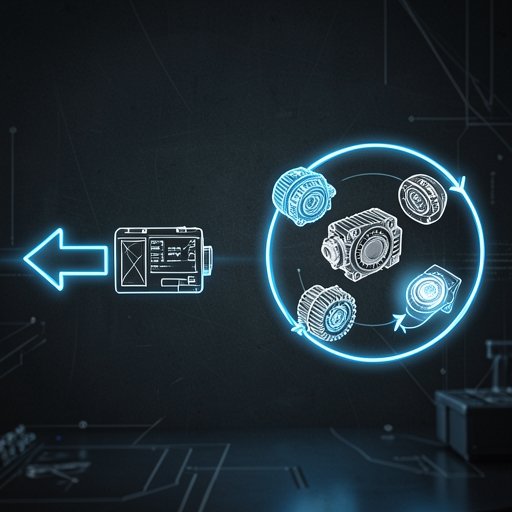
Introduction: Did Your Motor Really Reach Its Target?
The fundamental goal of any motion control system is simple: move a mechanical load from Point A to Point B. However, the way a system guarantees that this movement actually occurred makes all the difference in modern manufacturing.
If you command a machine to move 100 millimeters, how do you know it didn’t stop at 98 millimeters due to friction or a sudden mechanical jam? The problem of simply assuming execution is why sending a command isn’t enough in high-stakes automation. This guide breaks down the critical differences between open-loop and closed-loop control, helping engineers make better, more reliable design choices when specifying motors and actuators.
Understanding Open-Loop Systems: The “Send and Pray” Approach
An open-loop system is a one-way street. The controller sends a command to the motor, and the motor attempts to execute it. There is no confirmation process.
How Standard Stepper Motors Operate Without Feedback
The most common example of an open-loop system is a standard stepper motor. The controller sends a specific number of electrical pulses, and the motor turns a corresponding number of “steps.” The system blindly assumes that one pulse equals one step of physical movement, with absolutely no mechanism to verify the actual final position.
The Appeal: Simplicity and Cost-Effectiveness
Open-loop systems are highly popular for a reason: they are simple and incredibly cost-effective. Because they lack expensive sensors and complex tuning algorithms, they are easy to wire and program. For applications like 3D printers, simple conveyors, or low-cost indexing tables where loads are predictable and occasional inaccuracies are acceptable, they work perfectly fine.
The Fatal Flaw: Step Loss and Uncorrected Errors
The fatal flaw of the open-loop architecture is its vulnerability to external disturbances. If a mechanism encounters an unexpected physical blockage, or if the load suddenly increases, the stepper motor might not have enough torque to execute the commanded step. This results in step loss. The controller continues sending pulses, oblivious to the fact that the motor has physically stalled. Every subsequent move will now be out of position, potentially causing catastrophic machine collisions.
The Power of Closed-Loop Control (The Servo Standard)
A closed-loop control system operates on continuous verification. It sends a command, measures the result, and makes instant corrections.
Introducing Position Feedback (Encoders and Resolvers)
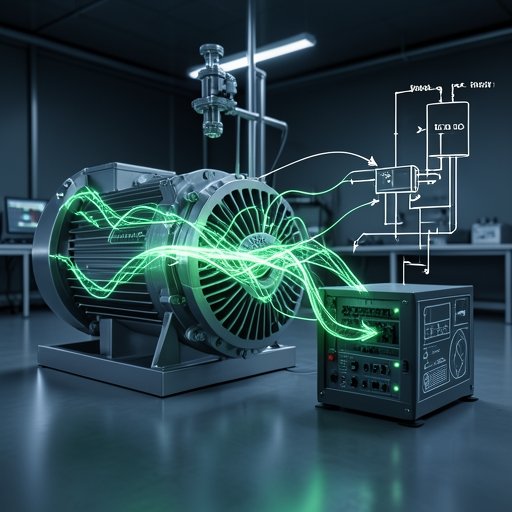
The defining feature of a closed-loop system is the inclusion of a sensing device, typically an optical encoder or a resolver, mounted directly on the motor shaft or the moving load. This sensor continuously relays the exact physical position and velocity of the motor back to the controller. This stream of data is the “feedback” that closes the loop.
How the Servo Motor Corrects Errors in Real-Time
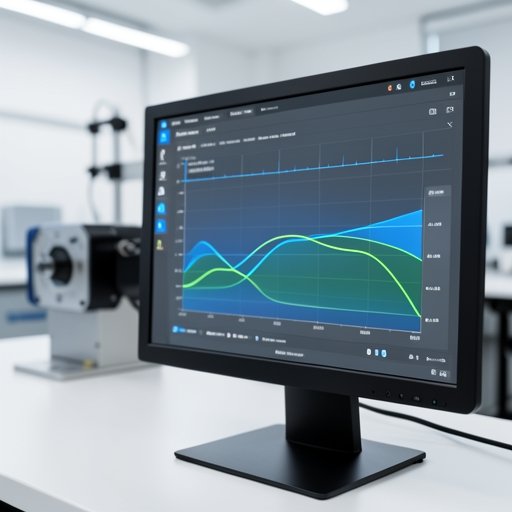
When a servo motor is commanded to move, the controller constantly compares the “commanded position” with the “actual position” reported by the encoder. If a sudden increase in friction causes the motor to lag behind its target, the controller instantly detects this “position error.” It immediately increases the electrical current sent to the motor, supplying a surge of torque to overcome the friction and force the motor back onto its correct trajectory, entirely in real-time.
Head-to-Head Comparison in Industrial Automation
When designing machinery for industrial automation, the choice between these two architectures affects every aspect of machine performance.
Accuracy and Reliability Under Variable Loads
Open-loop systems only remain accurate if the load never exceeds the motor’s capabilities. Closed-loop control systems maintain absolute accuracy regardless of variable loads, tool wear, or fluctuating friction. They guarantee that the machine will reach its target, or they will safely trigger an alarm if the blockage is physically insurmountable.
Heat Generation and Energy Efficiency Differences
Open-loop stepper motors typically run at full current all the time to maximize their chance of not losing steps, even when standing still. This generates massive amounts of wasted heat. A servo motor in a closed-loop system is highly energy-efficient; it only draws as much current as is absolutely necessary to perform the required work, running much cooler and prolonging the life of the machine.
Dynamic Response and High-Speed Performance
Because open-loop motors have a rigid magnetic structure, pushing them to high speeds drastically reduces their torque output, making them prone to stalling. Closed-loop servo systems can maintain high torque across a vast speed range, allowing for aggressive acceleration profiles, faster settling times, and significantly shorter overall cycle times.
When is it Time to Upgrade Your Motion System?
Recognizing when to abandon an open-loop architecture is a critical engineering milestone.
Recognizing the Limits of Your Current Setup
If your current automation equipment suffers from unexplained positioning drifts, if you have to artificially slow down your machine to prevent stalling, or if you spend hours manually recalibrating axes after a jam, you have reached the limits of open-loop technology.
Why Precision Robotics Demand Closed-Loop Architecture
In advanced applications like multi-axis robotic arms, medical scanning devices, or laser cutting, open-loop control is entirely disqualified. The compounding errors of multiple axes moving without verification would render the machine useless. Precision robotics demand the absolute certainty, dynamic stiffness, and real-time error correction that only a high-end closed-loop servo architecture can provide.
Conclusion: Closing the Loop on Precision
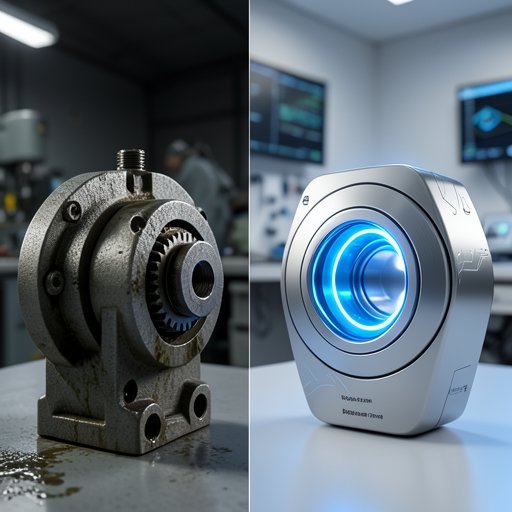
In summary, open-loop control is for predictability, while closed-loop control is for certainty.
As manufacturing tolerances shrink and the demand for high-speed throughput rises, relying on a “send and pray” approach is a liability. By utilizing advanced servo motors equipped with high-resolution feedback, engineers build machines that are not only faster and stronger but genuinely intelligent enough to guarantee their own performance. When precision is non-negotiable, closing the loop is the only acceptable engineering standard.
FAQ Section: Demystifying Control Loops
Q1: What is a “closed-loop stepper” and how does it compare to a servo motor?
A closed-loop stepper (or hybrid stepper) adds an encoder to a traditional stepper motor. It prevents step loss by increasing current when an error is detected. While much better than an open-loop stepper, it still lacks the high-speed dynamic performance, smooth continuous torque, and ultra-high efficiency of a true AC servo motor.
Q2: Is closed-loop control harder to program?
Historically, yes, tuning the PID (Proportional-Integral-Derivative) loops of a servo system required specialized knowledge. However, modern servo drives feature advanced auto-tuning software that automatically analyzes the load inertia and sets the optimal gains, making them almost as easy to deploy as traditional steppers.
Q3: Do I need closed-loop if my application moves very slowly?
Not necessarily for speed, but potentially for accuracy and heat management. Even at low speeds, if your load is variable or if you need to guarantee that a critical position is held against a disturbing force without overheating the motor, a closed-loop system remains the superior choice.