 Joint Rotary Actuators Series HAT
 Joint Rotary Actuators series HAS
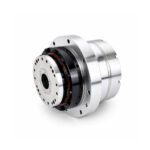 Joint Rotary Actuators Series HAMF
 Frameless Torque Motor HBM
 Rotary Actuators
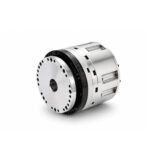 Joint Rotary Actuators Series HAG
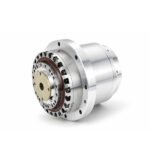 Rotary Actuators Series HPG

Introduction: The Physics of Seeing Inside the Human Body
The evolution of modern medicine relies heavily on our ability to non-invasively visualize the internal structures of the human body. From early X-rays to sophisticated computed tomography (CT) and magnetic resonance imaging (MRI), radiology has transformed healthcare. However, patients and clinicians rarely consider the complex mechanical choreography required to capture these life-saving diagnostics.
The clarity of a medical image depends heavily on software and sensor technology, but the physical foundation rests on absolute mechanical stability. A micro-vibration in a scanner gantry can ruin a diagnostic scan, leading to costly rescans or misdiagnoses. This article examines the critical engineering demands of motion control within advanced medical imaging equipment and how specialized actuators empower modern radiology.
The Unique Motion Challenges in Radiology Equipment
Designing for the radiology suite requires navigating an intersection of heavy mechanical loads, high-speed rotation, and patient-safety standards.
Eliminating Motion Artifacts in High-Speed Gantry Rotation
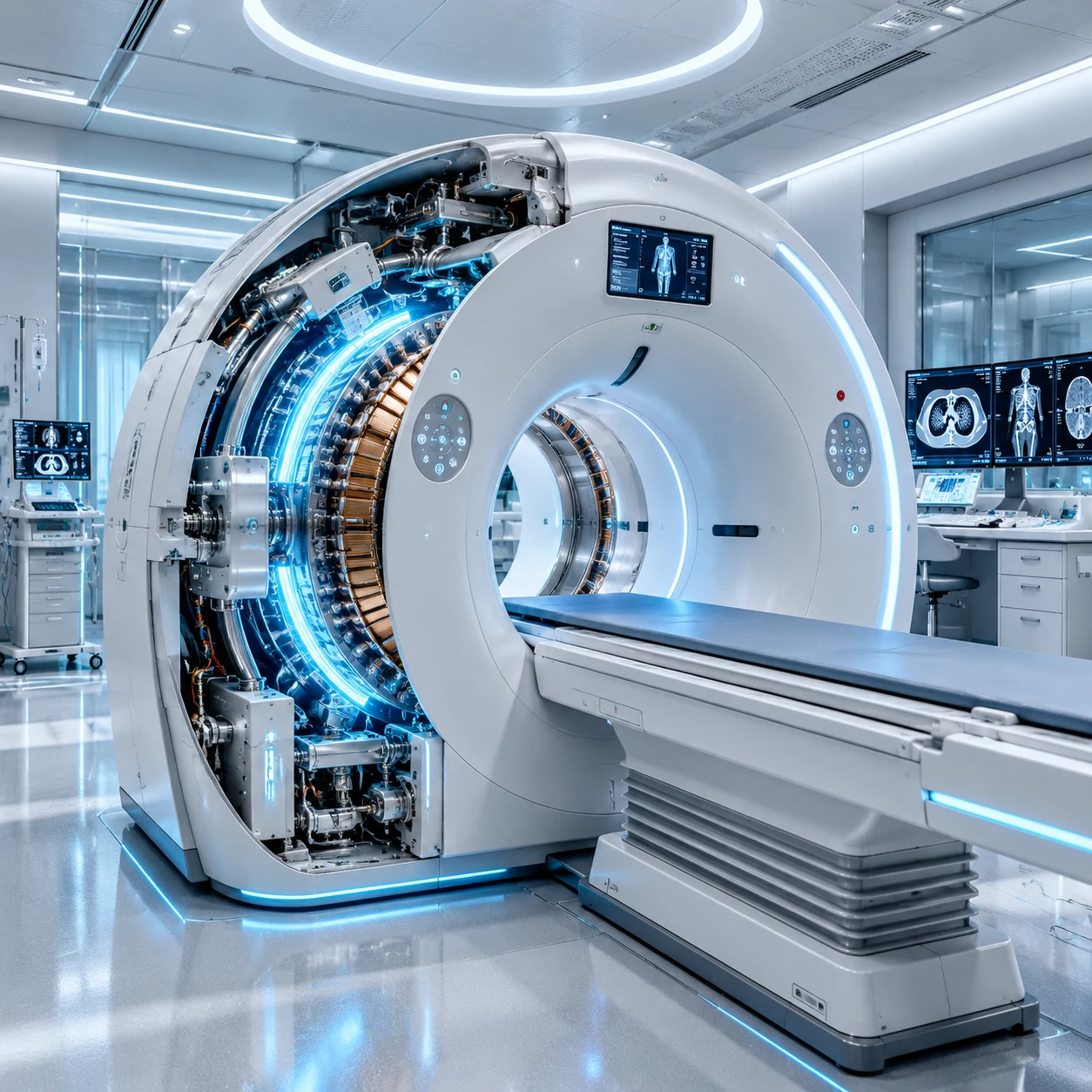
In a CT scanner, the X-ray tube and detectors must rotate around the patient at speeds reaching several revolutions per second. This massive gantry structure weighs hundreds of kilograms. If the drive system experiences speed ripples, cogging torque, or uneven friction, the resulting image will suffer from “motion artifacts”—streaks and distortions that obscure clinical details. Achieving absolute smoothness at high speeds requires specialized precision engineering.
Strict Acoustic and Vibration Limits for Patient Comfort
Medical equipment operates in close proximity to patients, many of whom are already under stress. Excessive mechanical noise or structural vibration is not only distracting but terrifying to someone inside an enclosed scanner. Motion components must be inherently quiet, utilizing direct-drive architectures and precision bearings to minimize acoustic output and mechanical hum.
Direct Drive Technology in CT Scanners
To achieve the necessary speeds and stability, modern CT gantry design has shifted dramatically toward direct-drive mechanisms.
Handling Massive Inertia at High RPMs
A rotating CT gantry possesses immense rotational inertia. Traditional belt or gearbox systems struggle with this inertia, leading to belt stretch, gear tooth wear, and energy loss. Direct-drive configurations couple the heavy gantry ring directly to a large-diameter frameless torque motor or ring actuator, providing immediate acceleration control and instant stopping power.
Why Frameless Torque Motors Outperform Traditional Systems
Frameless torque motors eliminate internal gearboxes and separate housings, allowing the motor elements to be integrated directly into the structural frame of the scanner. This drastically reduces the overall mass of the rotating assembly, decreases bearing wear, and allows for a smooth, uninterrupted central bore where the patient bed passes safely through.
MRI Compatibility: Overcoming Magnetic and Material Hurdles
While CT scanners present inertial challenges, Magnetic Resonance Imaging (MRI) introduces an entirely different physics problem: extreme magnetic fields.
Non-Magnetic Materials and Shielding in MRI Environments
An MRI machine utilizes powerful superconducting magnets that generate massive magnetic fields (often 1.5 to 3 Tesla or higher). Any standard electric motor containing traditional ferrous metals placed near an MRI will either become a dangerous projectile or experience severe magnetic saturation, rendering it completely useless.
Precise Patient Table Positioning Without Magnetic Interference
Positioning the patient bed accurately inside an MRI bore requires specialized non-magnetic actuators. These systems use alternative materials like specialized ceramics, high-grade polymers, and non-ferrous titanium alloys, paired with optical or custom feedback sensors that do not distort the local magnetic field or corrupt the diagnostic radiofrequency (RF) signals.
Precision Actuators in Patient Positioning and Radiation Therapy
Beyond diagnostic scanning, precision motion control is vital in therapeutic environments where accuracy directly dictates treatment success.
Sub-Millimeter Patient Couch Alignment
Modern diagnostic and radiation tables must position patients in multi-axis coordinate spaces with sub-millimeter precision. These tables use specialized linear and rotary stages to tilt, slide, and rotate patients into exact alignment with imaging beams or treatment vectors.
Gantry-Mounted Radiation Delivery Systems (Linear Accelerators)
In advanced radiotherapy systems (such as those used in cancer treatment), a linear accelerator (LINAC) rotates dynamically around the patient to target tumors from multiple angles while sparing healthy tissue. The mechanical gantry joints must coordinate heavy shielding and radiation sources with absolute spatial repeatability.
Conclusion: Precision That Drives Healthcare Outcomes
The evolution of diagnostic clarity is inextricably linked to mechanical precision. As medical imaging techniques become faster, more detailed, and less invasive, the hardware driving these machines must rise to meet higher performance benchmarks.
By integrating robust, low-vibration, and magnetically compatible components, equipment designers can build radiology tools that offer superior image capture and long-term reliability. Precision motion control is the vital, unseen engine driving better healthcare outcomes worldwide.
FAQ Section: Medical Imaging Motion Control Q&A
Q1: How do frameless torque motors handle the massive centrifugal forces in a rotating CT gantry?
Frameless torque motors are designed to be integrated directly into heavy, rigid mechanical structures supported by large-diameter cross-roller bearings. Because the motor stator and rotor distribute magnetic forces evenly across the entire circumference of the ring, they handle high centrifugal loads much more effectively than off-center, shaft-coupled motors.
Q2: Can precision actuators be customized to operate inside strong magnetic resonance fields?
Yes. For MRI-compatible applications, actuators are built using strictly non-ferrous materials (such as titanium, brass, and special plastics) and specialized electronics that are shielded from or immune to high-intensity static and gradient magnetic fields.
Q3: What measures are taken to ensure zero audible noise from mechanical stages in patient-facing equipment?
Engineers use direct-drive technologies that eliminate metal-on-metal gear meshing, apply sound-dampening materials to structural mountings, and utilize advanced servo drive algorithms (such as sinusoidal commutation and smooth current profiling) to ensure near-silent operation during patient scanning.