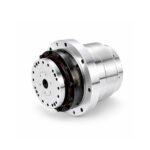
 Joint Rotary Actuators Series HAT
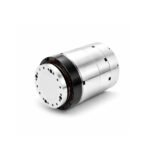 Joint Rotary Actuators series HAS
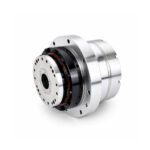 Joint Rotary Actuators Series HAMF
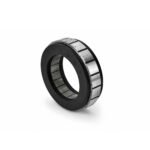 Frameless Torque Motor HBM
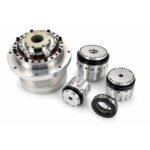 Rotary Actuators
 Joint Rotary Actuators Series HAG
 Rotary Actuators Series HPG


Introduction: The Evolution of Industrial Data Transmission
The evolution of the factory floor over the past few decades is a story of digital transformation. We have moved away from complex, hardwired analog I/O harnesses toward streamlined, high-speed digital networks. Today’s automated machines rely on a web of interconnected devices—controllers, servo drives, sensors, and actuators—that must exchange thousands of data points every single millisecond.
At the heart of this data exchange is the network architecture. Choosing the right industrial communication protocol is just as critical to machine success as selecting the motor or gearbox. If your network suffers from high latency or poor determinism, your multi-axis coordination will fail. This guide compares traditional serial fieldbus networks with modern real-time Ethernet solutions to help you architect a robust multi-axis motion system.
Traditional Fieldbus Networks: Reliable Workhorses with Limits
To understand why the industry is shifting, we must first look at the legacy systems that built modern automation.
How Cyclic Polling and Bandwidth Caps Restrict Axis Counts
Traditional fieldbus networks (such as standard CANopen or Profibus) rely on a cyclic polling mechanism. The master controller queries each slave device sequentially to send and receive data. While this works wonderfully for simple I/O blocks or small machines, it introduces a severe bandwidth cap. As you add more axes to the network, the communication cycle time must expand to accommodate the extra data payloads.
The Growing Pains of Network Jitter in High-Speed Interpolation
In multi-axis interpolation—such as 5-axis CNC machining or synchronized printing—every axis must receive its position command at the exact same microsecond. Traditional fieldbus networks often suffer from “network jitter,” which is micro-variations in packet arrival times. This jitter leads to tracking errors, micro-stuttering, and compromised surface finishes during high-speed moves.
The Rise of Real-Time Ethernet and EtherCAT
To shatter the bandwidth and determinism limits of serial fieldbuses, automation engineers turned to industrial-grade Ethernet protocols, with EtherCAT leading the charge in high-performance motion control.
Breaking Through Standard Ethernet Limitations via “Processing on the Fly”
Standard office Ethernet is non-deterministic; data packets bounce around switches, causing variable delays. Real-time industrial Ethernet solves this by modifying how data packets are handled. Protocols like EtherCAT use a brilliant “processing on the fly” mechanism. As a single Ethernet telegram passes through a servo drive, the drive reads the data intended for it and inserts its own feedback data into the frame while the frame is still passing through, with virtually zero hardware delay.
Why EtherCAT Dominates Multi-Axis Motion Control
Because of this on-the-fly processing, update rates can drop below 100 microseconds across dozens of axes simultaneously. This ultra-fast, hard real-time synchronization makes industrial Ethernet the mandatory standard for advanced robotics, semiconductor equipment, and high-speed packaging lines where millisecond-level timing is everything.
Head-to-Head Performance Comparison
When designing a new machine control architecture, engineers evaluate networks across three primary technical pillars.
Update Rates and Synchronization Accuracy
Traditional fieldbus networks typically operate at update rates measured in milliseconds (e.g., 2ms to 10ms), which is fine for basic positioning. Real-time Ethernet protocols operate in microseconds (e.g., 0.1ms or faster) with jitter values measured in nanoseconds. This ensures every servo drive on the network executes its motion profile in absolute lockstep.
Topology Flexibility and Implementation Costs
Fieldbuses traditionally used strict line (daisy-chain) topologies where a single broken cable could bring down the entire machine. Modern real-time Ethernet supports flexible topologies including lines, trees, and drop-lines, and can even incorporate ring redundancy to ensure the network stays active if a cable is severed.
Future-Proofing Your Machine Architecture
Choosing a high-speed network isn’t just about solving today’s speed problems; it’s about preparing your machine for future data demands.
Integrating IoT Diagnostics and Edge Data Over the Same Network
Industrial Ethernet offers massive bandwidth headroom. This means you can stream heavy diagnostic data, motor temperatures, vibration logs, and HD video feeds across the exact same network cables carrying real-time motion commands, enabling true IIoT (Industrial Internet of Things) connectivity without requiring a separate IT infrastructure.
Conclusion: Speed, Determinism, and the Connected Machine
In modern automation, hardware capability is only unlocked when the communication network delivers commands cleanly and on time. Transitioning from legacy serial loops to high-speed real-time Ethernet removes the invisible handcuffs holding back your machine’s dynamics.
Whether you are scaling from a 4-axis robot to a 32-axis production cell, matching your network architecture to your dynamic performance requirements ensures long-term reliability and market competitiveness.
FAQ Section: Industrial Networking Architecture Q&A
Q1: Can a traditional fieldbus network achieve the sub-millisecond sync required for 5-axis CNC machines?
Generally, no. Standard serial fieldbuses lack the bandwidth and deterministic cycle rates required for microsecond-level multi-axis interpolation. Simultaneous 5-axis CNC machining mandates a high-speed real-time industrial Ethernet protocol to prevent path contouring errors.
Q2: What makes EtherCAT faster than other industrial Ethernet protocols?
EtherCAT achieves its unmatched speed through “processing on-the-fly.” Unlike protocols that require the network frame to stop at each node, be unpacked, processed, and repackaged, an EtherCAT frame reads and updates data as it passes through the slave device’s hardware slave controller instantaneously.
Q3: How do I handle EMI (electrical noise) when running high-speed Ethernet cables near servo power lines?
High-speed industrial Ethernet relies on structured cabling standards. Always use high-quality, double-shielded industrial Ethernet cables (SF/UTP or S/FTP) with metallic RJ45 connectors grounded properly to the cabinet backplate, and maintain physical separation from high-voltage motor power conduits.