 Joint Rotary Actuators Series HAT
 Joint Rotary Actuators series HAS
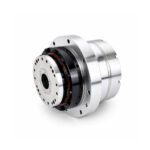 Joint Rotary Actuators Series HAMF
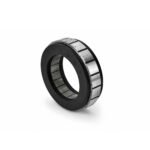 Frameless Torque Motor HBM
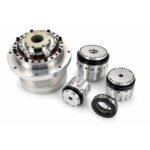 Rotary Actuators
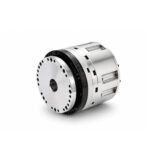 Joint Rotary Actuators Series HAG
 Rotary Actuators Series HPG

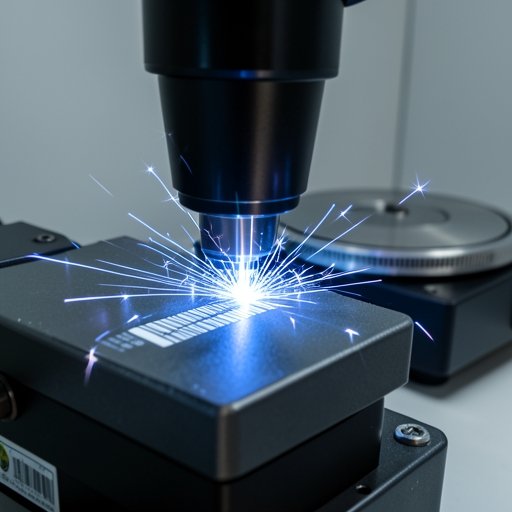
Introduction: Speed and Precision on the Marking Line
In modern manufacturing, permanent part identification—such as UDI codes, complex 2D data matrices, serial numbers, and corporate branding—is mandatory. Whether tracing components through an aerospace supply chain or verifying medical devices, traceability relies entirely on the quality and speed of industrial marking.
As production lines accelerate, traditional mechanical methods struggle to keep pace. Today’s equipment must execute lightning-fast point-to-point transitions while maintaining absolute positional stability. Achieving this level of performance requires a shift away from conventional gearboxes and timing belts. This article explores how direct drive technology and advanced frameless motors are revolutionizing laser marking systems, delivering unmatched speed, pristine edge finishes, and zero maintenance.
The Anatomy of High-Speed Laser Marking Demands
To understand why traditional actuators fall short, we must examine the specific kinematic demands placed on a modern laser marking machine.
Point-to-Point Jump Speed and Settling Time
In vector-based laser marking, the laser beam or the workpiece jumps rapidly from one line to the next. The system must accelerate, decelerate, and settle into position within milliseconds. If the motion hardware suffers from mechanical compliance or long settling times, the laser will fire before the axis is truly stable, resulting in blurred characters, distorted lines, and failed inspection scans.
Continuous Rotary Indexing for 360-Degree Part Marking
Many components—such as cylindrical medical tools, electronic connectors, and automotive valves—require 360-degree circumferential marking. This requires a high-precision rotary axis (C-axis) to index or continuously rotate the part in perfect synchronization with the laser beam. Any angular lag or micro-jitter during rotation leads to warped text or misaligned graphics.
Why Traditional Drivetrains Fail in Laser Applications
Legacy motion systems that rely on gearboxes, worm drives, or timing belts introduce physical limitations that degrade laser performance.
Belt Stretch and Gearbox Backlash Causing Edge Distortion
Traditional gear trains rely on physical tooth contact, creating mechanical backlash. When a rotary stage reverses direction to handle complex vector paths, the motor must traverse this physical gap before moving the load. This delay causes edge distortion and micro-gouge marks on the material. Furthermore, timing belts stretch under rapid acceleration, introducing unpredictable spring-like elasticity into the motion profile.
Mechanical Wear and Loss of Calibration Over Millions of Cycles
A high-volume laser marking cell might execute tens of millions of indexing cycles per year. Over time, friction wears down gear teeth and stretches belts, causing calibration drift. Operators are forced to constantly readjust or rebuild the mechanical stages to maintain acceptable print quality, driving up operational costs and causing unwanted downtime.
How Direct Drive and Frameless Motors Revolutionize Marking Heads
The engineering solution to these limitations is direct-drive technology, which removes all intermediate mechanical compliance.
Removing the Middleman: 1:1 Coupling for Instant Response
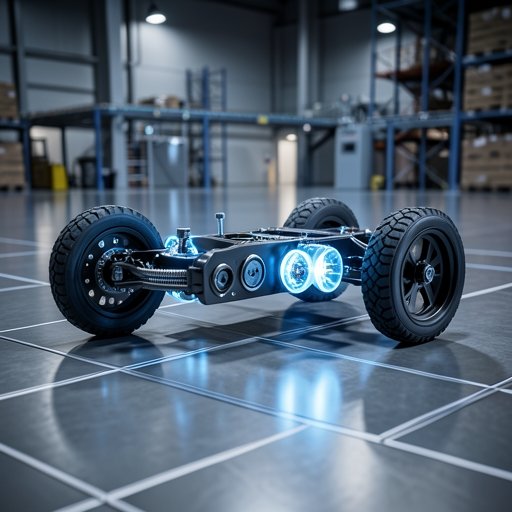
In a direct-drive setup, the workpiece or the moving stage is coupled 1:1 directly to the motor rotor. There are no gears to strip, no belts to stretch, and no backlash to compensate for. When the controller commands a move, the execution is instantaneous, dramatically reducing settling times and eliminating trajectory lag.
Utilizing Frameless Technology for Ultra-Low-Profile Integration
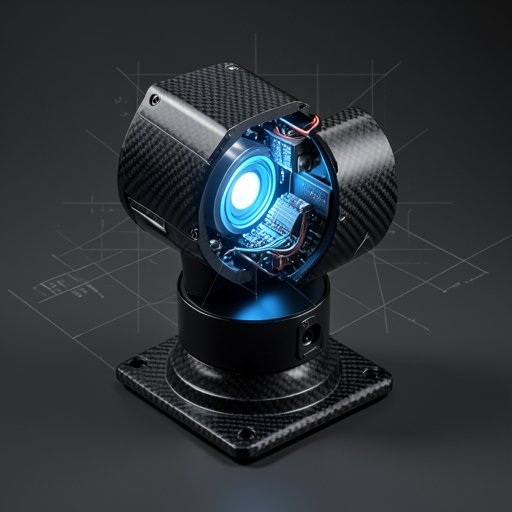
By implementing a frameless motor, machine builders can embed the motor’s stator and rotor directly into the structure of the laser marking head or rotary stage. This removes the weight and volume of a traditional motor housing, resulting in a compact, low-profile assembly that reduces gantry mass and allows for even faster accelerations.
Real-World Benefits: Throughput, Yield, and Zero Maintenance
Transitioning to direct-drive laser marking systems delivers immediate economic and technical benefits.
Slashing Cycle Times with Explosive Acceleration
By removing transmission inertia and leveraging the high torque density of direct-drive components, manufacturers can push their machine acceleration curves to new heights. Marking cycle times drop significantly, allowing a single machine to process a higher volume of parts per hour (PPM).
Maintenance-Free Operation for 24/7 Laser Cell Environments
With zero mechanical wear points in the drivetrain, direct-drive laser systems operate with pristine consistency over years of continuous use. There are no belts to tension and no oil baths to change, ensuring true 24/7 reliability on the factory floor.
Conclusion: Laser Precision Without Compromise
Achieving the true potential of high-power laser sources requires an equally advanced motion system. Traditional gearboxes and belts introduce friction and delay that simply cannot keep up with modern manufacturing demands.
By eliminating backlash and utilizing direct-drive architecture, equipment builders can deliver laser marking systems that combine blistering speed with microscopic precision. In the competitive world of part traceability, direct drive is the ultimate tool for excellence.
FAQ Section: Laser Marking Motion Control Q&A
Q1: How does a direct drive motor improve the sharpness of high-speed vector laser marking?
A direct drive motor eliminates mechanical backlash, belt stretch, and transmission wind-up. Because the load is coupled 1:1 to the rotor, the system responds instantly to path changes without micro-delays. This prevents the laser from lingering on corners or distorting lines, resulting in ultra-sharp, high-contrast vector characters.
Q2: Can frameless motors handle the rapid back-and-forth oscillations of galvanometer-adjacent axes?
Yes. Frameless torque motors are engineered with high pole counts to deliver fast dynamic response and high peak torque at moderate speeds. Their low rotor inertia makes them exceptionally well-suited for rapid directional changes required in auxiliary laser positioning axes.
Q3: What cooling methods are recommended for continuous high-speed laser marking stages?
For standard duty cycles, natural convection through a well-designed machine chassis is sufficient. However, for continuous, high-current operations running 24/7 at elevated ambient temperatures, integrating liquid cooling channels directly into the stationary housing of the direct-drive stage is recommended to maintain optimal thermal stability.